
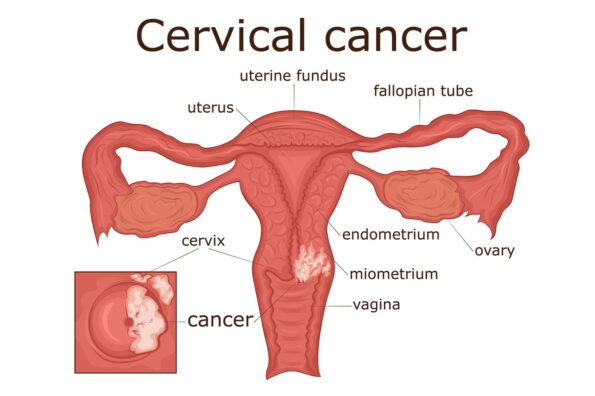
Cervical Cancer
Temitope Adebayo
M.Sc. Industrial Microbiology & Biotechnology | Microbiologist | Research Assistant | Biotech Enthusiast
Introduction
Cervical cancer is a malignant tumour arising from the cells of the cervix — the lower part of the uterus that connects to the vagina. It is one of the most common cancers affecting women worldwide, particularly in low- and middle-income countries. According to global estimates, cervical cancer caused approximately 604,000 new cases and 342,000 deaths in 2020 (WHO, 2022).
Recent years have seen intensified efforts toward elimination. In June 2025, global leaders convened at the second Global Cervical Cancer Elimination Forum in Bali, reaffirming commitments to the WHO’s 90-70-90 targets: 90% HPV vaccination by age 15, 70% screening by ages 35 and 45, and 90% treatment of detected cases. Early detection and prevention are crucial, as the disease is highly preventable and treatable when found in its early stages.
Anatomy and Function of the Cervix
The cervix serves as the gateway between the uterus and vagina. It plays an important role during menstruation, pregnancy, and childbirth. It also produces mucus that changes consistency during the menstrual cycle to either facilitate or block sperm entry.
Causes and Risk Factors
The primary cause of cervical cancer is persistent infection with high-risk types of the human papillomavirus (HPV), especially HPV types 16 and 18, which together account for about 70% of cases (Arbyn et al., 2020). Other risk factors include early onset of sexual activity, multiple sexual partners, smoking, prolonged use of oral contraceptives, a weakened immune system (e.g., HIV infection), and a family history of cervical cancer (CDC, 2023)
Pathophysiology
HPV infects the epithelial cells of the cervix, integrating its DNA into the host genome. This disrupts normal cell cycle control, leading to the production of viral oncoproteins E6 and E7, which inactivate tumour suppressor proteins p53 and Rb. Over time, infected cells may progress from cervical intraepithelial neoplasia (CIN) to invasive carcinoma (Bhatla & Singhal, 2020).
Signs and Symptoms
In its early stages, cervical cancer often produces no noticeable symptoms. As the disease progresses, common signs may include abnormal vaginal bleeding (after intercourse, between periods, or after menopause), foul-smelling vaginal discharge, pelvic pain, and pain during sexual intercourse (WHO, 2022).
Screening and Diagnosis
Routine screening is critical for detecting precancerous changes. Common methods include:
- Pap smear: Detects abnormal cervical cells.
- HPV DNA testing: Identifies high-risk HPV strains.
- Visual inspection with acetic acid (VIA): Used in low-resource settings.
If abnormalities are detected, colposcopy and biopsy are performed for confirmation (Koh et al., 2019).
Staging of Cervical Cancer
The FIGO (International Federation of Gynaecology and Obstetrics) staging system classifies cervical cancer based on tumour size, spread to lymph nodes, and metastasis. Staging helps determine the most appropriate treatment plan (Bhatla & Singhal, 2020).
Treatment Options
- Treatment depends on the stage:
- Early-stage: Surgical removal (conisation, hysterectomy).
- Locally advanced: Radiotherapy with concurrent chemotherapy.
- Advanced stage: Palliative care, targeted therapy, and immunotherapy may be considered (Koh et al., 2019).
Prevention
The most effective preventive measures include:
HPV vaccination: Recommended for girls (and boys) before sexual debut, typically between ages 9 and 14.
Safe sexual practices: Limiting the number of partners and using condoms.
Regular screening: Even vaccinated women should be screened, as vaccines do not cover all HPV strains (WHO, 2022).
Global and Regional Statistics
Cervical cancer remains a major public health issue in sub-Saharan Africa, South-East Asia, and parts of Latin America, where screening programmes are less accessible. The WHO aims to eliminate cervical cancer as a public health problem by achieving 90% HPV vaccination coverage, 70% screening coverage, and 90% treatment for detected disease by 2030 (WHO, 2020).
Challenges in Management
Barriers include limited access to vaccines, screening facilities, and cancer treatment centres in low-resource settings. Cultural beliefs, stigma, and lack of awareness also reduce participation in preventive programmes (Arbyn et al., 2020).
Conclusion
Cervical cancer is both preventable and treatable, yet it continues to claim hundreds of thousands of lives each year. Strengthening HPV vaccination programmes, ensuring regular screening, and improving access to treatment are essential steps toward elimination. Awareness and education remain powerful tools in this fight.
References
1. Arbyn, M., et al. (2020). Estimates of incidence and mortality of cervical cancer in 2018: a worldwide analysis. *The Lancet Global Health*, 8(2), e191–e203.
- Bhatla, N., & Singhal, S. (2020). Primary management of cervical cancer: Society of Gynaecologic Oncology consensus guidelines. *Gynaecologic Oncology*, 157(3), 481–493.
3. CDC. (2023). Cervical Cancer. Retrieved from [https://www.cdc.gov/cancer/cervical](https://www.cdc.gov/cancer/cervical)
4. Koh, W.-J., et al. (2019). Cervical Cancer, Version 3.2019, NCCN Clinical Practice Guidelines in Oncology. *Journal of the National Comprehensive Cancer Network*, 17(1), 64–84.
- WHO. (2020). Global strategy to accelerate the elimination of cervical cancer as a public health problem. World Health Organisation.
6. WHO. (2022). Cervical Cancer Fact Sheet. Retrieved from [https://www.who.int/news-room/fact-sheets/detail/cervical-cancer] (https://www.who.int/news-room/fact-sheets/detail/cervical-cancer)