Jul 2, 2025 | News
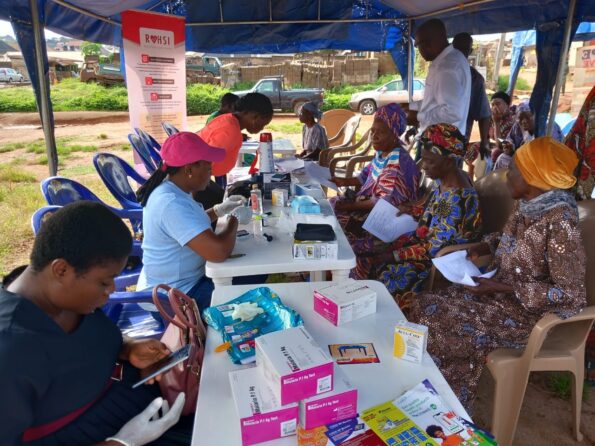
On Saturday, June 21, 2025, the Rays of Hope Support Initiative (ROHSI) successfully conducted a free medical outreach at Otun Abese Community, Ibadan, Oyo State. Approximately 200 residents, comprising men, women, children, and the elderly, accessed essential healthcare services.
The outreach promoted health awareness, offered medical screenings, provided free medication, and educated the community on healthy living practices. The ROHSI approach focused on proactive health management and accessible care.
At the medical outreach, we provided health education where vital information on maintaining good health, regular medical screenings, and adopting healthy lifestyles were discussed with the participants
Also, there was medical screening to identify various health conditions early, especially on hypertension and diabetes, the two silent killers
Participants also received free medications courtesy of our sponsors and partners. On that day also some individuals that requires further medical attention were referred to appropriate healthcare facilities
Names of individuals with critical medical conditions were listed out for further support and follow-up through our WhatsApp community, where we shared daily health tips and other health opportunities
We extend our deepest gratitude to our sponsors: Codix Pharma Nigeria, Kemisola Bolarinwa through Next Wear Technologies, Africa Social Enterprise Workshop (ASEW) for supporting our social enterprise scheme and other anonymous contributors.
To our host community, Otun Abese Community, for their warmth and hospitality, and our Board of Trustees, Management Team, Staff, and Volunteers for their dedication and hard work. To our family, friends, and ROHSI Community, we say thank you all for your support and generosity. We enjoy always
Major highlights of the outreach:
- A majority of residents are unaware of their health status, highlighting a critical need for increased health awareness campaigns.
- Even those aware of their conditions cannot access necessary care due to the escalating cost of medical services.
- There is an alarming surge in non-communicable diseases (NCDs), particularly hypertension and diabetes. This trend demands urgent attention from the government and other stakeholders.
- The preventable nature of many NCDs, which are tragically claiming the lives of our working and productive adults, is a significant concern that requires immediate and concerted efforts.
The surge in preventable #NCDs demands urgent intervention from government and stakeholders. We urge:
- The implementation of practical healthcare policies (beyond paperwork).
- Introduction of affordable indigenous health insurance schemes for underserved community
- More partnerships from governments, policymakers and organisations of like minds to expand medical outreach programmes.
We reiterate our profound gratitude to all our sponsors, partners, board, and team members for making this outreach a success. We remain committed to bridging healthcare gaps and working towards accessible quality healthcare for all.
Thank you for your unwavering support.
ROHSI Management Team.

Dec 21, 2024 | News
Rays of Hope Support Initiative: Path to Healthier Lives in Ibadan
Rays of Hope Support Initiative: Path to Healthier Lives in Ibadan
Nigeria’s Silent Health Crisis: Hypertension and Diabetes
More than 20 million Nigerians are living and battling with hypertension silently, while more than 11 million live with diabetes. More than half of those affected by these silent killers are unaware of their health status. Even among those who are aware, many are not taking action. Those trying to seek care are hindered by economic challenges and unable to afford or access health care. As a result, they resign to their fate, waiting for the inevitable.
Nearly 30% of deaths in Nigeria, either at the hospital or at home, stem from NCDs. The nation’s potential brightest contributors are lost to these illnesses. The most vulnerable are hit hardest, as a lack of resources cuts their dreams short.
Rays of Hope Support Initiative
Rays of Hope Support Initiative (ROHSI) has been operational since 2017. Located in Ibadan, Oyo State, Nigeria. ROHSI is dedicated to combating the rising burden of NCDs in Ibadan and Nigeria, where it has been implementing innovative solutions to address these pressing issues. As an organization working within the NCD health space, ROHSI has focused on empowering vulnerable populations, such as older people, women and children, who are disproportionately affected by NCDs. This involves providing targeted interventions, addressing social determinants of health and ensuring equitable access to health care services.
The ROHSI team, since inception, has been working closely with local health care providers through collaboration and partnerships to ensure that individuals with NCDs, especially hypertension and diabetes, receive appropriate treatment and care. This includes providing access to essential medications and connecting patients with support services. Through its community-based health education initiative, the organization conducts regular health education programs to raise awareness about NCDs, especially hypertension and diabetes, their risk factors and preventive measures.
These sessions are tailored to the specific needs of the community, ensuring that information is accessible and understandable. Furthermore, the ROHSI early detection and screening program allows for timely intervention, reducing the likelihood of severe complications, therefore saving many lives from avoidable deaths.
Impact of Rays of Hope Support Initiative
ROHSI’s efforts have yielded significant results in improving the health and well-being of the community in Ibadan. It has educated more than 10,000 citizens on disease prevention with an emphasis on hypertension and diabetes. The organization has made an impact across three states, reaching more than 5,000 direct beneficiaries through free screenings and medication.
The nonprofit currently has a thriving online community with access to daily, up-to-date health tips. More than 1,500 members are part of its combined Facebook group, with thousands more across other social media platforms, where they access up-to-date information on health-related issues.
Many of ROHSI’s community members have reported a significant improvement in their quality of life as a result of the team interventions, including reduced symptoms, increased energy levels and greater independence.
Final Note
ROHSI has strengthened its community members’ resilience by empowering individuals to take control of their health and well-being. It has done so through daily health tips and free access to its medical team for guidance on health and wellness issues. The organization has advocated for favourable health policy changes from the Nigerian government and policymakers to address the root causes of NCDs and improve access to health care services in Nigeria. It does this by fostering partnerships and collaborations with like-minded local and international organizations.
Coutersy: The Borgen Project & ROHSI

Aug 24, 2024 | Testimonials
This week, we shine our MCM limelight on Benjamin Masominu Olorunfemi, an exemplary leader who has dedicated his life to the service of humanity. Born on June 7th, Benjamin is the driving force behind Rays of Hope Support Initiative (ROHSI), where he serves as the Executive Director. With a career that spans over 18 years, Benjamin has made significant strides in the field of social impact and community development, particularly in the health sector.
Benjamin’s journey is one marked by a relentless pursuit of excellence and a deep commitment to improving the lives of the underserved. His work with ROHSI has been transformative and impactful, particularly in the areas of non-communicable diseases, hypertension and diabetes. Since taking the helm in 2017, his ability to build and maintain strategic partnerships with government agencies, donors, and stakeholders has been crucial in sustaining efforts and ensuring that the organization’s mission holds, and this mission. Benjamin has successfully implemented with over 11 community health outreaches across Lagos, Oyo, and Osun states. These initiatives have provided free screenings and medication to over 5,000 individuals, offering hope and health to some of Nigeria’s most underserved, and left behind communities.
With a solid educational background in Banking and Finance from Ambrose Alli University, coupled with certifications from the Nigerian Institute of Industrial Security and the Police Training College in Ikeja. Benjamin has also taken numerous courses in entrepreneurship, leadership, cyber security, nonprofit management, and social enterprise – skills that have proven invaluable in his current role.
Benjamin’s contributions to community health and development are profound. In 2023, he was nominated for the prestigious CSR_in_Action: CAHR Award. He is also an active member of the Nigeria Network of NGOs, World Health Organisation Global Diabetes Compact Forum, and World Patients Alliance, where he continues to advocate for better health outcomes on a global scale.
Guided by his philosophy, “I believe in making a tangible difference in people’s lives,” Benjamin Masominu remains committed to serving humanity and creating opportunities. His leadership is embedded in the power of building strong partnerships and leveraging resources to address the challenges faced by underserved communities.
On Member Crush Monday Feature which also coincides with the commemoration of World Humanitarian Day, join us in celebrating Benjamin Masominu Olorunfemi, a change maker who embodies the spirit of humanitarianism and continues to inspire us all to act for humanity.
#MemberCrushMonday
#WorldHumanitarianDay
#PhilanthropyMatters
#ChangeMakersInNonprofits
#NonprofitsDoingGood
#SustainableDevelopmentGoals
#LeaveNoOneBehind
#GlobalGoals #Rohsi3 #NNNGO

May 17, 2022 | Healthy Tips
Today, the number of the people living with hypertension has doubled to 1.28 billion, says World health Organisation (WHO), and nearly half of these people did not know they had it (More than 700 million people with untreated hypertension).
As an organisation working within the NCDs space, we know some of the effects of hypertension on our people! That hypertension significantly increases the risk of heart, brain, and kidney diseases that has caused many sudden death and disease among our people.
That, about 25-30% of medical emergencies at our medical centres got to do with issues related to high blood pressure and other Non-Communicable diseases (NCDs). That hypertension does not show signs or symptoms, but it can be detected through checking of ones’ blood pressure either at home or in a health centre. That hypertension can often be treated effectively with medications that are low cost (but not often affordable).
From our field experience and conversations with our community people, we saw the prevalence of hypertension to be so high. We are asking our policymakers, international organisations such World Health organisation (WHO), International Hypertension Federation and community influencers to arise and help with a framework that can help in reducing the risk and burden that come with this ailment among our people.
We ask that they make our primary health centres a working one (be equipped to meet up the need of the people as the first point of contact) where our people can have access to the best treatment and possible medical referrals in case.
The cost of hypertension treatment per person in Nigeria is on the high side. It has led majority of our people to source for alternative means or abandoning treatments due to the high cost of treatment and medications with little family income (that is to tell us that there is poverty in the land). For people to access medical treatments and medications in a month, it cost; them over #5000 (in a population where the majority survive on less than a few hundred Naira per day).
We are asking, let there be an increase in awareness, screening, treatment, and control of hypertension among our people. They must be encouraged to visit our Primary Healthcare Centres (PHCs) with the assurance of having access to best of medical treatment.
Let there be considerations to the cost of procuring high blood pressure medications. If they can do it with HIV/AIDS and TB something like that can be done with hypertension treatment and other NCDs.
We must know that hypertension and other NCDs worsen our people’s poverty levels since it would not allow them to make a viable contribution to national income that can lead to growth and development.
We at the Rays Of Hope Support Initiative -ROHSI are saying; we can stop the surge of hypertension among our people if we all do our part.
We care for the health and wellbeing of our people. That is why we are #ROHSI3.

Dec 20, 2021 | News
HE ALMOST DIED FROM HYPERTENSION; NOW HE HELPS OTHERS LIVE FREE OF THE DISEASE
Benjamin Olorunfemi had strong headaches and felt body weakness amid racing heartbeats. When self-medication did not help, his wife persuaded him to see a doctor. What followed was slightly scary.
“I went as advised, and the doctor that attended to me raised an eyebrow about my blood pressure numbers [198/125 mmHg, way above the healthy average of 120/80 mmHg),” 49-year-old Olorunfemi said.
His condition was hypertension stage 3, the doctor explained further. The doctor prescribed some drugs for Olorunfemi, which he took and, fortunately, became better.
But during his recovery process, Olorunfemi wanted to know more about hypertension and how to control it, so he started reading online articles on the subject. This led him to discover that millions of Nigerians live with hypertension and other non-communicable diseases without knowing it.
His finding was consistent with a World Health Organisation report that says “most people with hypertension are unaware of the problem because it may have no warning signs or symptoms.”
Available data further confirms that at least 31% of Nigerians (66 million) are suffering from hypertension. And most of the 1.28 billion adults aged 30-79 who live with the disease globally are from low and middle-income countries like Nigeria.
Olorunfemi takes action to help others
Inspired by his discovery, in 2017, Olorunfemi started a nonprofit organisation, Rays of Hope Support Initiative or ROHSI, to create awareness about hypertension and diabetes (another deadly disease affecting 5.77% of Nigerians) among rural residents of Oyo State in Southwest Nigeria, where he lives.
Olorunfemi started with a post on Facebook explaining what he planned to do and asking for volunteers. He got several responses, including from a pharmacist and three medical doctors who are now part of his volunteer pool of 19.
Operating from Plot 5. Block C, Oke Bola(CICS) Layout,Ondo Road, Otun Abese in Ibadan, Oyo State, ROHSI also provides free screening, medical advice, and free medications to patients with hypertension and diabetes via biannual community outreaches.
Once every six months, the group holds a health outreach in a rural community in either Oyo or Lagos State. The outreach is done in consultation and collaboration with community leaders, targeting young adults and the elderly.
Months before the outreach, the group runs physical and social media fundraising campaigns to raise money to buy drugs and handle other logistics during the one-day campaign.
On the day of the outreach, people come to a designated location. Medical experts in ROHSI’s team brief the attendees about hypertension and diabetes mellitus, the risk factors, dangers, symptoms, preventive measures., and what to do if they have symptoms of the diseases.
After that, each participant can proceed to see a doctor for testing. Those with positive results are directed to see another doctor who counsels them privately and sends a list of prescribed drugs to the pharmacist, who hands the medications to the patient for free.
“We test for their blood pressure, blood sugar level, as well as their weight. We offer medical education and treat them where necessary,” said Charles Fajonyomi, a volunteer medical doctor with the organisation.
“Our mandate is to reach out and impact the lives of Nigerians in our rural communities who are not aware of the life-threatening effects of hypertension and diabetes and the preventive methods,” adds Olorunfemi, who studied Banking and Finance but works as a security expert for a private security firm in Oyo.

Olorunfemi said the organisation had its first outreach in August 2017 at Irewumi community in Oyo State. Since then, it has reached about 10,000 people with information about hypertension and diabetes mellitus, including nearly 3000 people (across six communities in Lagos and Oyo states) it has screened and provided with health advice and free medications.
“At first, we thought it was a joke, but they treated us free of charge when they came to our community,” said 50-year-old Imam Ibraheem’, who benefitted during that first outreach in Irewumi.
For 59-year-old Taiwo Odukoya, a November 2019 beneficiary from Otun Abese community in Ido Local Government Area of Oyo State, “They checked my blood pressure, and it was high. They also told me my sugar level was high. “[Then] I was given drugs, and they followed up on me from time to time to be sure I was sticking to my medication and recovering well.”
As a means of follow-up on its beneficiaries, the organisation created a WhatsApp group where beneficiaries can always ask questions about their health and get advice from its volunteer doctors in the group. The group now has 256 members.
“We ask questions and talk to doctors [on the group] when we need to,” said Ibraheem’.
Fajonyomi, the doctor, said ROHSI is trying to change rural dwellers’ attitudes toward their health. And that is because “people’s attitude to their health is poor in our part of the world. Once people are not very sick, they don’t care about going for medical check-ups.”
According to Olorunfemi, the nonprofit conducts just two outreaches per year because, for now, its funding and funding sources are limited, mostly from family, friends, and colleagues and whatever they get from their social media calls for support per outreach.
He said none of the group’s regular calls for support from pharmaceutical companies, local authorities and donor organisations had yielded any significant fruits.
“Getting support isn’t always easy. Most times, we write to pharmaceutical companies seeking drugs, but that support never comes, and we have to purchase the drugs ourselves,” he said.
He said in the future, ROHSI hopes to build a medical centre in Oyo State, where people could have access to healthcare when they need it for free.
“Our primary healthcare system is not there yet, and it is supposed to be the first point of call for the majority of these preventable ailments in our communities, but that’s not the case. Also, the cost of accessing treatment and medication is so high that it discourages a lot of people from visiting health facilities when they have symptoms of these ailments,” Olorunfemi said.
First Published By Prime Progress https://primeprogressng.com/posts/he-almost-died-from-hypertension-now-he-helps-others-live-free-of-the-disease-55

Aug 2, 2021 | News
ROHSI MAKES CASE FOR WIDOWS, SINGLE MOTHERS IN NIGERIA

The Rays of Hope Support Initiative (ROHSI), a non-governmental organisaton has proffered solution to the plights of widows and single mothers in Nigeria, following the difficult challenges they face after the death of their spouses.
This was made known in a paper presented by Oyeronke Olorunfemi, director at ROHSI during a programme organised recently by Heart For Widows International, a charity organisaton, to commemorate the United Nations (UN) International Day 2021 held at Alagbaka in Akure, Ondo State with theme: “Invisible Woman, Invisible Problem”.
Olorunfemi said that in the course of her community work, she noticed that more of women especially, older women are having high blood pressure than their male counterparts as majority are widows, handed over the mantle of family leadership without much preparation after the death of their husbands.
She therefore, prays that, God should continue to protect the men as they go out daily, not to die young as not to relinquish the mantle of family leadership to the woman should such suddenly happens.
“We know the loss of a partner is devastating. For many of our women around the world especially in developing countries such as ours, the loss is magnified by a long-term struggle for their basic needs, their rights and dignity”, Olorunfemi said.
She stressed on what befalls the woman should she loose her husband to include evicted from their homes or physically abused, or where their social status is linked to that of their husband’s and such husband passed on suddenly without a solid plan, what would happen to the health of such a widow?
Olorunfemi lamented that such a widow among other things have to accept unwillingly what nature has brought to her because of the children, unwarranted conditions from their husband relatives, social norms, which results in many women dying prematurely.
“So we can all imagine how burning this issue is? I have this question, should our women identity be defined by their husband or should be viewed on their own merits?” she asked.
To this end, she suggested ways by which government and society must improve the lives of widows, single women and their families to include:
“We must come up with poverty-reduction strategies like access to credit or other economic resources and provide educational opportunities for our widows and their children to make life easier.
“Our widows should have unlimited rights to their husband inheritance or land ownership under the law of the land.
“Violence towards widows must be stopped and it has to be now.
“We must all advocate for equitable access to healthcare for our widows. They must not be denied such an opportunity.
“We must them secure against economic insecurity stemming from widowhood that has driven some of our widows and girls to sex work.
“We must keep talking to authorities to take action to uphold their commitment to ensuring the rights of the widows as enshrined in our laws and conventions.
“Let us keep advocating for programmes and policies for ending violence against widows and their children.
She concluded that the above would make life more meaningful to widows, as the health and the wellbeing of their children would not be an issue anymore, because these solutions if implemented would have taken care of those needs.
Eelier in their welcome addresses, Prince Adetayo Adesida and Mrs. Britt Schulze Adesida expressed the gratitude that God had used them to reach out to widows across Africa and the world at large by empowering them, so that they can fend for themselves on the event of the loose of their husbands.
“God has been able to help spread our tentacles to some countries in Africa as well where we have been able to reach out to the widows in Rwanda, Kenya, Lesotho, Seychelles, Uganda to mention but a few.
“We thank God that we did not only give widows fishes to survive on, but also teach them how to fish through various vocational developmental schemes, which empowers the widow to be self-reliant and self-sufficient to the point that their product which is been displayed at this event, is not only sold in the country, but also shipped out of other countries so that it becomes an economic empowerment for our widows.”
“God has been so faithful to the point that we are able to establish this foundation in the USA, The Netherlands, Germany, India, Nigeria, Tanzania and Bulgaria.
Dignitaries at the event include The Deji of Akure, Oba Aladetoyinbo Ogunlade Adelusi represented by Chief Aro of Akure kingdom accompanied by some chiefs from the palace; delegation from the Ondo State government, which included Mrs. Olubunmi Ademosu, Special Adviser to the Ondo State government on Intergovernmental Relation and Oluwafemi Dennis Fadairo, Director of Administration to the Senate President of Nigeria, Ahmed Lawan.
First Published By Dispatch News Online http://dispatchnews.com.ng/2021/08/02/rohsi-makes-case-for-widows-single-mothers-in-nigeria/
Jun 7, 2021 | Events
ROHSI CALL TO ACTION
I am writing to say thank you and to show my appreciations for all that you have made us to achieved in terms of being able to provide access to healthcare treatment to our targeted community members. A huge thank you!
I am also using this as a call to action to my other friends to be part of what we are doing at Rays of Hope Support Initiative – #ROHSI3
Within my work as a social development worker, whenever I hear of people battling with health-related issues especially hypertension and diabetes that have led to strokes, heart attack, sudden death, or stories such as he/she wasn’t sick, we were still together yesterday give me and my team great pains because death such as this could be prevented with access to information, measures and monitoring of our health numbers, medication, and change in lifestyle.
I do wish we saved many of these lives by influencing their diets and lifestyles in a way that would keep them healthy and strong to be able to be alive for their loved ones! We know how unbearable it is; to lose a loving and dependable member of a household. I do not want this to happening again because many of these deaths could be prevented with our efforts at Rays of Hope Support Initiative.
I am asking you to join my team with your resources, time (as our ambassadors/Volunteers), network, collaborations, recommendation, money, donations. Let us save lives by inculcating healthy lifestyles through awareness and access to equity healthcare treatment among people when we were able to take the good news to their doorsteps.
You can start from here:
For the donations, use any of our secure links:
STANBICIBTC BANK PLC: Rays of Hope Support Initiative
Naira: 0022069426
Dollar: 0027047650
Or through
www.rohsi.org/donate
If you could support this by donating and then sharing it with your network. I would greatly appreciate it. I know that money can be tight, so please know that every donation makes us closer to our goal.
Kindly reach out to me in case you have any questions, and I will be happy to answer them. I thank all for rejoicing with me and joining me in this mission of impacting and saving the majority of our people from avoidable/sudden death.
Let’s do this together! Love, Health and Joy,
Benjamin Olorunfemi
Executive Director

Sep 20, 2020 | News
ROHSI CREATES AWARENESS ON SALIENT ILLNESSES
By Canice Opara
The Rays of Hope Support Initiative (ROHSI) has been creating awareness on salient sicknesses in the country, such as hypertension and diabetes through education on their health implications.
According to Mr. Benjamin Olorunfemi, founder of the organization, these ailments have been causing a lot of problems in the country, and unfortunately people are not always taking them seriously, hence his organization has embarked on an awareness campaign to education citizens.
Olorunfemi, who narrated how he almost died through these sickness, said he later researched on them only to discover that high blood pressure and diabetes are among other non-communicable diseases millions of Nigerians are battling with without knowing what they are, that this has led to his desire to raise awareness, provide health education, get people screened for hypertension and diabetes with the vision to reducing the untimely death resulting from complications caused by these ailments. Hence, Rays of Hope Support Initiative (ROHSI) was born in March 2017.
“We found out that if people had access to information and medical services early, deaths and other health complications arising from these ailments could be prevented. Then we decided to fight against these diseases with one-on-one talk Initiative, which was later extended to our communities because of the increasing number of people who need information and treatment”, he said.
Olorunfemi, quoting the World Health Organisation (WHO), said hypertension and diabetes are responsible for an estimated 45 percent of adults’ death due to heart diseases, and 51 percent of deaths due to stroke globally, with studies blaming the increasing prevalence of the condition on lifestyle and dietary factors such as physical inactivity, alcohol and tobacco use, and a diet high in sodium usually from processed and fatty foods. That unfortunately, the control of hypertension and diabetes has become a priority in many countries of the world, but remains a crisis in Nigeria in terms of awareness and management as the condition continues unabated.
He stated that studies continue to show from experts that more Nigerians are daily battling with these ailments without laid down measures, and asked why?
The ROHSI founder believes that economic downturn and the astronomical increase in managing these ailments are forcing many people to go on compulsory “drug holiday’’, as they found it hard to get funds in getting medical screening and medication on real-time. And that it could be why today people are seeking an alternative to orthodox drugs and treatment, as the economic situation has not allowed the majority of them to be able to cope with continuing medication.
He wondered why government, whose responsibility it is to create awareness and help pharmaceutical companies in curbing these sicknesses, is not doing much in that regard.
“Our government that was supposed to help in terms of awareness, providing relief and subsidies to pharmaceutical companies and the people with hypertension and diabetes to ameliorates their health conditions are not doing much even; our primary healthcare centres that supposed to be the first point of call for screening, detecting and helping in alleviating these ailments are not functioning to their name. Today, many of these patients are going back to alternative medicine or ‘’drug holiday’’ as I have said earlier, which often worsens the condition resulting in more health complications”, Olorunfemi lamented.

He said based on this, they are coming in to bridge that gap by coming in today as an organization to provide means by which more of people with these ailments could be reached through programmes like community outreaches, where they have provided free screening and medication to over 3,000 Nigerians.
“We all know there are significant health and economic gains attached to early detection, adequate treatment and good control of hypertension and diabetes than treating the complications of these ailments”, he reminded.
While saying that his organisation has the vision of supporting the health and well-being of people through health education and enlightenment, Olorunfemi said “but it’s not what we can do alone as an organisation; we need like minded people like you to help us with your time, network, resources among others in achieving the following:
“To create awareness on the effects and management of hypertension and diabetes among our people with special interest among the low income and the less privileged members of our society.
“To help increase the understanding among the communities, especially the less privileged members of the communities battling with these ailments about its impact on their health.
“To reduce the percentage of people with these diseases significantly through our awareness, health education and community outreaches respectively with follow-up on a great percentage of the people.
“To provide people living with hypertension or diabetes with comprehensive information on the causes and management.
“To provide our targeted audience with ongoing follow-up information on hypertension and diabetes.
“To reach a larger number of the communities with pamphlets, handbill, lecture in local dialects for clear and better understanding of what hypertension and diabetes are all about, and how deadly they could become if not discovered and managed on time”.
Olorunfemi advised that Nigerians should discourage people from resorting to self – medication, but instead seek for proper medical attention.
He added that all of the above cannot be achieved without Nigerians’ efforts and contributions, and that is why his organisation is asking people to join them with all that they have in achieving these.
First Published By Dispatch News Online http://dispatchnews.com.ng/2020/09/19/rohsi-creates-awareness-on-salient-illnesses/

Sep 17, 2020 | News


MY STORY WITH RAYS OF HOPE SUPPORT INITIATIVE-ROHSI
BY: Benjamin Olorunfemi
In July 2016, after being away for weeks I came home to observe some off-duty days with my family. I knew I was having symptoms of not being in good health but I cannot say precisely what was wrong with me. My wife and I was a bit worry because I hardly fell sick.
I took some medication (just as we like to do in this part of the world without consulting a doctor; or any medical personnel). I was a bit ok as I went back to my place of work after observing the few days off. But by the time I resumed back, it became an issue as I couldn’t comprehend or coordinate myself. I was advised to visit a hospital to see a doctor. I went as advise, and the doctor that attended to me raised an eyebrow about my blood pressure numbers (to me it was nothing because I did not know the health implications of the numbers).
I was given medication for few days with advice to come back in a matter of days but within two days my blood pressure numbers rose from 140/100 mmHg to 198/125mmHg (at this stage, all was happening to me as I could not see, the headache, the heartbeats among others). I was rushed back to the hospital by my colleagues, where I was admitted and put under observation for over 12 hours (Their actions saved my life from some health complications I got to know later).
I got advised of my life through the medical doctor that attended to me on what was happening to me, the prevalence in Nigeria and the health implications it could cause me if I did not get to manage it on time. He made me understand that it has led to many dying at their prime but; I wondered why with all my education and exposure I did not get to know this
With that, consultations were made within the circle of friends, family, and community members among others. Books and Journals were read researching on what is high blood pressure, diabetes among other non-communicable diseases and what I found out (that millions of Nigerians are battling with these diseases without in knowing of what it is) led to the desire to raise awareness, provide health education, get people screened for hypertension and diabetes with the vision of reducing the untimely death resulting from complications caused by these ailments
We found out that if people had access to information and medical services early, deaths and other health complications arising from these ailments could be prevented. Then we decided to fight against these diseases with one on one talk Initiative, which was later extended to our communities but because of the increasing number of people who need information and treatment, Rays of Hope Support Initiative (ROHSI) was born in March 2017
According to the World Health Organization (WHO), hypertension and diabetes are responsible for an estimated 45% of adults’ death due to heart diseases and 51% of deaths due to stroke globally with studies blaming the increasing prevalence of the condition on lifestyle and dietary factors such as physical inactivity, alcohol and tobacco use, and a diet high in sodium usually from processed and fatty foods. Unfortunately, the control of hypertension and diabetes has become a priority in many countries of the world, but remain a crisis in Nigeria in terms of awareness and management as the condition continues unabated.
Studies continue to show from experts that more Nigerians are daily battling with these ailments without laid down measures why? The economic downturn and the astronomical increase in managing these ailments are forcing many of our people to go on compulsory ‘’ drug holiday’’ as they found it hard to get funds in getting medical screening and medication on real-time.
Today people are seeking an alternative to orthodox drugs and treatment as the economic situation has not allowed the majority of them to be able to cope with continuing medication.
Our government that was supposed to help in terms of awareness, providing relief and subsidies to pharmaceutical companies and the people with hypertension and diabetes to ameliorates their health conditions are not doing much even; our primary healthcare centres that supposed to be the first point of call for screening, detecting and help in alleviating these ailments are not functioning to their name. Today, many of these patients are going back to alternative medicine or ‘’ drug holiday’’ as I have said earlier which often worsens the condition resulting in more health complications.
Today we are coming in as an organization to provide means by which more of our people with these ailments can be reached through programmes like our community outreaches where we have provided free screening and medication to over 3000 Nigerians.
We all know there are significant health and economic gains attached to early detection, adequate treatment and good control of hypertension and diabetes than treating the complications of these ailments.
Through my organization, we have the vision of supporting the health and well being of our people through health education and enlightenment but it’s not what we can do alone as an organization we need like minded people like you to help us with your time, network, resources among others in achieving the following:
- To create awareness on the effect and management of hypertension and diabetes among our people with special interest among the low income/ less privileged members of our society
- To help increase the understanding among the communities especially the less privileged member of the communities battling with these ailments about its impact on their health

- To reduce the percentage of people with this disease significantly through our awareness, health education and community outreaches respectively with follow up on a great percentage of the people
- To provide people living with hypertension or diabetes with comprehensive information on the causes and management
- To provide our targeted audience with ongoing follow up information on hypertension and diabetes
- To reach a larger number of the communities with pamphlets, handbill, lecture in local dialect for clear and better understanding of what hypertension and diabetes are all about and how deadly it can become if not discovered and Managed on time.
- Discouraging people restoring to self –medication instead of seeking proper medical attention.
All of the above cannot be achieved without your efforts and contributions and that is why we are asking you to join us with all that you have in achieving these.
I am asking for whatever assistance you are ready to give as an individual and organization. Be your brother’s keeper; let us put an end to curtail the effects of these ailments among our people
Aug 3, 2026 | Testimonials
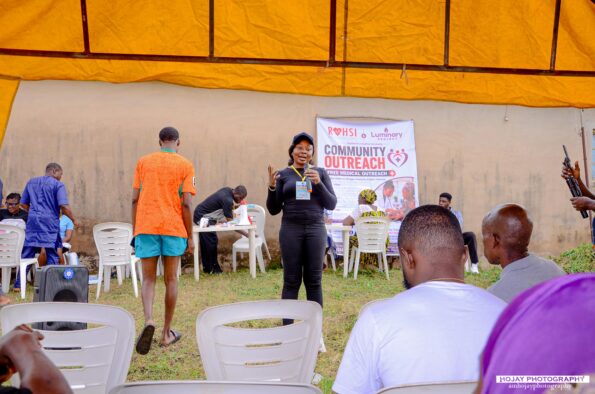
On Saturday, July 25, 2026, the quiet community of Balogun-Ajibode in Ibadan, Oyo State, witnessed something extraordinary. The Rays of Hope Support Initiative (ROHSI), in strategic partnership with The Luminary TLP Project, brought comprehensive
healthcare services directly to the doorsteps of underserved residents free of charge and without barriers.
For many of the 74 community members who attended, it was their first health check-up in years. The outreach, held at the proposed Balogun-Ajibode community, Primary Healthcare Centre from 8:30 AM to 2:00 PM, which was more than a medical mission—it was a lifeline.
But to understand the significance of this day, we must first understand the challenge. it sought to address.
In Nigeria’s peri-urban settlements like Balogun-Ajibode, access to quality healthcare remains a distant dream for many families. Financial constraints, limited proximity to health facilities and inadequate health literacy create a perfect storm of preventable suffering. Non-communicable diseases (NCDs) particularly hypertension and diabetes, have become silent killers, often going undiagnosed until it is too late.
ROHSI, established in March 2017, has been at the forefront of combating this burden. The organisation has educated over 10,000 people through community health outreaches across Lagos, Oyo, and Osun states, providing free screenings and medication to over 6,000 individuals. The Balogun Community Outreach represented the latest chapter in this ongoing mission.
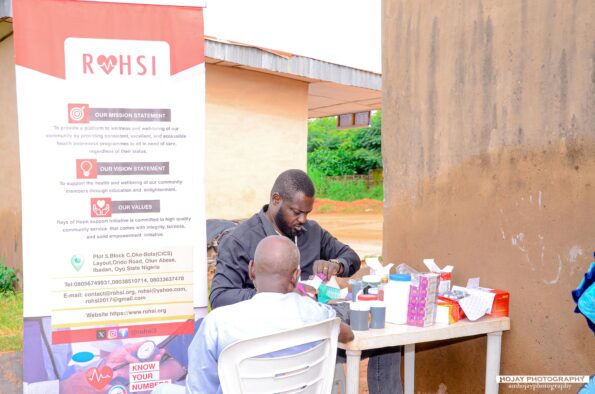
The Balogun Community Health Outreach was meticulously planned to ensure seamless service delivery. A multidisciplinary team comprising a medical doctor, nurses, dietitians, pharmacist, and support volunteers came together with a single purpose: to serve.
Every attendee received a full spectrum of care:
- Blood pressure checks, random/fasting blood sugar tests, Body Mass Index (BMI) assessments, and rapid diagnostic testing for malaria parasites.
- Comprehensive clinical evaluations by licensed doctors and chronic disease assessments.
- Dispensing of free, essential prescription medications and health supplements.
- One-on-one consultation with dietitians focused on practical dietary modifications for chronic disease prevention.
- Group interactive sessions covering preventive health practices, sanitation, and early symptom identification.
The scope of services reflected a holistic approach to health, one that addresses not just the symptoms but the underlying causes of poor health outcomes.
The outreach attracted 74 community members, with a demographic breakdown of 28 males (37.8%) and 46 females (62.2%). While these numbers tell a story of community engagement, the clinical findings reveal a more urgent narrative. Over 29%
of participants screened presented with undetected or unmanaged elevated cardiovascular or metabolic risks.
These findings are sobering. Eighteen individuals, nearly one in four attendees, were diagnosed with hypertension. Four others were found to have elevated blood sugar levels, indicating a risk of diabetes.
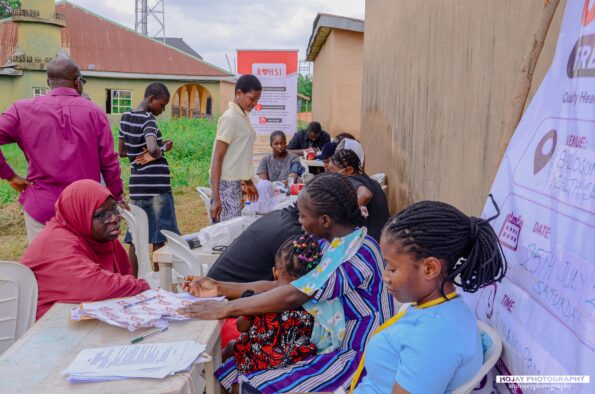
Several cases were entirely undiagnosed prior to the outreach, highlighting the critical importance of regular health screenings.
- Hypertension prevalence was notably higher among female participants.
- Age distribution spanned all demographic segments—children, adults, and the elderly.
- Several cases of pre-diabetes were identified, enabling early intervention.
Beyond the numbers and statistics, the outreach’s true significance lies in the human stories behind each diagnosis. For the elderly woman who had not seen a doctor in a while, the blood pressure check was a revelation. For the young father who discovered he was pre-diabetic, the dietary counselling was a wake-up call. For the mother and young productive adults who received free medication for their hypertension, the outreach was nothing short of a lifeline.
Community leaders and residents alike praised the initiative, describing it as a “beacon of hope” and a “lifeline” for families who would otherwise forgo healthcare due to financial constraints. The event fostered a sense of community solidarity and demonstrated the power of collaborative action in addressing social challenges.
The Balogun Health outreach delivered tangible results across multiple dimensions:
- 74 previously underserved individuals gained access to quality healthcare services.
that would otherwise have been out of reach.
- The identification of 18 hypertension cases and 4 elevated blood sugar cases
enabled timely intervention and referral, potentially preventing
life-threatening complications.
- Participants received vital health education that will inform future health decisions.
creating a ripple effect of health literacy throughout the community.
- The programme strengthened trust in health services and demonstrated the value of
community-based interventions, paving the way for future engagement
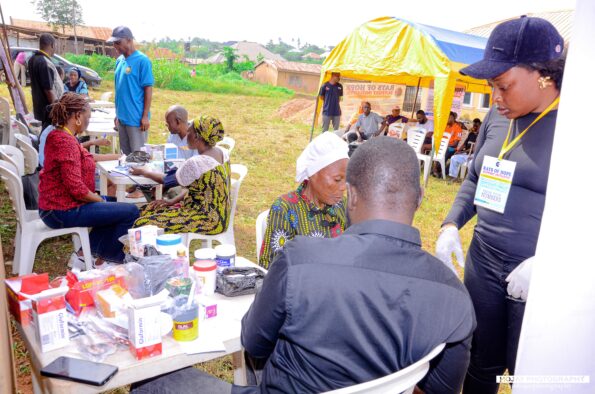
The success of this outreach would not have been possible without the unwavering commitment and selfless service of our valued partners starting from Luminary TLP Projects, the community leaders, our medical team and volunteers; the participants whose trust and agreement to be part made the event meaningful.
The Balogun Community Health Outreach represents a significant milestone in the ROHSI and Luminary Project’s shared mission to improve healthcare access and promote well-being in underserved communities. It demonstrated that when organisations and individuals unite with a common purpose, meaningful and lasting change becomes possible.
The silent killer’s hypertension and diabetes continue to claim lives in communities across Nigeria. But as the Balogun community outreach has shown, these diseases are not inevitable. With awareness, early detection, and access to care, they can be managed and even prevented. This outreach is not an endpoint to us; it is a stepping stone in a continuing journey to build. healthier, stronger, and more resilient communities.
The Rays of Hope Support Initiative welcomes partnerships, volunteers, and supporters who share its commitment to healthcare access for all. Whether through financial contributions, professional expertise, or simply spreading awareness, every effort brings us closer to a Nigeria where no community is left behind.
Together, we can continue to be a beacon of hope and a catalyst for positive change.
Rays of Hope Support Initiative (ROHSI): Changing Lives. Inspiring Hope. Building Stronger Communities.
Aug 1, 2026 | News
that behind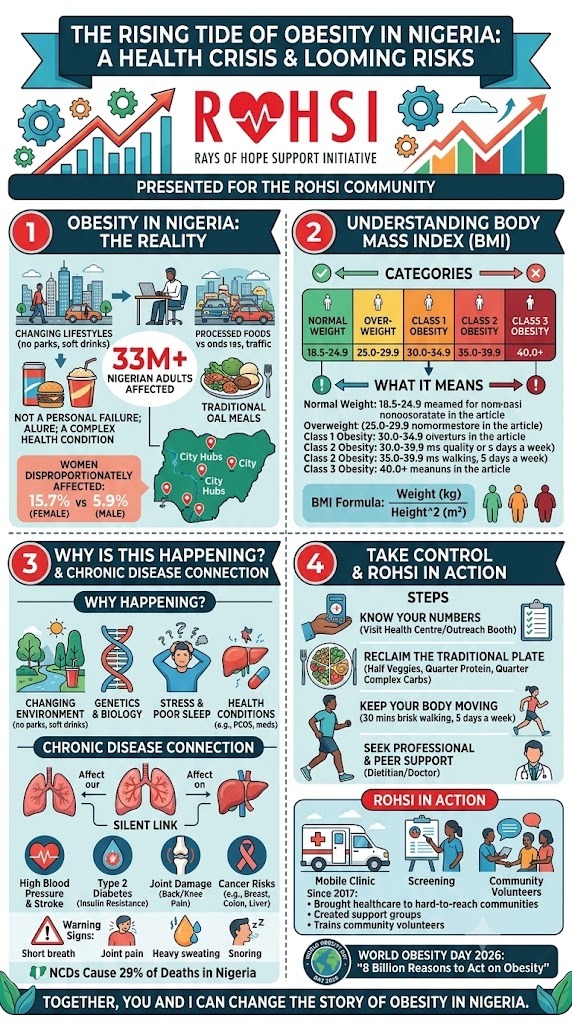 that behind
Benjamin Olorunfemi
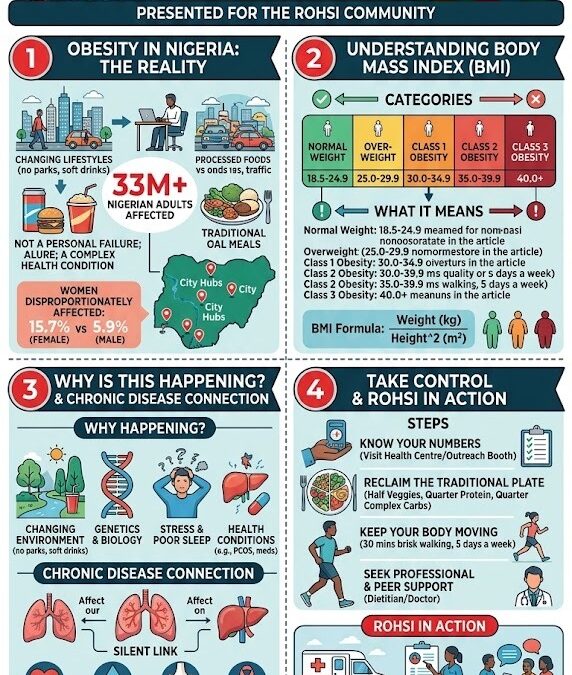
For many years, Nigerians viewed carrying extra weight as a sign of wealth and good living. Today, our lifestyles are changing rapidly. More people are moving to busy cities, sitting for longer hours at desk jobs or in traffic, and eating highly processed packaged foods instead of our traditional, fresh home-cooked meals.
Because of these changes, overweight and obesity have become a nationwide health crisis, affecting over 33 million Nigerian adults. Carrying too much weight is not a personal failure or a matter of willpower; it is a complex health condition that silently damages the body over time.
Understanding the Terms: Overweight vs. Obesity
Healthcare providers use a tool called “body mass index” (BMI) to see if a person’s weight is healthy for their height. It is calculated using a simple formula based on our height and weight.
While individual body types vary, the world standard health categories are broken down into clear ranges:
- Health Category
- BMI Range
- What it Means
Normal Weight: Healthy weight for your height.
18.5 – 24.9
Overweight – Carrying extra weight from fat, muscle, or water.
25.0 – 29.9
Class 1 Obesity – Excess body fat that actively begins to affect health.
30.0 – 34.9
Class 2 Obesity – Higher fat accumulation; increased medical risks.
35.0 – 39.9
Class 3 Obesity – Severe weight levels require urgent medical attention.
40.0 or higher
Note:
- Overweight means a person weighs more than what is considered healthy for their height.
- Obesity is a chronic, long-term disease where excessive body fat accumulates to the point that it actively harms internal organs.
Why is This Happening?
Weight gain fundamentally happens when the body takes in more calories from food and drinks than it burns off through daily movement. However, this imbalance is driven by a mix of real-world factors:
- The changing environment where modern cities lack safe parks or walkable pathways. Meanwhile, processed foods, sugary soft drinks, and cheap instant noodles have flooded local markets.
- Genetics and biology as one family DNA strongly affectfamily’show our body stores fat and signals when we are full or hungry.
- Daily stress and poor sleep change our body chemistry, making it easier to gain weight.
- Health Conditions & Medications like Polycystic Ovarian Syndrome (PCOS) or certain medications for blood pressure and depression can trigger weight gain.
The Chronic Disease Connection:
In its early stages, carrying extra weight might not cause any pain. However, it acts as a silent trigger for non-communicable diseases (NCDs), illnesses that cannot be passed from person to person but cause 29% of all deaths in Nigeria.
Note this silent link! Women are disproportionately affected by this crisis. Nationally, female obesity rates exceed 15.7% compared to 5.9% for men, with the highest rates found in urban hubs like Lagos, Abuja…
As excess weight builds up, it can cause visible warning signs like persistent shortness of breath, joint and knee pain, heavy sweating, and loud snoring (sleep apnoea). Inside the body, it causes severe, long-term complications:
- High blood pressure & stroke, where extra fat tissue forces the heart to pump harder, damaging blood vessels and heavily raising the risk of heart attacks.
- Type 2 diabetes where excess fat causes insulin resistance, meaning the body can no longer properly process blood sugar.
- Joint Damage: Carrying heavy weight wears down joint cartilage, causing chronic back, hip, and knee pain.
- Cancer risks where long-term inflammation from excess fat increases the risk of breast, colon, and liver cancers.
How to Take Control:
Managing your weight is a long-term journey. You do not have to do it alone—medical teams, including registered dietitians, doctors, and specialists, are trained to build safe, realistic plans for you.
Know your numbers; that is, get screened.
Visit a local health centre or a community outreach booth to check your weight, BMI, blood pressure, and blood sugar. Early checking saves lives because diabetes and high blood pressure often have no early symptoms.
Reclaim the Traditional Nigerian Plate:
Move away from fast food and sugary drinks. Use the healthy plate rule: fill half your plate with vegetables (like efo, utazi, or garden eggs), one-quarter with healthy protein (beans, fish, chicken, or eggs), and one-quarter with local complex carbohydrates (unprocessed rice, yam, or garri).
Keep Your Body Moving:
Aim for 30 minutes of moderate activity, like brisk walking, 5 days a week. Walk while taking phone calls, take the stairs instead of the elevator, and reduce long hours of sitting.
Seek Professional and Peer Support:
Consult a dietitian for a personalised meal plan that fits your budget. If lifestyle changes are not enough, doctors can discuss medical treatments or bariatric surgery for severe cases.
Since 2017, the Rays of Hope Support Initiative (ROHSI) has been working tirelessly to fight the rise of obesity, diabetes, and hypertension in Nigeria. At ROHSI we focus on helping the most vulnerable, which includes women, children, and older adults who live in hard-to-reach communities where medical care is scarce.
In these past years:
We have brought healthcare to the doorstep of the hard-to-reach community that cuts across states in Nigeria, providing free screenings, health education, medication, referrals, and follow-up.
Created a community where people living with obesity, hypertension, and diabetes can share their experiences, keep each other motivated, and learn together.
Trains community volunteers to teach their neighbours about healthy living, ensuring vital information reaches even the most remote areas.
On World Obesity Day 2026, under the global theme “8 Billion Reasons to Act on Obesity”, we reminded the nation that 1 in 5 Nigerian adults is living with obesity. That true change requires action from everyone—from individuals choosing fresh local foods to the government strictly enforcing policies like the sugar-sweetened beverage (SSB) tax and clear front-of-pack food labels.
Remember that, behind every statistic is a person, a family, and a community. Together, you and I can change the story of obesity in Nigeria.”
Jul 6, 2026 | Healthy Tips
Benjamin Olorunfemi
Living with a chronic or non-communicable disease (NCD) can sometimes feel like managing a complex puzzle. You are balancing medications, tracking symptoms, and trying to make the best lifestyle choices possible.
If there is one quiet hero your body needs in its corner right now, it is magnesium.
This single mineral is responsible for keeping your heart steady, your blood pressure stable, and your energy up. Yet, nearly half of us aren’t getting enough of it. Let’s break down in plain human language exactly why magnesium is so vital, how much you need, and how to safely bring more of it into your life.
Why Magnesium Matters: The Multi-Tasker in Your Body
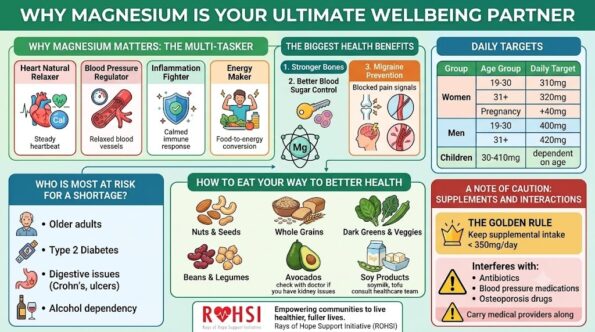
Think of magnesium as the ultimate manager for your internal systems. It powers over 300 biochemical reactions inside you. When it comes to managing long-term health issues, magnesium plays four critical roles:
- The Heart’s Natural Relaxer: Magnesium acts like a natural calcium blocker. While calcium helps your heart muscle contract to pump blood, magnesium steps in to help the muscle relax afterwards. soy milkdiarrhoea. Since your heart beats roughly 100,000 times a day, magnesium ensures each beat stays steady and strong.
- The Blood Pressure Regulator: By relaxing the walls of your blood vessels, magnesium allows blood to flow more freely, which naturally helps keep blood pressure numbers in a healthy range.
- The Inflammation Fighter: Chronic (long-term) inflammation is the root trigger for many complications in heart disease, arthritis, and diabetes. Magnesium acts as a protective buffer, calming down the immune system’s stress responses.
- The Energy Maker: If you are dealing with unexplained fatigue, low magnesium could be a factor. This mineral is essential for converting the food you eat into usable daily energy.
Daily Targets: How Much Do You Need?
Because our bodies use magnesium for so many daily tasks, running low over a long period can set the stage for major health hurdles—including type 2 diabetes, high blood pressure, irregular heartbeats, and severe migraines.
Here is a simple breakdown of what your body requires daily:
|
Group
|
Age Group
|
Daily Target
|
|
Women
|
19–30 years old
31 years and older
During Pregnancy
|
310 mg
320 mg
Add an extra 40 mg
|
|
Men
|
19–30 years old
31 years and older
|
400 mg
420 mg
|
|
Children
|
Dependent on age
|
30 mg to 410 mg
|
Who is most at risk for a shortage?
Older adults, individuals living with type 2 diabetes, those managing digestive issues (like Crohn’s disease or ulcers), or anyone dealing with alcohol dependency are much more likely to run low. This happens because the body either struggles to absorb the mineral properly or flushes too much of it out through the kidneys.
The Biggest Health Benefits
- Stronger Bones
Your body relies directly on magnesium to build new, healthy bone cells. Research shows that people living with osteoporosis (a condition that makes bones weak and brittle) consistently show lower levels of magnesium in their blood. Getting enough protects you against bone loss and sudden fractures.
- Better Blood Sugar Control
Magnesium helps insulin do its job effectively. Insulin is the hormone responsible for moving sugar out of your blood and into your cells for energy. When you have enough magnesium in your system, your body can keep blood sugar levels much steadier, lowering the risk of diabetes complications.
- Migraine Prevention
If you experience debilitating migraines, a magnesium deficiency might be partly to blame. Medical experts believe magnesium helps block pain-signalling chemicals in the brain and prevents the sudden tightening of blood vessels that triggers a painful attack.
How to Eat Your Way to Better Health
Getting your nutrients from real, whole foods is always the safest and most effective strategy. Luckily, there are plenty of delicious, accessible ways to add magnesium to your plate:
- Nuts and Seeds: Grab a handful of cashews, peanuts, or almonds for a quick snack. They are packed with the healthy fats and minerals your heart craves.
- Whole Grains: Ditch the processed white bread and white rice! Swap them for whole grains like brown rice, oats, or whole wheat bread. They retain all their natural fiber and high magnesium content.
- Dark Greens and Fresh Veggies: Leafy greens like spinach and kale are loaded with vitamins. Local favourites like okra are also incredibly rich in magnesium and excellent for your stews.
- Beans and Legumes: Beans are an incredible, budget-friendly source of magnesium that many of us skip. Kidney beans, black beans, and chickpeas are all fantastic choices.
- Avocados: Whether sliced, diced, or mashed, avocado is a nutrient powerhouse.
Note: If you are managing kidney-related health issues, please check with your doctor or dietitian before drastically increasing your avocado intake.
- Soy Products: A single cup of unsweetened soymilk provides around 60 mg of magnesium. Tofu is also a great option. (Check with your healthcare team before making soy a major part of your meal plan if you have specific dietary restrictions).
A Note of Caution: Supplements and Interactions
Can you have too much magnesium? If you get it entirely from food, healthy kidneys will naturally filter out and flush away any extra your body doesn’t use.
However, supplements are different. Taking too much supplemental magnesium—or overusing magnesium-heavy laxatives and antacids—can cause stomach cramps, nausea, and severe diarrhea.
The Golden Rule for Supplements
Keep your supplemental magnesium intake under 350 mg per day unless a doctor explicitly prescribes a higher dose for a specific medical reason.
Most importantly, magnesium can act like a sponge in your gut, binding to other medications and stopping them from working. It can interfere with:
- Certain antibiotics
- Blood pressure medications
- Osteoporosis drugs
Always carry your medical providers along
Never start a new supplement without talking to your healthcare team first, especially if you have existing kidney problems. Bring a list of everything you take to your next clinic visit, ask questions, and make sure any new change fits safely into your daily care plan. Your health and wellbeing are worth the conversation!
Note! Magnesium may be a small mineral, but it plays a giant role in your health. Start small today: add a handful of nuts to your snack routine, swap white rice for brown, or toss some extra okra and spinach into your next soup. Your heart will thank you!
Rays of Hope Support Initiative (ROHSI): Empowering communities to live healthier, fuller lives.
May 3, 2026 | Healthy Tips
Benjamin Olorunfemi – ROHSI
In our community, we talk a lot about the joy of childbirth and the beauty of raising a family. But there is a season that comes afterward—a “silent transition” that many of our mothers and sisters went through in secret. We often call it “the change of life”, yet many of our women enter this phase feeling confused, irritable, or even fearful that they are falling ill.
This article is for our women to enlighten those in the thick of it and to prepare our younger daughters for the journey ahead.
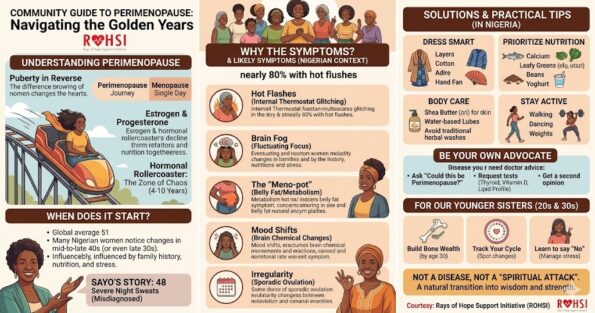
Think of perimenopause as “puberty in reverse”. Just as our young girl’s body takes years to transition into her childbearing years, a woman’s body takes time to transition out of them.
Medically, menopause is a single day—the one-year anniversary of our last period. Perimenopause, which means “around menopause”, is the entire journey that leads to that day. During this time, our ovaries, which have been diligently producing hormones for decades, begin their slow retirement. They start making less oestrogen and progesterone.
But here’s the key: the decline isn’t a smooth, gentle slope. It’s more like a hormonal rollercoaster, with levels surging and plunging unpredictably. This “zone of chaos” can last anywhere from four to ten years, and it’s the cause of the many changes our women experience.
While the global average for menopause is around 51, many Nigerian women begin to notice perimenopausal changes in their mid-to-late 40s. For some, it can start as early as their late 30s.
Think of Sayo (not her real name), a 48-year-old woman who started having night sweats so severe she had to change her clothes multiple times a night. She visited her local clinic and was given vitamins and told to “rest more”. It was only when a friend mentioned menopause that the pieces of the puzzle finally came together. Her story is the story of millions of our women.
Factors like our family history, nutrition, and even the chronic stress of our daily lives can influence when our body begins this shift. A good rule of thumb? If our mother started early, there’s a high chance one might too.
In Nigeria, research shows that nearly 80% of women experience hot flushes, and many others struggle with fatigue and joint pain. Because oestrogen affects everything from our brain to our bones, the symptoms can show up in many ways:
Likely symptoms:
Hot flashes – a sudden wave of intense heat, often followed by chills, and why? Our “internal thermostat” is glitching due to low oestrogen.
Brain Fog – Forgetfulness or feeling like you can’t concentrate, and why? Oestrogen helps the brain function; when it fluctuates, focus slips.
The “meno-pot” – weight gain specifically around the belly – and why? Our metabolism slows down, and the body stores fat differently.
Mood Shifts – Sudden irritability, anxiety, or sadness and why? Hormones directly affect our “feel-good” brain chemicals.
Irregularity – Periods that are too heavy, too light, or skip months, and why? Ovulation is becoming sporadic.
Solutions:
Dress in layers. Use breathable fabrics like cotton or Adire. Let us keep a traditional hand fan in our bag for church services or market trips.
Our local diets can be high in carbs, so let us prioritise calcium-rich foods like sardines (with the bones), leafy green vegetables (efọ and utazi), beans, and yoghurt.
For dry skin, shea butter (ori) is excellent. For vaginal dryness, use water-based lubricants—avoid “traditional” herbal washes that might cause irritation or infection.
Walking, dancing, or lightweight-bearing exercise helps keep our bones strong and our mood lifted.
Ma, if we feel something is “off”, let us be our own advocate. When visiting a doctor, let us ask specifically: “Could this be perimenopause?” We can request tests for our thyroid, vitamin D, and heart health (lipid profile). If a provider dismisses our symptoms as “just stress” without a proper check-up, we should not be afraid to seek a second opinion.
For Our Younger Sisters (20s & 30s)
You are not “too young” to prepare! Your future self will thank you if you:
- Build Bone Wealth! Most bone density is built by age 30. Eat well and exercise now.
- Track Your Cycle! Knowing what is “normal” now will help you spot “changes” later.
- Learn to say “No”: Chronic stress wreaks havoc on your hormones. Practise healthy boundaries today.
We should all remember that perimenopause is not a disease, and it is not a “spiritual attack”. It is a natural transition into a phase of strength and wisdom.
Apr 7, 2026 | Healthy Foods
Hello ROHSI Family,
We’ve all heard the term “gut health” floating around, and we know it’s supposed to be a good thing. But in our journey toward whole-body wellness, it’s time to understand why it’s so fundamental. Think of your gut not just as a part of you but as the very foundation of your health. When the foundation is strong, the whole house stands firm.
What Does “Good Gut Health” Really Mean?
Simply put, good gut health is about balance. Inside your digestive system lives a vast, bustling community of microorganisms, bacteria, yeasts, and other microbes collectively known as your gut microbiome. A healthy gut occurs when there’s a harmonious balance between the “good” (helpful) and the “bad” (potentially harmful) microbes.
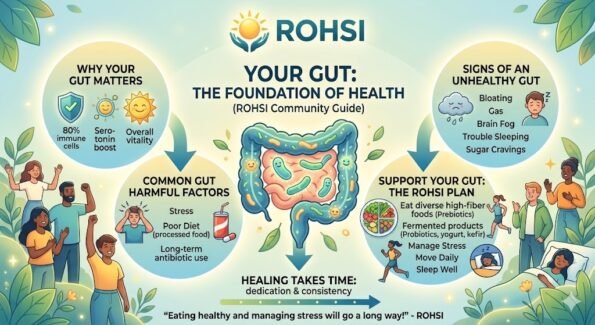
This isn’t just about digestion. In fact, 80% of your immune system resides in your gut! It’s also a major production site for neurotransmitters, including the “feel-good” hormone serotonin. This means your gut health is directly linked to your immunity and your mood. If your gut is out of balance, your immune system can weaken, and your emotional well-being can suffer.
What Can Throw Our Gut Out of Balance?
Our modern lifestyle can be tough on our internal ecosystem. Several factors can tip the scales, leading to an overgrowth of the bad bacteria. The most common culprits include the following:
Chronic Stress: When we’re stressed, it can increase intestinal permeability (often called “leaky gut”). This allows toxins to escape the gut and enter the bloodstream, disrupting the delicate balance of our microbiome.
Poor Nutrition: A diet high in processed foods, sugar, and unhealthy fats can feed the harmful bacteria, causing inflammation throughout the body and starving the beneficial bacteria that keep us healthy.
Overuse of Medications: While sometimes necessary, long-term use of antibiotics and antacids can have a negative impact. Antibiotics don’t discriminate; they kill both the bad bacteria causing an infection and the good bacteria we need. Antacids can decrease nutrient absorption, like B12, which is vital for energy and brain function. Always consult with your physician about the risks and benefits of any long-term medication.
How Your Gut Affects Your Whole Life
When your gut is thriving, you feel it from head to toe. Here’s how a healthy gut positively impacts your overall well-being:
Think of your gut as your body’s first line of defence. Beneficial bacteria train your immune cells to fight off real threats and maintain a strong gut barrier, preventing harmful substances from entering your bloodstream.
The “gut-brain axis” is a real and powerful connection. A healthy gut produces mood-regulating neurotransmitters like serotonin and dopamine. This is why a balanced gut can lead to a calmer mind, reduced anxiety, and better mental clarity. Conversely, an unhealthy gut can contribute to brain fog and mood swings.
A balanced microbiome is a master at breaking down food and extracting the vitamins and minerals your body needs to function. It also helps regulate waste removal, keeping your system running smoothly.
Your gut bacteria play a role in regulating your metabolism, blood sugar, and insulin sensitivity. An imbalanced gut can make it harder to maintain a healthy weight and is linked to metabolic issues.
An unhealthy gut can trigger chronic, low-grade inflammation throughout the body. This type of inflammation is a root cause of many chronic diseases, including autoimmune conditions, heart disease, and irritable bowel syndrome (IBS).
Is Your Gut Trying to Tell You Something?
An unhealthy gut doesn’t always just announce itself with a stomach ache. While gas, bloating, constipation, and diarrhoea are common signs, there are other, less obvious clues:
- Unexplained fatigue or poor sleep
- Skin irritations
- Autoimmune conditions (like Hashimoto’s, rheumatoid arthritis, or Type 1 diabetes)
- Brain fog, headaches, and poor concentration
- Intense cravings for sugar or carbs
- Moodiness, anxiety, or depression
If any of these resonate with you, it might be time to show your gut some love.
Healing your gut is a journey, not a race. Start with these simple foundational steps:
Eat a diverse range of whole foods. Focus on high-fibre foods (prebiotics) like fruits, vegetables, legumes, and whole grains to feed your good bacteria. Incorporate fermented foods (probiotics) like plain yoghurt, kefir, sauerkraut, and kimchi to introduce more beneficial bugs.
Your gut and brain are deeply connected. Manage your stress levels through activities you enjoy, whether it’s gentle movement, deep breathing, or time in nature. Prioritise regular exercise and aim for 7-9 hours of quality sleep each night.
Remember, your microbiome didn’t become unbalanced overnight, and it won’t be restored overnight either. Some people may need additional, targeted support from a healthcare provider, but for everyone, the journey starts here.
At Rays of Hope Support Initiative (ROHSI), we believe in empowering you with knowledge and compassionate support. Nourishing your body with healthy foods and managing your stress are powerful acts of self-care that will pave the way on your road to recovery and optimal well-being. Your gut is the root—let’s nurture it together.
