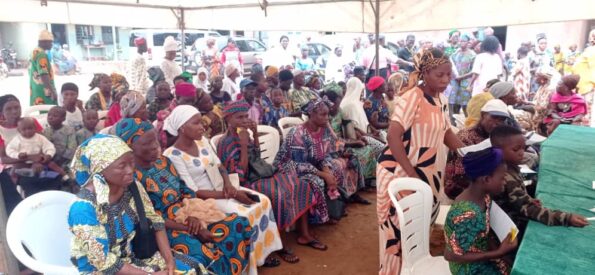
TACKLING THE SILENT KILLERS: TAKING NCDS ADVOCACY TO THE DOORSTEPS OF UNDERSERVED COMMUNITIES IN NIGERIA
By: Benjamin Olorunfemi
In communities across Nigeria, a silent epidemic is claiming more lives than many infectious diseases, yet it barely makes a sound until it is too late. Non-communicable diseases (NCDs), particularly hypertension and diabetes, have escalated into a public health emergency. Current statistics paint a grim picture: more than 20 million Nigerians are living with hypertension, and over 11 million are battling diabetes. Alarmingly, more than half of these individuals are completely unaware of their health status, walking around with a time bomb ticking in their chests.
For the average Nigerian in an underserved community where health facilities are miles away and the cost of a simple blood pressure check is a luxury, these are not just numbers; they are fathers, mothers, and youths resigning to fate simply because they cannot afford or access care. These are the people who fall through the cracks of our healthcare system. This is where our work at the Rays of Hope Support Initiative (ROHSI) becomes not just relevant, but essential.
Since 2017, we have been at the forefront of combating this burden in Ibadan and beyond. We have seen firsthand that the fight against NCDs cannot be won within the four walls of a hospital alone; it must be taken to the people. We have educated over 10,000 citizens, reached more than 5,000 direct beneficiaries with free screenings and medication, and built a thriving community of over 250 members who now have access to daily health tips. Our work proves that when you empower a person with knowledge and access, you give them a fighting chance.
However, to truly curb the negative health impacts of hypertension and diabetes, we must scale up our strategies and go deeper—right to the heart of our local communities. One of the most effective, yet often untapped, pathways to achieving this is through a deliberate and structured partnership with Community Development Association (CDA) executives.
Here is why this partnership is the key to unlocking better health outcomes for the underserved:
The Gatekeepers of Trust
In rural and semi-urban settings, the CDA executive is the most influential body. They are the gatekeepers of the community. While a flyer from a distant hospital might be ignored, an announcement at the town hall meeting or a directive from the CDA chairman is respected. By partnering with these executives, we aren’t just visitors; we become collaborators with the community’s leadership. They help us navigate the cultural nuances and mobilise their people, ensuring that when we show up, the community shows up with us.
Creating a “Hypertension-Smart” Community
Through our model, we work with CDAs to designate local champions, trained volunteers from within the community who understand the language and the lifestyle of their neighbours. These champions, backed by ROHSI’s medical team, can conduct regular, informal blood pressure and blood sugar checks at local markets, churches, or mosques. Instead of waiting for people to come to the hospital, we bring the hospital to their doorstep. This approach mirrors the proven effectiveness of using Community Health Extension Workers (CHEWs) to manage NCDs, as they become trusted figures leading health education efforts.
Leveraging Local Gatherings for Screening
Most communities have existing structures for weekly/monthly meetings, annual festivals, or town hall gatherings. These are missed opportunities for health interventions. By partnering with CDAs, we can integrate free screening exercises into these events. As we have seen with initiatives like Nigeria’s “Project 10 million”, the goal is to help people “know their number”. Imagine a community meeting where, after discussing local development, every adult present knows their blood pressure reading. That is preventive healthcare in action.
Affordability and Local Support
One of the biggest barriers to managing NCDs is the cost of medication. A diagnosis of hypertension can feel like a death sentence to a low-income earner who cannot afford daily pills. Through our partnerships with CDAs, we can help facilitate community-based medication support schemes.
Data Collection and Referral Pathways
CDAs have an intimate knowledge of their population. They know who is elderly, who is sick, and who has been unable to leave their home. Partnering with them allows us to build a more accurate picture of NCD prevalence in hard-to-reach areas. We can then establish a clear referral pathway: screening at the community level, followed by linkage to care at primary health centres.
We need to know that the fight against hypertension and diabetes in Nigeria is a fight for the soul of our communities. It requires us to be innovative, mobile, and deeply integrated. At Rays of Hope Support Initiative, we have the template, the experience, and the passion. But we cannot do it alone.
We call on community development associations across the country to open their doors to this kind of partnership. Let us work together to ensure that no one in our community dies from a disease we can prevent or manage. Let us take the message of hope—and the tools for health—directly to the doorsteps of those who need it most. Because a healthy community is the foundation of a prosperous nation.
Join us. Partner with ROHSI. Let’s bring hope to the doorstep of every Nigerian.