Mar 1, 2026 | Healthy Moves
By: Benjamin Olorunfemi
In communities across Nigeria, a silent epidemic is claiming more lives than many infectious diseases, yet it barely makes a sound until it is too late. Non-communicable diseases (NCDs), particularly hypertension and diabetes, have escalated into a public health emergency. Current statistics paint a grim picture: more than 20 million Nigerians are living with hypertension, and over 11 million are battling diabetes. Alarmingly, more than half of these individuals are completely unaware of their health status, walking around with a time bomb ticking in their chests.
For the average Nigerian in an underserved community where health facilities are miles away and the cost of a simple blood pressure check is a luxury, these are not just numbers; they are fathers, mothers, and youths resigning to fate simply because they cannot afford or access care. These are the people who fall through the cracks of our healthcare system. This is where our work at the Rays of Hope Support Initiative (ROHSI) becomes not just relevant, but essential.
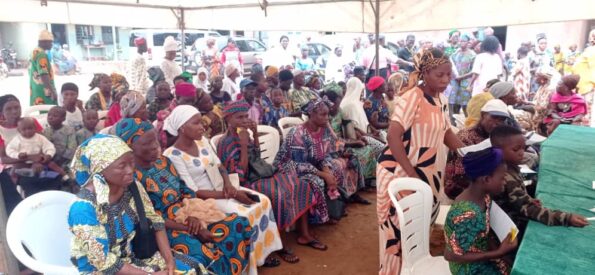
Since 2017, we have been at the forefront of combating this burden in Ibadan and beyond. We have seen firsthand that the fight against NCDs cannot be won within the four walls of a hospital alone; it must be taken to the people. We have educated over 10,000 citizens, reached more than 5,000 direct beneficiaries with free screenings and medication, and built a thriving community of over 250 members who now have access to daily health tips. Our work proves that when you empower a person with knowledge and access, you give them a fighting chance.
However, to truly curb the negative health impacts of hypertension and diabetes, we must scale up our strategies and go deeper—right to the heart of our local communities. One of the most effective, yet often untapped, pathways to achieving this is through a deliberate and structured partnership with Community Development Association (CDA) executives.
Here is why this partnership is the key to unlocking better health outcomes for the underserved:
The Gatekeepers of Trust
In rural and semi-urban settings, the CDA executive is the most influential body. They are the gatekeepers of the community. While a flyer from a distant hospital might be ignored, an announcement at the town hall meeting or a directive from the CDA chairman is respected. By partnering with these executives, we aren’t just visitors; we become collaborators with the community’s leadership. They help us navigate the cultural nuances and mobilise their people, ensuring that when we show up, the community shows up with us.
Creating a “Hypertension-Smart” Community
Through our model, we work with CDAs to designate local champions, trained volunteers from within the community who understand the language and the lifestyle of their neighbours. These champions, backed by ROHSI’s medical team, can conduct regular, informal blood pressure and blood sugar checks at local markets, churches, or mosques. Instead of waiting for people to come to the hospital, we bring the hospital to their doorstep. This approach mirrors the proven effectiveness of using Community Health Extension Workers (CHEWs) to manage NCDs, as they become trusted figures leading health education efforts.
Leveraging Local Gatherings for Screening
Most communities have existing structures for weekly/monthly meetings, annual festivals, or town hall gatherings. These are missed opportunities for health interventions. By partnering with CDAs, we can integrate free screening exercises into these events. As we have seen with initiatives like Nigeria’s “Project 10 million”, the goal is to help people “know their number”. Imagine a community meeting where, after discussing local development, every adult present knows their blood pressure reading. That is preventive healthcare in action.
Affordability and Local Support
One of the biggest barriers to managing NCDs is the cost of medication. A diagnosis of hypertension can feel like a death sentence to a low-income earner who cannot afford daily pills. Through our partnerships with CDAs, we can help facilitate community-based medication support schemes.
Data Collection and Referral Pathways
CDAs have an intimate knowledge of their population. They know who is elderly, who is sick, and who has been unable to leave their home. Partnering with them allows us to build a more accurate picture of NCD prevalence in hard-to-reach areas. We can then establish a clear referral pathway: screening at the community level, followed by linkage to care at primary health centres.
We need to know that the fight against hypertension and diabetes in Nigeria is a fight for the soul of our communities. It requires us to be innovative, mobile, and deeply integrated. At Rays of Hope Support Initiative, we have the template, the experience, and the passion. But we cannot do it alone.
We call on community development associations across the country to open their doors to this kind of partnership. Let us work together to ensure that no one in our community dies from a disease we can prevent or manage. Let us take the message of hope—and the tools for health—directly to the doorsteps of those who need it most. Because a healthy community is the foundation of a prosperous nation.
Join us. Partner with ROHSI. Let’s bring hope to the doorstep of every Nigerian.

May 31, 2025 | Healthy Tips

Every year on May 31, the world observes World No Tobacco Day (WNTD), a global initiative led by the World Health Organisation (WHO) to raise awareness about the dangers of tobacco use and advocate for stronger policies to reduce its consumption. This year’s theme, “Unmasking the Appeal”, focuses on the deceptive strategies employed by the tobacco and nicotine industries to attract new users, particularly young people.
As a leading non-communicable diseases (NCDs) support organisation based in Ibadan, Oyo State, Nigeria, Rays of Hope Support Initiative (ROHSI) stands with the global community in amplifying the call for tobacco control, public health protection, and policy enforcement.
The global tobacco epidemic is a formidable threat, claiming over 8 million lives annually worldwide. Of these, more than 7 million deaths are a direct result of tobacco use, while an alarming 1.3 million deaths are due to non-smokers being exposed to second-hand smoke. This exposure is a critical concern for ROHSI, as it also significantly increases the risk of NCDs in non-smokers.
In Nigeria, the situation is alarming:
- 3.4 million Nigerians (2.9% of adults aged 15+) smoke tobacco (2022 data).
- Male smokers (5.4%) far outnumber female smokers (0.4%).
- Tobacco-related diseases – cancer, heart disease, respiratory illnesses, and stroke – place a heavy burden on Nigeria’s healthcare system.
- Economic losses from tobacco-related illnesses and productivity decline further strain families and the nation.
While reports, such as one from the Tribune newspaper, suggest higher smoking prevalence in some northern states, ROHSI emphasises that tobacco use and its link to NCDs is a pressing issue across all regions, including Oyo State.
At ROHSI, we see firsthand the devastating impact of tobacco on individuals and families affected by NCDs here in Ibadan and across Nigeria.
This World No Tobacco Day, under the theme ‘Unmasking the appeal’, we urge a united front to expose the tobacco industry’s tactics that endanger our youth and perpetuate the cycle of NCDs. The first and most crucial step towards a healthier life, free from the threat of many NCDs, is to say NO to tobacco.
ROHSI encourages every Nigerian to reflect on the popular calls to action: “Breathe clean, live green. Quit tobacco today.”
The ROHSI team challenges every individual in Ibadan, Oyo State, and throughout Nigeria to consider making this powerful pledge: “Today, I am pledging to quit all forms of tobacco and nicotine, including cigarettes, smokeless tobacco products, heated tobacco products, e-cigarettes, nicotine pouches, shisha, and other harmful products, for my health and the health of my community.”
Join us in educating others on the dangers of tobacco and industry tactics, support smoke-free policies in workplaces, schools, and public spaces, advocate for stronger tobacco control laws in Nigeria, and help promote cessation programmes through counselling and support.
Together, we can unmask the truth and build a healthier, tobacco-free Nigeria!
About ROHSI:
Rays of Hope Support Initiative (ROHSI) is a Nigerian non-profit organisation based in Ibadan, Oyo State, dedicated to combating non-communicable diseases (NCDs) through awareness, advocacy, and community support programmes.
#NoTobacco #TobaccoFreeGeneration #PublicHealth #WHO_Africa #WorldNoTobaccoDay #ROHSI3 #Nigeria #Africa #Ibadan #NCDs #WHO_Nigeria #WHO_Africa #WHO #TobaccoFree #QuitSmoking #HealthForAll #NNNGO #NCDAlliance #TobaccoFreeNigeria #HealthForAll #FMoH #NPHCDA #NIgerian

Mar 10, 2023 | Healthy Foods
MASSIVE EFFORTS NEEDED TO REDUCE SALT INTAKE AND PROTECT LIVES
A first-of-its-kind World Health Organization (WHO) Global report on sodium intake reduction shows that the world is off-track to achieve its global target of reducing sodium intake by 30% by 2025.
Sodium, an essential nutrient, increases the risk of heart disease, stroke and premature death when eaten in excess. The main source of sodium is table salt (sodium chloride), but it is also contained in other condiments such as sodium glutamate. The report shows that only 5% of WHO Member States are protected by mandatory and comprehensive sodium reduction policies and 73% of WHO Member States lack full range of implementation of such policies.
Implementing highly cost-effective sodium reduction policies could save an estimated 7 million lives globally by 2030. It is an important component of action to achieve the Sustainable Development Goal target of reducing deaths from noncommunicable diseases. But today, only nine countries (Brazil, Chile, Czech Republic, Lithuania, Malaysia, Mexico, Saudi Arabia, Spain and Uruguay) have a comprehensive package of recommended policies to reduce sodium intake.
“Unhealthy diets are a leading cause of death and disease globally, and excessive sodium intake is one of the main culprits,” said Dr Tedros Adhanom Ghebreyesus, WHO Director-General. “This report shows that most countries are yet to adopt any mandatory sodium reduction policies, leaving their people at risk of heart attack, stroke, and other health problems. WHO calls on all countries to implement the ‘Best Buys’ for sodium reduction, and on manufacturers to implement the WHO benchmarks for sodium content in food.”
A comprehensive approach to sodium reduction includes adopting mandatory policies and WHO’s four “best buy” interventions related with sodium which greatly contribute to preventing noncommunicable diseases. These include:
- Reformulating foods to contain less salt, and setting targets for the amount of sodium in foods and meals
- Establishing public food procurement policies to limit salt or sodium rich foods in public institutions such as hospitals, schools, workplaces and nursing homes
- Front-of-package labelling that helps consumers select products lower in sodium
- Behaviour change communication and mass media campaigns to reduce salt/sodium consumption
Countries are encouraged to establish sodium content targets for processed foods, in line with the WHO Global Sodium Benchmarks and enforce them though these policies.
Mandatory sodium reduction policies are more effective, as they achieve broader coverage and safeguard against commercial interests, while providing a level playing field for food manufacturers. As part of the report, WHO developed a Sodium country score card for Member States based on the type and number of sodium reduction policies they have in place.
“This important report demonstrates that countries must work urgently to implement ambitious, mandatory, government-led sodium reduction policies to meet the global target of reducing salt consumption by 2025,” said Dr Tom Frieden, President, and CEO of Resolve to Save Lives, a not-for-profit organization working with countries to prevent 100 million deaths from cardiovascular disease over 30 years. “There are proven measures that governments can implement and important innovations, such as low sodium salts. The world needs action, and now, or many more people will experience disabling or deadly—but preventable—heart attacks and strokes.”
The global average salt intake is estimated to be 10.8 grams per day, more than double the WHO recommendation of less than 5 grams of salt per day (one teaspoon). Eating too much salt makes it the top risk factor for diet and nutrition-related deaths. More evidence is emerging documenting links between high sodium intake and increased risk of other health conditions such as gastric cancer, obesity, osteoporosis, and kidney disease.
WHO calls on Member States to implement sodium intake reduction policies without delay and to mitigate the harmful effects of excessive salt consumption. WHO also calls on food manufacturers to set ambitious sodium reduction targets in their products.
To read the report, visit: https://www.who.int/publications/i/item/9789240069985

Aug 22, 2021 | News
DIABETES NEXT EPIDEMIC IN NIGERIA
By Sola Ogundipe
The growing number of people living with diabetes mellitus in Nigeria is worrisome and an explosion in the number of diabetic patients may be imminent if urgent measures are not taken to address the trend.
The World Health Organisation, WHO, estimates for Nigeria, show that 4 million Nigerians are diabetic, and nearly 4 – 11 per cent of the population lives with diabetes.
Experts say it is getting commoner worldwide with the number of affected people rising yearly with projections showing that Africa and Nigeria in particular, is likely to experience the highest increase in the near future. The International Diabetes Federation estimates that by 2040, the global prevalence of diabetes is likely to affect 10 per cent of humanity.
Currently, diabetes care is poorly coordinated, especially at the primary and secondary public health care centres.
Many Nigerians are living with undetected diabetes and even for those that have been diagnosed, just a fraction is receiving proper care and treatment.
A recent study showed that pooled prevalence of diabetes mellitus in the six geopolitical zones were 3.0 percent in the northwest, 5.9 per cent in the northeast, 3.8 percent in the north-central zone, 5.5 percent in the southwest, 4.6 percent, in the south-east, and 9.8 percent in south-south zone.
Findings by Good Health Weekly reveal diabetes screening programmes are few across the States and have limited impact.
The steady increase of diabetic foot, a major complication of diabetes mellitus is equally worrisome.
Many people living with diabetes lack basic knowledge and information about diabetes foot care even as reliable support for diabetic foot care programmes are largely unavailable, leading to poor outcomes for the patient.
Nigeria is currently the most affected country in Africa. It is estimated that over four million Nigerians are living with either the type 1 or type 2 diabetes and findings show that more than 50 per cent the persons with diabetes in the country are unaware that they have the disease.
More than 1 in 3 people with diabetes will develop” a complication of the eyes known as diabetic retinopathy. There is also high prevalence of complications such as diabetic foot among diabetics who risk suffering nerve damage and end up losing their limbs from amputation.
Findings by Good Health Weekly show that patients with diabetes are 25 times more likely to have amputations than people without diabetes.
The amputations unfortunately often do not only result in the loss of the limb but in the loss of life of the patient. Worse still, treatment for diabetic foot complications is the most expensive part of diabetes care even though there is no guarantee that the leg or the life of the patient will be saved.
“Diabetic foot is one of the commonest reasons for prolonged hospitalization in tertiary hospitals. The patient suffers nerve damage to the affected limb even as the tissues develop ulcers, infection sets in and it begins to decay (gangrene),
With the majority of patients financing their medical bills out of pocket, several diabetic patients fail to adhere to their medications and tests. Only 1 in 5 of the patients perform self–blood glucose monitoring among other tests. Several patients even resort to traditional treatment and complementary alternative medicine options.
Today, many Nigerians have become victims of foot amputation, stroke, blindness, kidney failure, heart attack, among other serious conditions, all linked to diabetes.
Already, the rate of amputation among Nigerians living with diabetes is as high as 53.2 per cent of the number of people with foot ulcers in some centres across the country, making diabetic foot the most common cause of non-traumatic amputation in the lower extremities in the country.
“Diabetes places an extra burden on the individuals and families affected, especially for the majority of patients unable to access quality health care,” said Prof Femi Fasanmade. an endocrinologist at the Lagos University Teaching Hospital, LUTH.
Many patients report late to the health care centre when they have developed advanced disease making treatment and care difficult.
A Consultant Endocrinologist and diabetes expert, Dr Afoke Isiavwe, who is the Medical Director of Rainbow Specialist Medical Centre, Lagos, said diabetes is not getting the attention it deserves even as she decried the current situation whereby a lot of Nigerians are living with undetected diabetes.
“Diabetes is not getting the attention it deserves. There is a bigger problem coming in the near future and if we don’t get the right attention now, people will continue to die.
“We need to address the situation urgently. It is affecting the poor, the rich, the young and the old. What we need to do is set up centres that offer free screening and care for diabetes,” she argued.
An examination of the diabetes burden within sub-Sahara Africa showed that the region has the highest potential by an estimated 156 per cent increase by 2045.
“By 2040, 642 million will be diabetic. Diabetes kills more than HIV, TB and malaria combined and this is made worse by the fact that there are no dedicated diabetes centre in Nigeria. Worse still, mortality rate following diabetic foot amputation is higher than for breast cancer.
Among the main reasons for the expected rise are ageing population, increasing urbanization, (sedentary lifestyle) reducing physical activity and increasing obesity.
Noting that it is long overdue for all the States of the Federation to have dedicated diabetes Centres, Isiavwe said there are currently 16 million persons affected by diabetes, but the figure will rise in coming years.
“There is a very urgent need for all hands and voices involved in the diabetes circle – persons living with diabetes, advocacy groups and associations, diabetes care providers, Diabetes Health Care Trainers, policymakers, etc., to be united to birth the right atmosphere for both primary and secondary prevention of diabetes mellitus in Nigeria.
In her research on diabetes foot in Nigeria, Prof Anthonia Ogbera, an Endocrinologist and Consultant at the Lagos State University Teaching Hospital documented the financial burden of diabetic foot problem in the country.
The research published in 2005 showed that the direct costs of treating the diabetic foot ulcer were about 1000 Euros (N400,000), whereas the average monthly wage was about 46 Euros (N18,000).
Findings reveal that today, even the proposed average monthly wage of N30,000 would be inadequate.
“The accompanying social, emotional, and psychological implications of diabetes foot ulcers and amputations are severe, with high mortality rates. A foot care programme including education about foot care should be directed at patients and also at health-care providers.
“All health professionals should have the knowledge and skills to help individuals and families manage diabetes. It is important that every clinic is set up to provide appropriate care and to know when to refer patients to the Endocrinologist/diabetes specialist.”
Isaiavwe said training in Podiatry, a branch of medicine dedicated to the study, diagnosis, medical and surgical treatment of disorders of the foot, ankle, and lower extremities, should be part of the package.
Coping tips
Diagnosis
Early diagnosis can be accomplished through relatively inexpensive testing of blood sugar Treatment
Treatment involves diet and physical activity along with lowering blood glucose and the levels of other known risk factors that damage blood vessels.
Maintenance of blood glucose control, particularly for people with type 1 diabetes who require insulin. People with type 2 diabetes can be treated with oral medication but may also require insulin.
Maintain blood pressure control and foot care.
Prevention
Adopt simple lifestyle measures such as maintaining healthy body weight, being physically active eating a healthy diet, avoiding sugar and saturated fats intake, and avoiding tobacco use. Go for regular screening for early signs of diabetes-related kidney disease and treatment.
