
Hello ROHSI Family,
We’ve all heard the term “gut health” floating around, and we know it’s supposed to be a good thing. But in our journey toward whole-body wellness, it’s time to understand why it’s so fundamental. Think of your gut not just as a part of you but as the very foundation of your health. When the foundation is strong, the whole house stands firm.
What Does “Good Gut Health” Really Mean?
Simply put, good gut health is about balance. Inside your digestive system lives a vast, bustling community of microorganisms, bacteria, yeasts, and other microbes collectively known as your gut microbiome. A healthy gut occurs when there’s a harmonious balance between the “good” (helpful) and the “bad” (potentially harmful) microbes.
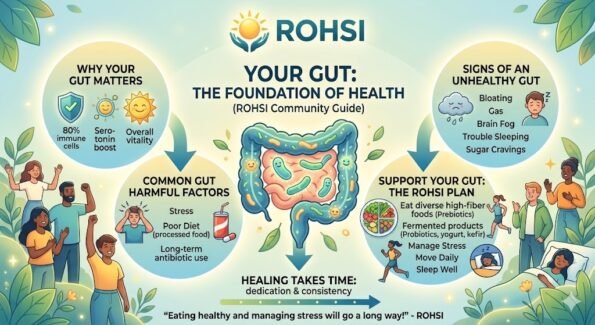
This isn’t just about digestion. In fact, 80% of your immune system resides in your gut! It’s also a major production site for neurotransmitters, including the “feel-good” hormone serotonin. This means your gut health is directly linked to your immunity and your mood. If your gut is out of balance, your immune system can weaken, and your emotional well-being can suffer.
What Can Throw Our Gut Out of Balance?
Our modern lifestyle can be tough on our internal ecosystem. Several factors can tip the scales, leading to an overgrowth of the bad bacteria. The most common culprits include the following:
Chronic Stress: When we’re stressed, it can increase intestinal permeability (often called “leaky gut”). This allows toxins to escape the gut and enter the bloodstream, disrupting the delicate balance of our microbiome.
Poor Nutrition: A diet high in processed foods, sugar, and unhealthy fats can feed the harmful bacteria, causing inflammation throughout the body and starving the beneficial bacteria that keep us healthy.
Overuse of Medications: While sometimes necessary, long-term use of antibiotics and antacids can have a negative impact. Antibiotics don’t discriminate; they kill both the bad bacteria causing an infection and the good bacteria we need. Antacids can decrease nutrient absorption, like B12, which is vital for energy and brain function. Always consult with your physician about the risks and benefits of any long-term medication.
How Your Gut Affects Your Whole Life
When your gut is thriving, you feel it from head to toe. Here’s how a healthy gut positively impacts your overall well-being:
Think of your gut as your body’s first line of defence. Beneficial bacteria train your immune cells to fight off real threats and maintain a strong gut barrier, preventing harmful substances from entering your bloodstream.
The “gut-brain axis” is a real and powerful connection. A healthy gut produces mood-regulating neurotransmitters like serotonin and dopamine. This is why a balanced gut can lead to a calmer mind, reduced anxiety, and better mental clarity. Conversely, an unhealthy gut can contribute to brain fog and mood swings.
A balanced microbiome is a master at breaking down food and extracting the vitamins and minerals your body needs to function. It also helps regulate waste removal, keeping your system running smoothly.
Your gut bacteria play a role in regulating your metabolism, blood sugar, and insulin sensitivity. An imbalanced gut can make it harder to maintain a healthy weight and is linked to metabolic issues.
An unhealthy gut can trigger chronic, low-grade inflammation throughout the body. This type of inflammation is a root cause of many chronic diseases, including autoimmune conditions, heart disease, and irritable bowel syndrome (IBS).
Is Your Gut Trying to Tell You Something?
An unhealthy gut doesn’t always just announce itself with a stomach ache. While gas, bloating, constipation, and diarrhoea are common signs, there are other, less obvious clues:
- Unexplained fatigue or poor sleep
- Skin irritations
- Autoimmune conditions (like Hashimoto’s, rheumatoid arthritis, or Type 1 diabetes)
- Brain fog, headaches, and poor concentration
- Intense cravings for sugar or carbs
- Moodiness, anxiety, or depression
If any of these resonate with you, it might be time to show your gut some love.
Healing your gut is a journey, not a race. Start with these simple foundational steps:
Eat a diverse range of whole foods. Focus on high-fibre foods (prebiotics) like fruits, vegetables, legumes, and whole grains to feed your good bacteria. Incorporate fermented foods (probiotics) like plain yoghurt, kefir, sauerkraut, and kimchi to introduce more beneficial bugs.
Your gut and brain are deeply connected. Manage your stress levels through activities you enjoy, whether it’s gentle movement, deep breathing, or time in nature. Prioritise regular exercise and aim for 7-9 hours of quality sleep each night.
Remember, your microbiome didn’t become unbalanced overnight, and it won’t be restored overnight either. Some people may need additional, targeted support from a healthcare provider, but for everyone, the journey starts here.
At Rays of Hope Support Initiative (ROHSI), we believe in empowering you with knowledge and compassionate support. Nourishing your body with healthy foods and managing your stress are powerful acts of self-care that will pave the way on your road to recovery and optimal well-being. Your gut is the root—let’s nurture it together.