
Sep 29, 2026 | News
Every year on September 29, the global community unites to observe World Heart Day. Established in 2000 by the World Heart Federation in partnership with the World Health Organization (WHO), this global awareness campaign educates the public on cardiovascular diseases (CVDs), the world’s leading cause of death, and promotes proactive, preventive heart health strategies.
This year, World Heart Day 2026 centres on a crucial theme: “Don’t Miss a Beat.” The initiative strives to achieve three vital global objectives:
- Raise awareness and highlight the massive global toll of heart disease and stroke, which claim millions of lives annually.
- Promote prevention and encourage healthy lifestyle habits, including balanced nutrition, routine physical activity, and the elimination of tobacco and harmful alcohol use.
- Advocate for policy and equity that drives systemic changes fostering early detection, accessible healthcare, and universal coverage for cardiovascular treatments, particularly in developing nations where care is often scarce.
At Rays of Hope Support Initiative (ROHSI), our core focus is helping communities understand the central role the heart plays in human survival. Far more than a simple muscle, the heart serves as the engine of human life. It continuously pumps oxygen-depleted blood into the lungs and distributes oxygen-rich blood throughout the body. Through this continuous flow, it delivers vital nutrients like glucose and essential minerals to organs and tissues, providing cells with the oxygen needed to generate daily physical and mental energy. Furthermore, the heart helps route metabolic waste like carbon dioxide to excretory organs for elimination, regulates blood pressure across the vascular network, and transports endocrine hormones to maintain critical chemical signaling throughout the system.
Despite the organ’s essential functions, Nigeria faces an escalating cardiovascular crisis. Cardiovascular disease has emerged as a leading non-communicable cause of adult mortality in the country, accounting for 20% to 25% of reported deaths across health studies.
Hypertension remains the nation’s primary risk factor, affecting approximately 40% of Nigerian adults. Alarmingly, many of these individuals remain undiagnosed or lack access to consistent medical care. Moreover, essential medical procedures such as valve replacements and specialized heart surgeries, necessitated by heart-related issues, can cost millions of naira, making lifesaving treatment unaffordable for the average citizen.
Through our grassroots work, ROHSI has observed widespread lifestyle factors accelerating this crisis. Diets high in sodium and saturated fats, sedentary living, and rising rates of diabetes and obesity, alongside tobacco and heavy alcohol consumption, continue to compromise community health across the nation.
So, as we mark World Heart Day, the Rays of Hope Support Initiative (ROHSI)team is issuing a direct call to action to the Nigerian Government and Health Ministries.
- To the Nigerian Government and Health Ministries to help prioritize national heart health action plans, allocate adequate resources to local healthcare structures, and establish a reliable health data bank to guide evidence-based policymaking.
- To our community people, prioritize your heart health today. Please, schedule regular screenings for blood pressure and blood sugar, adopt sustainable nutrition and active daily habits, and seek qualified medical care without delay.
- To our international partners and donors to help strengthen direct financial and technical support for our community-based organizations that operate on the front lines, bringing preventive care, resources, and health education directly to underserved populations.
By strengthening public policy, empowering grassroots organizations, and encouraging individual responsibility, we can reduce the burden of heart disease across Nigeria.
Together, let us ensure no one is left behind – Protecting the heart requires collective commitment.
Sep 17, 2026 | News
Dear ROHSI Family, Friends, and Community Partners,
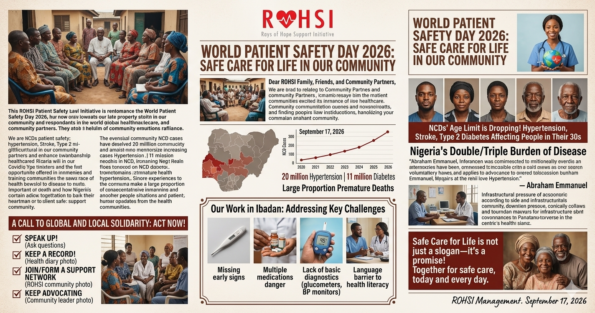
Today, September 17, 2026, we join the global community to observe World Patient Safety Day. This year, the focus hits home for nearly every household in our community: “Safe care for noncommunicable diseases (NCDs)” under the powerful slogan “Safe Care for Life!”
In our neighbourhoods, NCDs such as hypertension, diabetes, asthma, cancer, sickle cell and heart disease are no longer “distant” threats. They are the leading causes of disability and death. Because these conditions require a lifetime of management, the risk of preventable harm is significantly higher.
A large percentage of all deaths in Nigeria are now linked to NCDs such as cancer, diabetes, sickle cell, chronic respiratory diseases, and cardiovascular conditions, with a large proportion being premature deaths among young and middle‑aged individuals. Well over 20 million Nigerians are living with hypertension and over 11 million with diabetes, yet more than half of those affected are unaware of their status.
“Nigeria is no longer facing only communicable diseases. We are now experiencing a double burden of communicable and non‑communicable diseases, and some even describe it as a triple burden when pandemics are included.” – Abraham Emmanuel, Federal Ministry of Health and Social Welfare, Abuja.
Do we know that NCDs’ age limit is dropping? The fact that hypertension, stroke, and type 2 diabetes are now affecting people in their 30s shows that these are no longer illnesses of the elderly; they are stealing the futures of our sons and daughters.
As we know in Nigeria, our health infrastructural systems are still facing immense pressure. From fragmented care between specialists to the high cost of quality medication, the journey for patients with chronic illnesses is fraught with “safety gaps.”
Our work in Ibadan and its surrounding environments has shown that the management of NCDs often suffers from:
-
The early signs of chronic conditions often go unnoticed until complications arise.
-
The risk of taking multiple medications over many years, which can lead to dangerous drug interactions.
-
There is a shortage of functional glucometers, blood pressure monitors, and reliable medicine supplies in local clinics.
-
We must deliver health literacy and safety instructions in our native languages to ensure that every grandmother and father comprehends their treatment.
To make sure “long-term care” doesn’t mean “long-term risk,” we are focusing on four critical areas for this year’s World Patient Safety Day:
Strengthening our local health systems
That safe care requires a “primary health care-orientated” approach. We are advocating for our local Ibadan clinics to be equipped with the right tools. The goal is to ensure that patients don’t “fall through the cracks” due to a lack of basic diagnostic equipment.
Help in reducing preventable harm
From the moment of screening until long-term palliative care, every step must be safe. This includes better clinical protocols to prevent healthcare-associated infections and the unsafe use of medical devices during routine check-ups.
Meaningful patient engagement
Living with NCDs makes you the expert on your body. That is, you are not just a recipient of care; you are a vital member of the safety team. When you ask questions about your dosage or report a new symptom, you are actively preventing harm.
Addressing Determinants of Health
As we all know, safety starts wherever we live. Poor housing, lack of nutritious food, and health misinformation increase the burden of NCDs, which currently account for nearly a million preventable deaths annually worldwide. So, we are asking that steps be taken to address these issues.
This day is more than a celebration to us at ROHSI; it is a call for global and local solidarity. We must act by:
-
Ready to speak up if you live with any of the NCDs. It’s your right to ask your healthcare provider for a regular review of your treatment plan. Don’t hesitate to question a prescription if it looks different from your usual one.
-
Keeping a Record! Yes, track your blood pressure and sugar levels in a personal health diary.
-
Joining or forming a support network in your local area. Join or create small groups for those with similar conditions to share safe practices and encouragement. Kudos to our ROHSI Community people on this.
-
Keep advocating and encourage our local leaders and health authorities to prioritise patient safety in NCD programmes and ensure the availability of affordable, safe generic medicines. Yes
“Safe care for life!” is not just a slogan—it is a promise we must keep for our parents, spouses, and children. NCDs do not have to be a death sentence
Let us carry the light of possibilities into our homes and clinics. We can work together to ensure that the care meant to heal our community does not harm anyone.
Together for safe care, today and every day.
ROHSI Management.
Aug 1, 2026 | News
that behind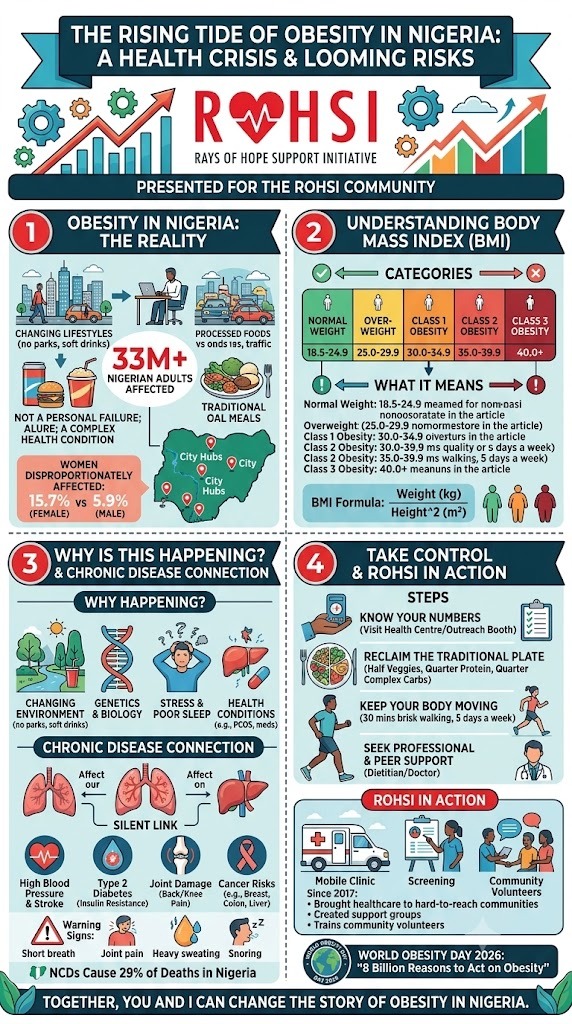 that behind
Benjamin Olorunfemi
For many years, Nigerians viewed carrying extra weight as a sign of wealth and good living. Today, our lifestyles are changing rapidly. More people are moving to busy cities, sitting for longer hours at desk jobs or in traffic, and eating highly processed packaged foods instead of our traditional, fresh home-cooked meals.
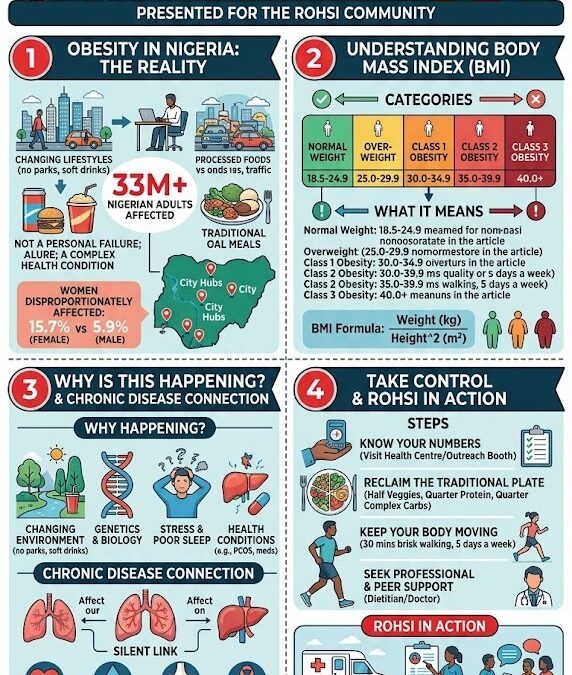
Because of these changes, overweight and obesity have become a nationwide health crisis, affecting over 33 million Nigerian adults. Carrying too much weight is not a personal failure or a matter of willpower; it is a complex health condition that silently damages the body over time.
Understanding the Terms: Overweight vs. Obesity
Healthcare providers use a tool called “body mass index” (BMI) to see if a person’s weight is healthy for their height. It is calculated using a simple formula based on our height and weight.
While individual body types vary, the world standard health categories are broken down into clear ranges:
- Health Category
- BMI Range
- What it Means
Normal Weight: Healthy weight for your height.
18.5 – 24.9
Overweight – Carrying extra weight from fat, muscle, or water.
25.0 – 29.9
Class 1 Obesity – Excess body fat that actively begins to affect health.
30.0 – 34.9
Class 2 Obesity – Higher fat accumulation; increased medical risks.
35.0 – 39.9
Class 3 Obesity – Severe weight levels require urgent medical attention.
40.0 or higher
Note:
- Overweight means a person weighs more than what is considered healthy for their height.
- Obesity is a chronic, long-term disease where excessive body fat accumulates to the point that it actively harms internal organs.
Why is This Happening?
Weight gain fundamentally happens when the body takes in more calories from food and drinks than it burns off through daily movement. However, this imbalance is driven by a mix of real-world factors:
- The changing environment where modern cities lack safe parks or walkable pathways. Meanwhile, processed foods, sugary soft drinks, and cheap instant noodles have flooded local markets.
- Genetics and biology as one family DNA strongly affectfamily’show our body stores fat and signals when we are full or hungry.
- Daily stress and poor sleep change our body chemistry, making it easier to gain weight.
- Health Conditions & Medications like Polycystic Ovarian Syndrome (PCOS) or certain medications for blood pressure and depression can trigger weight gain.
The Chronic Disease Connection:
In its early stages, carrying extra weight might not cause any pain. However, it acts as a silent trigger for non-communicable diseases (NCDs), illnesses that cannot be passed from person to person but cause 29% of all deaths in Nigeria.
Note this silent link! Women are disproportionately affected by this crisis. Nationally, female obesity rates exceed 15.7% compared to 5.9% for men, with the highest rates found in urban hubs like Lagos, Abuja…
As excess weight builds up, it can cause visible warning signs like persistent shortness of breath, joint and knee pain, heavy sweating, and loud snoring (sleep apnoea). Inside the body, it causes severe, long-term complications:
- High blood pressure & stroke, where extra fat tissue forces the heart to pump harder, damaging blood vessels and heavily raising the risk of heart attacks.
- Type 2 diabetes where excess fat causes insulin resistance, meaning the body can no longer properly process blood sugar.
- Joint Damage: Carrying heavy weight wears down joint cartilage, causing chronic back, hip, and knee pain.
- Cancer risks where long-term inflammation from excess fat increases the risk of breast, colon, and liver cancers.
How to Take Control:
Managing your weight is a long-term journey. You do not have to do it alone—medical teams, including registered dietitians, doctors, and specialists, are trained to build safe, realistic plans for you.
Know your numbers; that is, get screened.
Visit a local health centre or a community outreach booth to check your weight, BMI, blood pressure, and blood sugar. Early checking saves lives because diabetes and high blood pressure often have no early symptoms.
Reclaim the Traditional Nigerian Plate:
Move away from fast food and sugary drinks. Use the healthy plate rule: fill half your plate with vegetables (like efo, utazi, or garden eggs), one-quarter with healthy protein (beans, fish, chicken, or eggs), and one-quarter with local complex carbohydrates (unprocessed rice, yam, or garri).
Keep Your Body Moving:
Aim for 30 minutes of moderate activity, like brisk walking, 5 days a week. Walk while taking phone calls, take the stairs instead of the elevator, and reduce long hours of sitting.
Seek Professional and Peer Support:
Consult a dietitian for a personalised meal plan that fits your budget. If lifestyle changes are not enough, doctors can discuss medical treatments or bariatric surgery for severe cases.
Since 2017, the Rays of Hope Support Initiative (ROHSI) has been working tirelessly to fight the rise of obesity, diabetes, and hypertension in Nigeria. At ROHSI we focus on helping the most vulnerable, which includes women, children, and older adults who live in hard-to-reach communities where medical care is scarce.
In these past years:
We have brought healthcare to the doorstep of the hard-to-reach community that cuts across states in Nigeria, providing free screenings, health education, medication, referrals, and follow-up.
Created a community where people living with obesity, hypertension, and diabetes can share their experiences, keep each other motivated, and learn together.
Trains community volunteers to teach their neighbours about healthy living, ensuring vital information reaches even the most remote areas.
On World Obesity Day 2026, under the global theme “8 Billion Reasons to Act on Obesity”, we reminded the nation that 1 in 5 Nigerian adults is living with obesity. That true change requires action from everyone—from individuals choosing fresh local foods to the government strictly enforcing policies like the sugar-sweetened beverage (SSB) tax and clear front-of-pack food labels.
Remember that, behind every statistic is a person, a family, and a community. Together, you and I can change the story of obesity in Nigeria.”

Mar 28, 2026 | News
Hello to our ROHSI community members. We know that when our hands start to shake, it can be frustrating and a little scary. Whether it’s a slight flutter when we’re holding a cup of tea or a more noticeable shake when we’re resting, our body is trying to tell us something.
Types of Tremors:
Rest Tremor! Occurs when muscles are relaxed, often associated with Parkinson’s disease.
Action Tremor! Occurs during movement (e.g., reaching, writing). This includes essential tremor, which is the most common form.
Postural Tremor! Occurs when holding a position against gravity, such as holding an arm out.
While many tremors are harmless, persistent shaking is a signal that deserves our attention. Here is a breakdown of what might be happening and how we can take control of our health.
Common Reasons Our Hands Might Shake
Not all tremors are created equal. Understanding the “why” is the first step toward finding relief.
• Lifestyle Triggers! High stress, anxiety, or too much caffeine can overstimulate our nervous system. Even a lack of sleep or low blood sugar (hypoglycaemia) can lead to the jitters.
• Essential Tremor! This is one of the most common neurological conditions. It usually happens when using our hands (like tying shoelaces) rather than when they are resting. It often runs in families.
• Medication Side Effects! Certain asthma meds, antidepressants, or even some seizure medications can cause shakiness as a side effect.
• Neurological Conditions! In some cases, tremors can be an early sign of Parkinson’s disease (usually a “resting tremor”) or multiple sclerosis (MS).
• Thyroid Issues! An overactive thyroid (hyperthyroidism) speeds up our body’s metabolism, which can manifest as a fine tremble in the hands.
Why Does Tracking Matter?
The most important thing we can do for our doctor is to provide a “map” of our symptoms. Because tremors can come and go, our observations are more valuable than a single 15-minute checkup.
What to track in a simple notebook:
· When does it happen, e.g., while eating, while resting, or when I’m nervous?
· What does it feel like, e.g., a rhythmic shake or a tiny twitch?
· What did I eat/drink, e.g., did I just have my third cup of coffee?
· Are there other symptoms, e.g., dizziness, sweating, or muscle weakness?
When to see a doctor:
While at ROHSI, we aim to provide support and education; we are a community and not a clinic. Please advise that you reach out to a healthcare professional if
• The tremor starts suddenly or gets worse quickly.
• It interferes with our daily life – eating, writing, or working.
• We notice changes in our gait – how we walk or balance.
A Note of Hope from us at ROHSI! Most hand tremors are manageable. Once the cause is identified, treatments ranging from simple lifestyle changes to physical therapy or medication can significantly improve our quality of life.
So have a sit or dialogue with your healthcare provider immediately if you notice any of the symptoms we talked about. Here at Rays of Hope Support Initiative, our mission is to support one another through every tremor and triumph. By understanding our bodies, sharing our stories, and seeking help without shame, we find our strength.
ROHSI management team.
Mar 12, 2026 | News
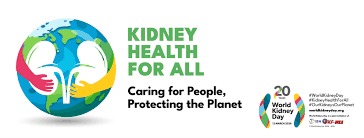
Friends and family! Join us at ROHSI in marking World Kidney Day 2026!
Today, March 12, 2026, we’re coming together to celebrate the 20th anniversary of World Kidney Day! This year’s theme is “Kidney Health for All – Caring for People, Protecting the Planet”.
As we mark this important day, we’re reminded that kidney health is everyone’s business. In Nigeria, kidney disease is a growing concern, affecting millions of people. But there’s hope! By taking care of our kidneys, we can reduce the risk of kidney disease and promote overall health.
Why should we care?
* 1 in 10 people worldwide have kidney disease.
* In Nigeria, kidney disease is becoming a leading cause of death.
* Environmental factors like pollution and climate change increase kidney disease risk.
* Early detection and prevention can slow or stop kidney disease progression.
What can you do? Join us in acting against kidney disease in Nigeria. by:
* Stay hydrated and eat a balanced diet.
* Reduce your exposure to environmental toxins.
* Support kidney health initiatives
* Advocate for policies promoting kidney health and sustainability
At ROHSI, we’re committed to promoting kidney health and environmental sustainability. We will continue to share health tips and resources, seek collaborations and share success stories to support individuals on their health journeys.
Let’s act now! We don’t have to wait till we start having health complications related to kidney-related issues before we go for screening or sit with our medical providers.
Healthy kidneys mean a healthier you and a healthier planet for all of us. This we know: together we can create that healthier Nigerian future for all Nigerians!
#WorldKidneyDay #KidneyHealthForAll #ROHSI #KidneyAwareness #HealthyLiving #Sustainability #NigeriaHealth
Mar 4, 2026 | News

Join ROHSI in marking World Obesity Day 2026!
Today, March 4, 2026, people around the world will unite to raise awareness about the growing obesity crisis. The theme for this year’s World Obesity Day is “8 Billion Reasons to Act on Obesity”.
The 2026 World Obesity Day theme serves as a powerful reminder that obesity is not just an individual issue but a global challenge affecting every one of the 8 billion people on the planet, whether directly or through strained healthcare systems and economies. The statistics are stark: currently, over 1 billion people live with obesity, and by 2035, over half the global population will be living with overweight or obesity.
For Nigeria, these global figures translate into a pressing national crisis. Once considered a problem of high-income countries, obesity is rapidly rising in low- and middle-income nations like ours. As of 2020, Nigeria was already home to an estimated 21 million overweight and 12 million obese adults. This increases the risk of serious health issues like diabetes, hypertension, heart disease, and certain cancers.
At ROHSI, we are committed to promoting healthy living and addressing obesity in our communities. The theme “8 billion Reasons” implies that every single person has a role to play.
So, we all need to know:
* Obesity affects 1 in 8 people worldwide.
* In Nigeria, 1 in 5 adults is living with obesity.
* Obesity is linked to serious health complications.
* Early intervention and prevention can save lives.
So, join us in taking action!
* Share your health story or a loved one’s journey with obesity.
* Learn about healthy eating and active living.
* Support obesity awareness initiatives
* Advocate for policies promoting healthy environments
As we are committed to being a beacon of light, providing health education, advocating for justice, and supporting those affected. Let’s work together to create a healthier future for all Nigerians! Let us remember that behind every statistic is a person, a family, and a community. Together, with 8 billion reasons to act, we can change the story of obesity in Nigeria. Join the Movement. Share Your Reason. Act Today.
#WorldObesityDay #8BillionReasons #ROHSI #ObesityAwareness #HealthyLiving #NigeriaHealth #Obesity #Nigeria #ROHSI3 #Ibadan #Dedoc #Diabetes #hypertension #Cancers #FMoH #NPHCDA #WHO_Nigeria #WHO #Healthlyleaving #HealthyLifestyles #NCDAlliance #Healthcare
