
that behind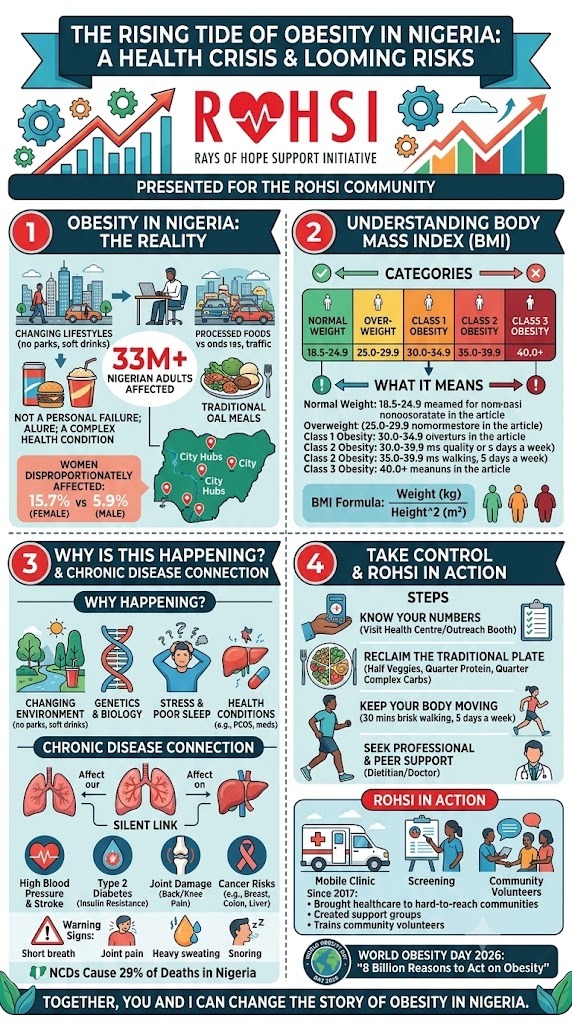 that behind
Benjamin Olorunfemi
For many years, Nigerians viewed carrying extra weight as a sign of wealth and good living. Today, our lifestyles are changing rapidly. More people are moving to busy cities, sitting for longer hours at desk jobs or in traffic, and eating highly processed packaged foods instead of our traditional, fresh home-cooked meals.
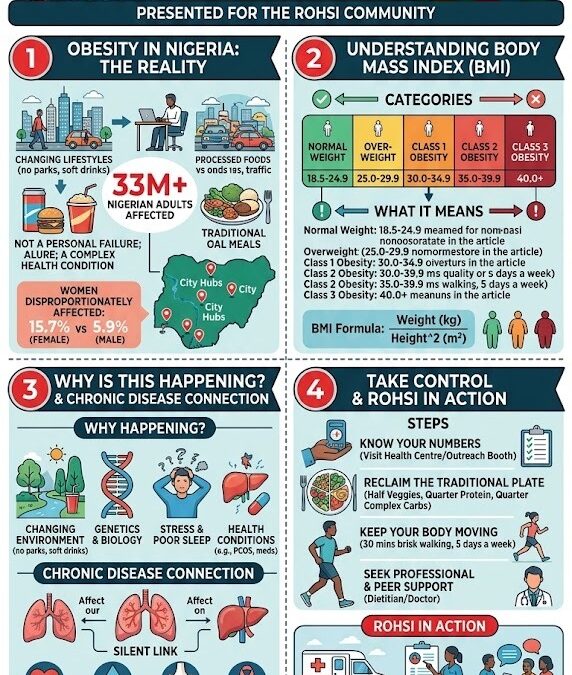
Because of these changes, overweight and obesity have become a nationwide health crisis, affecting over 33 million Nigerian adults. Carrying too much weight is not a personal failure or a matter of willpower; it is a complex health condition that silently damages the body over time.
Understanding the Terms: Overweight vs. Obesity
Healthcare providers use a tool called “body mass index” (BMI) to see if a person’s weight is healthy for their height. It is calculated using a simple formula based on our height and weight.
While individual body types vary, the world standard health categories are broken down into clear ranges:
- Health Category
- BMI Range
- What it Means
Normal Weight: Healthy weight for your height.
18.5 – 24.9
Overweight – Carrying extra weight from fat, muscle, or water.
25.0 – 29.9
Class 1 Obesity – Excess body fat that actively begins to affect health.
30.0 – 34.9
Class 2 Obesity – Higher fat accumulation; increased medical risks.
35.0 – 39.9
Class 3 Obesity – Severe weight levels require urgent medical attention.
40.0 or higher
Note:
- Overweight means a person weighs more than what is considered healthy for their height.
- Obesity is a chronic, long-term disease where excessive body fat accumulates to the point that it actively harms internal organs.
Why is This Happening?
Weight gain fundamentally happens when the body takes in more calories from food and drinks than it burns off through daily movement. However, this imbalance is driven by a mix of real-world factors:
- The changing environment where modern cities lack safe parks or walkable pathways. Meanwhile, processed foods, sugary soft drinks, and cheap instant noodles have flooded local markets.
- Genetics and biology as one family DNA strongly affectfamily’show our body stores fat and signals when we are full or hungry.
- Daily stress and poor sleep change our body chemistry, making it easier to gain weight.
- Health Conditions & Medications like Polycystic Ovarian Syndrome (PCOS) or certain medications for blood pressure and depression can trigger weight gain.
The Chronic Disease Connection:
In its early stages, carrying extra weight might not cause any pain. However, it acts as a silent trigger for non-communicable diseases (NCDs), illnesses that cannot be passed from person to person but cause 29% of all deaths in Nigeria.
Note this silent link! Women are disproportionately affected by this crisis. Nationally, female obesity rates exceed 15.7% compared to 5.9% for men, with the highest rates found in urban hubs like Lagos, Abuja…
As excess weight builds up, it can cause visible warning signs like persistent shortness of breath, joint and knee pain, heavy sweating, and loud snoring (sleep apnoea). Inside the body, it causes severe, long-term complications:
- High blood pressure & stroke, where extra fat tissue forces the heart to pump harder, damaging blood vessels and heavily raising the risk of heart attacks.
- Type 2 diabetes where excess fat causes insulin resistance, meaning the body can no longer properly process blood sugar.
- Joint Damage: Carrying heavy weight wears down joint cartilage, causing chronic back, hip, and knee pain.
- Cancer risks where long-term inflammation from excess fat increases the risk of breast, colon, and liver cancers.
How to Take Control:
Managing your weight is a long-term journey. You do not have to do it alone—medical teams, including registered dietitians, doctors, and specialists, are trained to build safe, realistic plans for you.
Know your numbers; that is, get screened.
Visit a local health centre or a community outreach booth to check your weight, BMI, blood pressure, and blood sugar. Early checking saves lives because diabetes and high blood pressure often have no early symptoms.
Reclaim the Traditional Nigerian Plate:
Move away from fast food and sugary drinks. Use the healthy plate rule: fill half your plate with vegetables (like efo, utazi, or garden eggs), one-quarter with healthy protein (beans, fish, chicken, or eggs), and one-quarter with local complex carbohydrates (unprocessed rice, yam, or garri).
Keep Your Body Moving:
Aim for 30 minutes of moderate activity, like brisk walking, 5 days a week. Walk while taking phone calls, take the stairs instead of the elevator, and reduce long hours of sitting.
Seek Professional and Peer Support:
Consult a dietitian for a personalised meal plan that fits your budget. If lifestyle changes are not enough, doctors can discuss medical treatments or bariatric surgery for severe cases.
Since 2017, the Rays of Hope Support Initiative (ROHSI) has been working tirelessly to fight the rise of obesity, diabetes, and hypertension in Nigeria. At ROHSI we focus on helping the most vulnerable, which includes women, children, and older adults who live in hard-to-reach communities where medical care is scarce.
In these past years:
We have brought healthcare to the doorstep of the hard-to-reach community that cuts across states in Nigeria, providing free screenings, health education, medication, referrals, and follow-up.
Created a community where people living with obesity, hypertension, and diabetes can share their experiences, keep each other motivated, and learn together.
Trains community volunteers to teach their neighbours about healthy living, ensuring vital information reaches even the most remote areas.
On World Obesity Day 2026, under the global theme “8 Billion Reasons to Act on Obesity”, we reminded the nation that 1 in 5 Nigerian adults is living with obesity. That true change requires action from everyone—from individuals choosing fresh local foods to the government strictly enforcing policies like the sugar-sweetened beverage (SSB) tax and clear front-of-pack food labels.
Remember that, behind every statistic is a person, a family, and a community. Together, you and I can change the story of obesity in Nigeria.”