Jun 28, 2019 | News
By: Amy Keller, RN
In this era of modern medicine, there’s a pharmacological fix for many ailments, but sometimes, the remedies can cause their own set of problems. Prescription painkillers, anti-anxiety medications and other drugs can lead to physical dependence, addiction and other issues. Understanding the risks of these medications and having frank discussions with your doctor can help head off complications.
Powerful prescription drugs are the go-to remedy for a host of ailments.
Someone struggling with anxiety is handed a prescription for a benzodiazepine, such as Xanax (alprazolam) or Ativan (lorazepam). The patient who’s having trouble sleeping receives a prescription for Ambien (zolpidem). A person suffering from chronic pain is given a prescription opioid, such as Percocet (oxycodone) or Vicodin (hydrocodone).
At first, the drugs may seem to work like magic — and they work quickly. The Xanax takes the edge off. The Ambien provides a restful night’s sleep. The Percocet eliminates the pain.
But over time, the dark side of these drugs often emerges. One day, the patient needs more than the usual dose of medication to get relief. Or the patient tries to stop taking the pills and feels horrible. The patient is suffering from withdrawal because his or her body has become dependent on the medication.
For many patients, this is how the cycle of dependence and addiction starts, and the toll is tremendous. Nearly 218,000 Americans died between 1999 and 2017 from overdoses related to prescription opioids, according to the Centers for Disease Control and Prevention, and millions more are struggling with ongoing substance use disorders.
Physicians sometimes fail to mention these risks when they prescribe the medications to patients, and many provide little or no information about when or how to stop taking the drugs.
That’s why it’s essential to get as much information as possible before you start taking these types of drugs. When you understand the risks, you can take steps to avoid them.
Talking To Your Doctor
Before taking any medication, it’s crucial to talk to your health care provider about the benefits and risks of the drug. This is especially the case with prescription painkillers and other central nervous system depressants, which have a host of serious side effects and are notoriously hard to quit when you take them for a long time.
Asking your doctor why they’ve selected a particular medication and how the drug works is a good starting point for this critical conversation.
It’s important to understand your diagnosis and the sort of results the medication will deliver. If your doctor has prescribed opioids for back pain, for instance, find out what he or she thinks is causing your pain. Will the medication improve your condition or just treat the symptoms? Or is there another way to get to the root of the problem and fix it?
Here are some other important questions to get you started:
- What are the benefits and risks of taking this medication?
- What are my treatment options?
- Are there better, safer (or non-addictive) alternatives?
- What are the medication’s side effects?
- How will this interact with my other medications?
- Can I safely drive while taking this medication?
- How long should I take this drug?
- How should I stop taking this drug? (Can I stop it suddenly or will I need to be weaned off of it?)
If you find this sort of conversation nerve-racking or uncomfortable, know that you’re not alone. Many people find doctors intimidating or worry that their doctors will think they are questioning their judgment. With the typical medical appointment lasting about 15 minutes, other patients simply feel too rushed to bring up their concerns.
But a good doctor will make time for these conversations and encourage you to be an active participant in your health care decisions. If you’re too shy or tongue-tied, take a friend or relative with you who can advocate for you. And remember, your doctor works for you — not vice versa.
DID YOU KNOW?
In a 2016 survey of patients using prescription opioids, six out of 10 patients said their physicians provided no instructions about how to stop taking the drugs, or when they should stop.
Source: The Washington Post/Post-Kaiser Long-Term Prescription Opioid Painkiller Users Poll
Understanding the Risks
Not everyone who fills a prescription for an opioid will become addicted. But a 2017 report by the National Academies of Sciences, Engineering and Medicine suggests that approximately 8 percent of those given prescription painkillers will end up with a diagnosed “opioid use disorder” and up to a quarter will engage in behaviours that suggest a substance abuse problem.
Physical dependence on opioids can occur in as little as eight weeks. And dependence on benzodiazepines and hypnotic sleep medications like Ambien can occur within three to four weeks of regular use, according to studies.
That’s why many physicians will prescribe the lowest dose needed for as short a time as possible.
But Dr. Chris Johnson, an emergency room physician who has worked on the front lines of the opioid epidemic, told Drugwatch that “there is no ‘risk-free’ dose of opioids,” and the risk of dependence and addiction escalates the longer you take them.
DID YOU KNOW?
One-third of patients taking prescription opioids for eight weeks developed an addiction or physical dependence on the medication.
Source: 2016 survey conducted by The Washington Post and Kaiser Family Foundation
Dependence and Withdrawal
Tolerance is a physiological change that occurs when you repeatedly use a drug. Tolerance is usually characterized by needing to take higher levels of a drug to get the same effect. Drug dependence often follows.
When you’re dependent on a drug, your body needs it in order to function normally, and you may feel sick and suffer withdrawal symptoms if you don’t take it. Dependence develops because the drug causes changes to your brain’s neurochemistry.
Dependence may be hard to identify at first, and the signs of trouble may seem counterintuitive.
With opioids, for instance, withdrawal may first manifest as an increase in pain, and a patient with chronic pain may interpret this as a “flare up” of their condition, according to Johnson.
But if your pain level has increased, that’s often the first warning sign that you’re dependent on the medication. Withdrawal symptoms often follow, but patients shouldn’t wait for severe symptoms to manifest to suspect they’re becoming dependent on a drug.
EXPAND
You should talk to your doctor as soon as you suspect you’re showing signs of dependence or experiencing withdrawal symptoms. He or she may be able to create a tapering schedule for you to gradually reduce your dose and minimize withdrawal.
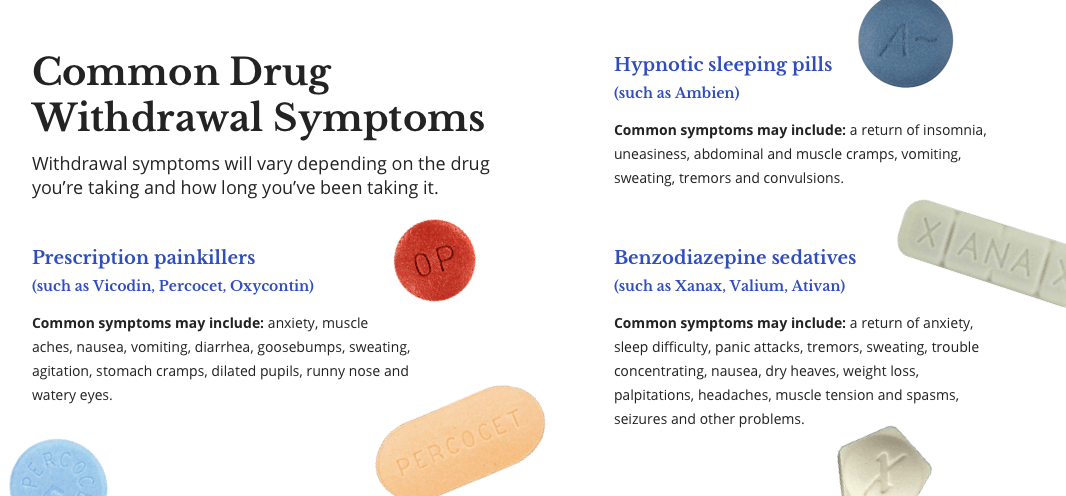
Depending on the drug you’re taking and how long you’ve been taking it, common drug withdrawal symptoms will vary:
Prescription painkillers (such as Vicodin, Percocet, OxyContin)
While opioid withdrawal feels miserable, it’s not usually life-threatening. Common withdrawal symptoms may include: anxiety, muscles aches, nausea, vomiting, diarrhoea, Goosebumps, sweating, agitation, stomach cramps, dilated pupils, runny nose and watery eyes.
Benzodiazepine sedatives (such as Xanax, Valium, Ativan)
Common symptoms of benzodiazepine withdrawal may include: a return of anxiety, sleep difficulty, panic attacks, tremors, sweating, trouble concentrating, nausea, dry heaves, weight loss, palpitations, headaches, muscle tension and spasms, seizures and other problems. Some people develop a protracted withdrawal syndrome that can drag on for months or years.
Hypnotic sleeping pills (such as Ambien)
Patients suffering Ambien withdrawal may experience a return of insomnia, uneasiness, abdominal and muscle cramps, vomiting, sweating, tremors and convulsions.
Physical dependence can occur with the chronic use of many drugs, even if you take your medication exactly as directed. Dependence is not the same as addiction, although addiction may accompany or follow dependence.
SAFETY TIP
Physical dependence on opioids, benzodiazepines and other medications can happen in a matter of weeks. For this reason, doctors usually recommend using such drugs for as brief a time as is necessary.
A CLOSER LOOK AT BENZODIAZEPINE DEPENDENCE
Benzodiazepine dependence doesn’t get nearly the attention that opioid dependence does, but the problem is significant.
A 2017 article in The New England Journal of Medicine found that benzodiazepine dependence occurred in approximately one half of patients who took the sedatives for more than a month. Those who’ve experienced it say it can happen even more quickly.
Dr. Christy Huff, a cardiologist and co-director of the Benzodiazepine Information Coalition, told Drugwatch that her doctor gave her a prescription for a low dose of Xanax (0.25 mg) in 2015 when she was suffering from insomnia and anxiety related to an excruciating bout of dry eye syndrome.
“I was warned about addiction. I don’t have a history of abuse or an addictive personality, so I thought as long as I was following my doctor’s instructions, I was safe,” Huff said in a phone interview. “What I didn’t realize is dependence is different and can develop quickly — in the matter of a week.”
After about three weeks of taking the drug to sleep at night, Huff developed a tremor and worsening anxiety. The symptoms were so unbearable that she soon began taking a second dose of Xanax in the middle of the day for relief.
When she told her doctor what was going on, her doctor put her through a battery of medical tests that turned up nothing.
“Nobody ever said the medication could be causing your problem,” she recalled.
“I don’t have a history of abuse or an addictive personality, so I thought as long as I was following my doctor’s instructions, I was safe. What I didn’t realize is dependence is different and can develop quickly — in the matter of a week.”
Dr. Christy Huff, a cardiologist and co-director of the Benzodiazepine Information Coalition
In fact, Huff had developed a physical dependence on alprazolam and was suffering from what’s known as “interdose withdrawal.” The phenomenon, which causes withdrawal symptoms in between doses, is common with short-acting benzodiazepines such as Xanax.
Like many who end up dependent on benzodiazepines, Huff developed an array of excruciating withdrawal symptoms. Hers included profound fatigue, cognitive problems, brain fog, muscle spasms, muscle weakness, stomach upset, and sensitivity to light and sound.
To ease her agony, her doctor switched her to Valium, a longer-acting benzodiazepine, and began a long, slow taper. In the end, it took her three years and three months to taper off of benzos completely and now, she said, she is working on rebuilding her health.
She also works with the Benzodiazepine Information Coalition to educate others about the dangers of benzodiazepine use and provide resources for those who are dependent.
Addiction and Overdose
Addiction is another risk associated with opioids, benzodiazepines, sleeping pills and other types of mind-altering drugs.
Addiction is different than physical dependence and less common, Johnson said, because it involves not just having withdrawal symptoms, but an inability to stop using the drug despite its adverse effects on your health and life.
A person who is addicted to a drug will usually experience intense cravings and compulsively use the drug. The user may spend a great deal of time thinking about the substance and figuring out ways to obtain it.
With prescription drug addiction, people may attempt to obtain more pills than they need or refill their prescriptions early. They may also try and obtain the same prescription from several practitioners, a phenomenon known as “doctor shopping.”
MISUSING PRESCRIPTIONS
An estimated 18 million people — 6 percent of the population over the age of 12 — misused a prescription medication in 2017.
Source: National Institute on Drug Abuse
And once addiction occurs, “things get ugly, even with treatment,” Johnson said. He pointed to a 2017 study in the Journal of Addiction Medicine that showed that even when getting treatment at a medical clinic, the fatality rate for people with an opiate use disorder is extremely high.
One in five who sought medical treatment for addiction died within 10 years. The risk of dying from a drug overdose is especially high right after treatment. That’s because a person’s tolerance drops quickly after any sort of prolonged period of drug abstinence, and if they return to their prior level of drug use, their body won’t be able to handle it.
Knowing the signs of an overdose is crucial.
The signs and symptoms of an opioid overdose may include:
- Excessive drowsiness or sedation
- Confusion or altered mental status
- Cool or clammy skin
- Slow or stopped breathing
- Low blood pressure
- Sluggish reflexes
- A weak or rapid pulse
- Pale face
- Bluish lips or fingers (darker-skinned people may appear gray or ashen)
- Unresponsiveness
- Vomiting
- Loss of consciousness
- The signs and symptoms of benzodiazepine overdose may include:
- Anxiety and agitation
- Confusion or altered mental status
- Drowsiness
- Blurred Vision
- Unresponsiveness
- Trouble breathing
- Muscle weakness
- Slurred speech
- Hallucinations
The signs and symptoms of an Ambien (zolpidem) overdose may include:
- Drowsiness
- Slowed heartbeat
- Trouble breathing
- Coma
Mixing medications can increase the risk of an overdose. More than a third of fatal opioid overdoses occur when people use opioid painkillers and benzodiazepines together. Both types of drugs suppress breathing, and those effects are greatly multiplied when used in combination, creating a fatal drug cocktail.
If someone is grappling with an addiction to opioids, it’s wise to have an antidote on hand. Naloxone, also known as Narcan, can reverse an opioid overdose if it’s given in time. It comes in several forms, including a nasal spray and an injection. Emergency responders usually carry naloxone with them, so if you or a loved one is overdosing, call 911 immediately.
SAFETY TIP
If you or a loved one take prescription painkillers, print out the Opioid Overdose Resuscitation Card. Follow the instructions on the card in the event of an overdose and ask your doctor whether you should keep naloxone on hand.
PTSD and Other Risk Factors
Anyone can become physically dependent on a drug. But some people, including those with post-traumatic stress disorder, have a higher risk of developing an addiction to opioids and other substances.
As Johnson explained, addiction is linked to distortions in the brain’s reward system. Chemicals, such as opioids and benzodiazepines can effectively hijack this reward system — as can pleasant activities, such as gambling, social media and video games.
But people who’ve had their normal reward systems disturbed through traumatic events face an even higher risk, Johnson said, because the reward pathways are also responsible for us feeling comfortable in our skin from minute to minute. As a result, people with PTSD may turn to substances to ease their discomfort.
DID YOU KNOW?
Approximately 50 percent of people who seek treatment for substance use disorders meet the criteria for post-traumatic stress disorder.
Source: Current Psychiatry Reports
“Furthermore, opioids and addiction deaths have been described as part of the phenomenon as ‘deaths of despair,’” Johnson said. “These deaths of despair include suicide and alcohol along with opioids. Anyone from any socioeconomic status can develop addiction, but the rates of addiction still hit those with lower status and more difficult prospects harder than those better off.”
Other risk factors — including genetics, a family history of substance abuse, and a history of mental health problems — can also increase a person’s chance of developing an addiction.
Certain psychological and social stressors can also lower the bar. A person might be more vulnerable to misuse substances after losing a job, moving or going through a divorce, for instance. You should make your doctor aware of any difficult or stressful situations in your life.
SAFETY TIP
If you have a history of addiction or alcoholism, let your doctor know. This can raise your risk of developing an addiction to certain prescription medications.
Safe Use of Painkillers After Surgery
In some situations, taking an opioid may unavoidable. Opioids are often the only reliable method to control pain related to cancer or other terminal diseases.
Likewise, if you’re undergoing major surgery or have suffered trauma from an accident, an opioid may be the only feasible method of providing adequate pain relief. There are still important precautions you and your healthcare team can take to avoid becoming dependent on the drug.
According to the CDC, doctors should prescribe the lowest effective dose of an opioid and provide no greater quantity than is needed: usually three days’ worth of medicine or less. Only in rare cases, will more than a week’s worth of medication be necessary.
“Patients with an acute injury such as fracture or kidney stone should plan on taking these medicines no more than a few days and plan to stop altogether in no more than a week as a general guideline,” Johnson said.
If you’re being prescribed opioids for pain after surgery, you should also understand responsibilities as a patient. According to the CDC, that includes knowing how often to take your medication, how to properly store it and how to dispose of any unused pills.
Opioid Dos and Don’ts:
Never take a larger dose of the medicine than your doctor has prescribed and never take your pills more frequently than it says to on the pill bottle.
Don’t combine your painkillers with alcohol, sedatives or other drugs (including over-the-counter medications) that cause drowsiness.
Never share or sell your pills.
Store your medication in a secure (locked) cabinet out of the reach of children, relatives and visitors, and keep track of your pills.
Dispose of any unused pills through a community drug take-back event or by disposing of them in the garbage. You can learn more about proper disposal methods from the FDA.
Patients also need to have realistic expectations about post-surgical pain relief.
“[You] should expect some ongoing pain, which is normal,” Johnson said. “Patients should not expect opioids to be taken to make one pain free until the healing has progressed to the point that when they stop taking opioids they are also pain-free. Opioids after an injury or a surgery should be taken only with the expectation that the worst of the pain will be mitigated for a few days.”
SAFE PRESCRIPTION DRUG USE
Jun 22, 2019 | News
Posted by Walter Keenan, Ph.D.
Drug use and abuse can happen to anyone. According to the Centers for Disease Control and Prevention (CDC), 1 out of every 10 people in the United States over the age of 12 have used an illicit drug—defined as a drug that is illegal to consume—at least once within the last year. An additional 2.4 percent have taken a prescription psychotherapeutic drug for nonmedical purposes that either wasn’t prescribed to them or was previously prescribed to them.
These numbers are slightly higher for women. According to the National Institute on Drug Abuse (NIDA), 12.9 percent (or 15.8 million) of women over the age of 18 have used some type of illicit drug within the last 12 months. Those misusing prescription drugs is higher as well at 3.8 percent, or 4.6 million women in total.
While illegal or improper use of drugs can be damaging to any woman’s mental and physical health, this behavior can have even more consequences if an unborn child is involved.
Pregnancy and Drug Use or Abuse
The NIDA reveals that drugs taken during pregnancy affect the mother and the growing foetus because these substances “pass easily through the placenta.”
The National Institute of Child Health and Human Development explains that the placenta is “a temporary organ linking mother and foetus [which] brings nutrients and oxygen to the foetus and moves harmful waste and materials away.” It performs the same duties as many internal organs not yet fully formed—like the lungs, liver, and kidneys—and, if problems develop, can create lifelong issues for the mother and child.
What are some of those potential issues? The answer to that question depends largely on which drug or type of drug is consumed.
Illegal Drugs
According to the American College of Obstetricians and Gynaecologists (ACOG), 1 out of every 20 pregnant women uses some type of illegal drug, also commonly referred to as a street drug. This can result in a number of issues that sometimes include:
- Miscarriage
- Preterm labour, which is labour that occurs prior to the 37th week of pregnancy, or preterm birth
- Stillbirth
Additionally, if a child is born to a mother who has used illegal drugs during pregnancy, there is an increased risk of low birth weight, small head size, heart defects, and other birth defects. Then, as the child begins to grow, there is also increased risk of delayed growth, learning and behavior issues, and even sudden infant death syndrome (SIDS).
Opioids
The ACOG explains that use of street-level opioids, like heroin, put a pregnant woman at risk of developing several different complications, some of which include placental abruption (which is when the placenta separates from the uterus wall prematurely), preterm birth, and stillbirth. It can also disrupt the foetus’s normal growth.
While no opioid use is preferred for pregnant women, the ACOG stresses that if there is an addiction to this type of drug, they “should not suddenly stop using the drug without medical supervision.” Their reasoning is that withdrawal symptoms often lead to relapse, which puts both the mother and the unborn baby at risk.
The ACOG adds that there are also medications that can assist with stopping opiate use, such as methadone or buprenorphine, neither of which have been linked to birth defects. In some cases, the infant may go through withdrawal if the mother has taken either of these drugs, but there are also things that can be done to ease these effects, like swaddling the baby, offering skin-to-skin contact, and taking certain medications.
Stimulants
Drugs that fall into this category include cocaine and methamphetamine. The NIDA indicates that the effects of these types of drugs on a growing foetus are somewhat unclear, largely because pregnant women who take them often use other drugs as well.
The NIDA goes on to explain that, in some cases, women who take stimulants don’t necessarily take proper care of themselves in regard to nutrition and prenatal care. As a result, it’s difficult to ascertain whether a child born with issues is struggling due to the mother’s use of stimulants or if the problems are related to one of these other just-as-important factors.
For the expecting mother specifically, potential consequences of using this category of drug include:
- Migraines
- Seizures
- High blood pressure or preeclampsia
- Premature membrane rupture
- Separation of the placenta from the uterus
- Spontaneous miscarriage
- Preterm labour
- Difficult delivery
Babies born to mothers who used cocaine during pregnancy can also be born with a lower birth weight or be shorter-than-normal in length. They can be irritable and hyperactive, and they may experience tremors, have a high-pitched cry, and engage in excessive sucking. These symptoms may be due to withdrawal or they may be because cocaine is still in the child’s system, where it can remain for as many as seven days’ post-birth.
Research has found that children born to pregnant women who use the stimulant methamphetamine—roughly 6.7 percent of all people seeking treatment for this drug—often act out or are hyperactive in nature. They’re also often more depressed, anxious, and struggle on a cognitive level.
Marijuana
Marijuana is legal in some states medicinally and/or recreationally, but it is included within the list of street drugs because it’s illegal to consume in many areas.
Some expecting mothers use marijuana or cannabis to help them get through the nausea they experience due to pregnancy-related morning sickness. However, marijuana usage during pregnancy can oftentimes have unintended effects, such as increasing the risk of stillbirth by 2.2 times, according to the NIDA.
There are studies that have linked marijuana to a variety of health issues sustained by a child following birth. For instance, the Alcohol & Drug Abuse Institute (ADAI) at the University of Washington reveals that, while researchers aren’t clear on all of the effects marijuana has on a foetus, some studies have found that children who are exposed to this drug in utero can potentially be born with a hole in their heart. Also, as they get older, they may develop cognitive difficulties related to memory and reasoning, attention span, impulsiveness, and hyperactivity.
Sometimes these negative effects continue into the teen years, says the ADAI, where they can be compounded by depression, anxiety, and academic difficulties. Usage of marijuana during pregnancy also means that the adolescent may have a higher risk of marijuana usage as well.
The ADAI adds that sometimes marijuana used during pregnancy can lead to physical issues for the baby, such as the development of childhood cancers. For reasons such as these, the ACOG recommends that marijuana not be consumed at all during pregnancy, even if it is prescribed for other purposes. Instead, alternate remedies should be explored to treat the originating condition without potentially causing harm to the fetus.
Socially Acceptable, Prescription, and Other “Legal” Drugs
While taking illegal drugs can have a negative effect on both a pregnant woman and her unborn child, there are also “legal” drugs that can impact both. Many of these are socially acceptable or even prescribed, yet may not be the best for a mother and the growing fetus.
Caffeine
Approximately 54 percent of Americans drink coffee daily. Worldwide, around 2 billion people consume at least one cup of tea every day. Therefore, it isn’t unrealistic to think that women who become pregnant will want to continue this habit, though some health experts advise that the cons may outweigh the pros.
The American Pregnancy Association (APA) is one such expert, and they point out that caffeine can raise blood pressure and heart rate, neither of which are good for a pregnant woman. It is also a diuretic, which can potentially lead to dehydration. According to the APA, caffeine can also harm the fetus by disrupting their normal movement patterns and keeping them awake, which can keep the mother awake as well.
While there is conflicting and inconclusive research as to whether it causes birth defects or can lead to miscarriages, the APA suggests that consuming 150 to 300 mg of caffeine daily has been deemed relatively safe. There is roughly 95 mg of caffeine in a cup of coffee, but that amount can exceed 500 mg, such as with an extra large coffee from Dunkin Donuts (517 mg), so monitoring the exact amount is recommended.
It’s also important to realize that there is caffeine in other products as well. This includes chocolate and many over-the-counter headache and migraine medications.
Alcohol
Alcohol use during pregnancy can lead to the unborn child developing Fetal Alcohol Syndrome (FAS), Partial FAS, Alcohol-Related Neurodevelopmental Disorder, or Alcohol-Related Birth Defects.
The National Institute on Alcohol Abuse and Alcoholism (NIAAA) says that the risk of these types of conditions increases if the expecting mother engages in binge drinking, which they define as consuming more than three drinks in one episode. This is especially critical during the first trimester. The NIAAA says that the frequency in which a pregnant woman drinks is a factor as well.
Babies born with FAS often have trouble emotionally, as well as difficulties related to understanding, attention, memory, and communicating. These can affect them academically and, later, create problems associated with holding work. Thus, FAS has both short- and long-term effects.
For these reasons, binge drinking is discouraged during pregnancy, but the NIAAA also emphasizes that “there is no known safe level of alcohol consumption during pregnancy.” Therefore, they recommend that pregnant women abstain from alcohol completely.
Nicotine
The NIDA indicates that roughly 16 percent of all pregnant women have smoked during some portion of their pregnancy. Furthermore, nicotine “in the blood of the foetus can be as much as 15 percent higher than in the mother.” The ACOG adds that the nicotine, which is only one of thousands of harmful chemicals contained in cigarettes, narrows the blood vessels. This allows less oxygen and fewer nutrients to make it to the growing foetus, which can cause permanent damage to the brain and lungs.
The CDC adds that smoking also increases the risk of birth defects like cleft lip or cleft palate, premature birth, miscarriage, and low birth weight. It can even contribute to SIDS. Stillbirth risk is also increased by 1.8 to 2.8 times when a woman smokes while pregnant according to the NIDA, and is believed to be a contributing factor to more than 1,000 infant deaths annually.
Even “passive exposure” to nicotine can have negative consequences. Secondhand smoke can increase the expectant mother’s risk of having a stillbirth by 2.1 times. It can also result in premature birth or low birth rate, as well as an increased risk of asthma, respiratory issues, ear infections, and cavities for the baby after he or she is born.
Some expecting mothers move to e-cigarettes in an attempt to be “healthier,” but the NIDA warns that they also contain nicotine, so their effects may be similar. The ACOG agrees, stating that there may also be issues with the propellant and flavouring used in electronic cigarettes. With this in mind, they suggest that it’s best to simply abstain from smoking altogether during pregnancy.
Prescription Painkillers
What happens if a woman becomes pregnant while taking prescription painkillers like codeine, oxycodone, hydrocodone, and morphine? According to the CDC, these opioids increase the risk of the fetus having developmental issues related to the brain or spine. They can also lead to the baby being born with heart defects or their intestines protruding from their abdomen via a hole next to their belly button.
In some cases, opiate use during pregnancy can lead to preterm delivery or stillbirth, with NIDA reporting that prescription painkillers can increase this risk by 2.2 times. However, as with street opiates, the CDC does not recommend stopping prescription painkillers suddenly as this may do more harm than good. Instead, it is suggested that you consult with your doctor to determine the best course of action for you and your unborn child.
The Impact of Addiction on a Newborn Baby
When a drug is taken regularly during pregnancy, the baby may become dependent on it, creating a withdrawal effect after birth. This is called neonatal abstinence syndrome (NAS) and is most common if the baby is born addicted to opiates. If NAS exists, this typically requires that the baby be hospitalized in an effort to effectively treat the withdrawal symptoms.
According to the NIDA, these withdrawal symptoms can appear up to 14 days’ post-birth and often include:
- Irritability
- Excessive crying
- High-pitched crying
- Trouble sleeping
- Increased heart rate
- Diarrhoea and other gastrointestinal issues
- Slow weight gain
- Vomiting
- Seizures
Long-term effects of drug use by the mother during pregnancy can also create lasting effects for the baby, such as those that occur as a result of birth defects, premature birth, or low birth weight. In severe cases, it can even lead to SIDS.
When the Father Uses or Abuses Drugs or Alcohol
In some cases, use of drugs or alcohol by the father can potentially impact the foetus as well. The Organization of Teratology Information Specialists (OTIS) says that is called “paternal exposure.” Also, while OTIS says that use of alcohol, tobacco, and other drugs by the father has no proven consequences for the child in relation to the development of possible birth defects, some health experts believe that it can cause some serious issues.
For instance, the ADAI indicates that the use of marijuana by the father during the 12 months prior to the pregnancy can increase the risk of the child developing rhabdomyosarcoma, a rare cancer that develops in the muscle tissue. And if the father uses marijuana during the conception or the pregnancy, or even after the child is born, the ADAI says that the child’s risk of SIDS is said to increase.
THE EFFECT OF DRUG ABUSE ON PREGNANCY

Jun 21, 2019 | Events
May 17, 2019 | News
Originally published on HVMN by Ryan Rodal
You’re about to embark on a weight loss journey. You’ve been through your kitchen and thrown all the junk food into the trash. You’ve got a diet plan and you’ve taken those awkward “before” selfies. What is the one thing you might have missed?
Have you made the common mistake of underestimating the caloric content of your favourite drinks?
The majority of beverages consumed by the public are packed with hidden calories. The drinks you might gulp down could be responsible for weight loss plateaus or lack of progress toward your weight loss goals.
The “healthy” smoothie from the organic store? It contains more calories than a double cheeseburger (a large Strawberry Surf Rider from Jamba Juice has 640 calories, a McDonald’s Double Cheeseburger has 440 calories). The coffee on your morning commute? It has the same amount of calories as two glazed donuts (a Venti Starbucks White Chocolate Mocha Frappuccino has 550 calories, while two Dunkin Donuts Glazed Donut have 520 calories). Having a beer with dinner? That’s more calories than a candy bar (a Lagunita’s IPA has 220 calories, while a Hershey bar has 214 calories).
The calories consumed from beverages may be adding hundreds of calories to your daily intake.
Whether it’s juices, flavoured coffees, sodas, beers, or even those popular “healthy” smoothies, they all contain high amounts of calories.
Instead of changing your diet, try rethinking your lifestyle. Don’t count calories, make calories count. The importance of getting the best nutrition out of every calorie will help you reach your goals. Here are a few of the best weight loss drinks to help you get there.
Drinking Your Weight
Most diets place emphasis solely on food—neglected is the significant nutritional value of what you drink. It’s vital to be aware of liquid calories and large quantities of sugar in drinks you’re consuming.
Beverages do not trigger the same satiation responses compared to their solid food counterparts. Studies have shown that meals with solid foods provide better sensations of fullness compared to liquid meal replacements alone.1 When dietary calories are drastically reduced to kick-start weight loss, it becomes crucial that satiation is maximized. Every calorie counts when sticking to a healthy diet.
A typical 16oz bottle of soda has around 200 calories; that’s approximately equal to six ounces of chicken breast. An average juice smoothie from a national chain has around 300 calories; that’s the equivalent to four whole eggs. Most beer has at least 150 calories, equivalent to five pieces of turkey bacon. As you can see, choosing the non-beverage option in each of these scenarios will not only provide more nutritional value, but will also help you feel satiated.
There are several drinks that also tout themselves as diet or zero-calorie options. These drinks have a similar taste but are sugarless. Once sugar is removed, artificial sweeteners are often incorporated into the new drink for taste purposes. These added ingredients mimic the taste of sugar without the added calories.
There is controversy surrounding these sweeteners due to their potential side effects.
- Studies have shown body weight, fat mass, and blood pressure may all be negatively affected by the consumption of sweeteners. Two of the most commonly added artificial sweeteners are aspartame and saccharin.
- Some research has indicated that with sweeteners such as aspartame, sucralose, and saccharin, there’s a potential risk of adverse metabolic effects and type 2 diabetes.
- Monitor your intake of artificial sweeteners as they are often used in zero-calorie drinks.
Try to pick natural, non-processed drink choices that contain minimal artificial sweeteners to be safe.
TOP 10 HIDDEN SOURCES OF CARBS:
Hidden carbs can sabotage your diet. Subscribe to see where they are lurking.
Everyday Drinks
Losing weight doesn’t have to mean sacrificing all beverage-based enjoyment. There are plenty of lower calorie, healthy options that can satisfy your taste buds and battle the bulge.
Green Tea
Green tea contains valuable antioxidants that supercharge weight loss benefits—extract from green tea is one of the most common ingredients added to fat burning supplements. Tea leaves contain many antioxidants such as catechins, which may help decrease body weight. In research on people drinking green tea along with caffeine, they lost an average of 0.2kg – 3.5kg compared to the control group.
Matcha is a Japanese green tea with higher concentrations of catechins. It contains up to 137x the amount of catechins compared to standard green tea; this higher dose has the potential to further enhance fat oxidation. Caffeine, also in many green teas, may also help support weight loss. In one study, people who were able to maintain weight loss consumed more caffeine.
So, if you’re feeling “hangry,” brew yourself a healthy green tea to help you stay on track.
Black Tea
Another type of tea, black tea, may help reduce body weight. Black tea contains polyphenols, which are micronutrients from plant-based foods. Mounting evidence suggests these antioxidants may help prevent obesity.
The polyphenols in black tea promote weight loss through calorie reduction, increased fat breakdown, and increasing friendly gut bacteria. Who would have thought the humble cup of tea could be a health drink?
Coffee
Coffee is synonymous with caffeine. Caffeine is the most widely-used nootropic in the world, with millions using coffee as a way to increase energy and potentially increase productivity. At one-point people believed coffee was linked to heart disease and high blood pressure, but in fact recent studies have suggested coffee may actually help prevent chronic diseases such as type 2 diabetes and liver disease.
Coffee may also have positive metabolic effects for both obese individuals and people of healthy weight.
Coffee can boost metabolism. A study found metabolic rate increased significantly three hours after drinking coffee. Furthermore, fat oxidation improved after consumption compared to a control group.
Not only does coffee help with weight loss, it also may help with weight maintenance. Studies have shown caffeine users are able to better maintain weight loss.
Coffee can also reduce energy intake as an appetite suppressant. One study suggests overweight adults who drank coffee were more likely to consume fewer calories. As a result, energy expenditure is reduced.
Water
Water—the Earth is made up of it, your body is made up of it, you need it to survive. Puzzlingly, most people do not get the recommended daily amount. Drinking adequate amounts of water will improve overall health.
Besides the health benefits of proper hydration, water can also help with weight loss. Many people mistake thirst for hunger. There’s a chance you may be overeating if not properly hydrated.
A study performed on overweight adults found those drinking seventeen ounces of water before a meal lost 44% more weight compared to a control group. Having a glass of water before each meal can help control appetite resulting in fewer consumed calories.
Drinking water can also increase resting energy expenditure (REE). REE is the amount of calories consumed at rest over the course of a day. In a study performed on overweight children, REE was increased up to 25% for around 40 minutes after the drink. Consuming the daily recommended amount of water may result in weight loss due to increased expenditure. The results may be true in adults as well.
Some people think drinking regular old water is boring. If you need to spice it up a bit, try adding mint leaves or citrus to hot water or cold water to give it a flavour boost.
Out of the Box Options
Outside of those everyday drinks, there’s a group of less common beverage options for potential weight loss.
Apple Cider Vinegar
Apple cider vinegar probably hides out in your condiments cupboard, but you maybe should bring it out more often. Emerging science suggests that it could be a great extra addition to your weight loss regime. It contains acetic acid, a compound linked to decreased belly fat and reduced accumulation of fat in the liver. In a study performed on rats, apple cider vinegar helped prevent obesity in those with type 2 diabetes. In another animal study, it also reduced body weight in obese mice.
The research on apple cider vinegar performed in humans is limited, but some research suggests it may improve metabolic health in humans. Consuming two tablespoons of ACV per day resulted in decreased body weight, waist circumference, and body fat compared to a control group.
Drinking apple cider vinegar on an empty stomach may help improve digestion; consuming it after meals may improve insulin sensitivity and help lower blood sugar levels.
The versatility of apple cider vinegar makes it a valuable tool for overall wellness.
Electrolyte Drinks
You may think athletes are the only ones who need to supplement with electrolytes, but everyone needs them to function properly. Drinking enough electrolytes is important to maintain proper fluid balance throughout the body. Sports drinks often have added electrolytes to counteract their loss in sweat as you work out. Unfortunately, many of these products contain high sugar contents, making them calorically dense. Every calorie counts on a diet. Luckily today, there are low-calorie electrolyte drink options available to provide proper electrolyte balance.
Staying properly hydrated is essential for overall health, and is important for weight loss.
While it seems counter intuitive, the body may retain extra water if not properly hydrated. This water weight can add extra pounds on the scale.
Vegetable Juices
No secret here: consuming whole vegetables maximizes nutrient intake. But preparing vegetables takes time—something on which many of us are short.
If you are on the move, vegetable juice is a convenient shortcut to make sure you eat those greens and get plenty of micro-nutrients. Unless you are a rabbit, eating several cups of spinach, broccoli, carrots, and kale in one sitting is hard. Instead, simply grab a blender and combine the ingredients into one beverage. Easy.
People tend to over complicate juicing by adding obscure ingredients together. Make things simple with this easy to follow recipe:
2 cups of spinach
4 stalks of celery
Handful of kale
1 cup of blueberries
Lemon juice to taste
An easy-to-follow. go-to recipe will help meet daily dietary needs, while still being low in calories.
Low Calorie Pre-Workout Drinks
Combining weight loss, dieting and working out may be a difficult balance for many people. They ask: don’t I have to increase my calorie intake to fuel my workouts?
Actually, it’s not essential to eat before working out, and doing some exercise while fasted or in a carb-depleted state can actually increase endurance adaptations.21 When carbohydrate stores are depleted, the body turns to fat as fuel, especially for lower intensity, aerobic exercise. That said, carbs are usually needed to fuel more intense workouts with a high anaerobic component; it can take a while for the body to fat adapt and become efficient at using fat rather than carbs.
Most people are not fat-adapted and tend to workout at a relatively high intensity. In these situations, carbs are generally the body’s workout fuel; having a small amount of carbs pre-workout can protect the quality of your workout, which is important even for individuals on a set diet plan. Just make sure you take into account the amount of energy you need for the workout before you choose your pre-session drink.
Many pre-workout drinks contain a high amount of sugar and carbs to get people pumped and feeling energetic.
For the calorie conscious gym-goer there are several pre-workout drink options containing little to no calories. The bad news is many contain other active ingredients such as beta alanine, tyrosine, and taurine, which supposedly boost your workout, but in reality the evidence for their impact is largely lacking.
What’s more, these extra ingredients often come as part of a proprietary blend, meaning the manufacturer provides little information as to the exact amount of each ingredient included. People should be concerned about putting unknown chemicals into their body in random quantities. It’s nice to know what you are putting in your body.
Instead of consuming pre-workout beverages with a laundry list of ingredients, choose one with fewer additives. Caffeine can be useful during workouts as it provides an extra boost of energy, especially on diet-days where you feel like you lack energy. Sprint, HVMN’s nootropic for energy and focus, has caffeine to help fuel your hardest workouts. And you won’t be spilling coffee and burning yourself as you dash between work and the gym.
For most people 100mg – 200mg of caffeine is sufficient to power through a workout.
Low Calorie Post-Workout Drinks
When sticking to a diet plan, it’s important to properly refuel after intense training sessions. Without proper post-workout fuel, recovery time will be prolonged and strength / endurance adaptations may not be fully realized.
Consuming protein post-workout is one way to maximize your gains. It’s often not possible to rustle up a protein rich meal in the few hours after your gym session; in this case, supplementation is a convenient alternative.
Taking a drink that is rich in protein not only enhances muscle protein synthesis, but also can be satiating as well.
Increasing evidence has shown that whey protein may increase fullness through a satiety-inducing hormone release. Casein and pea proteins in particular have also been shown to have a promising effect on reducing short term food intake. Having a protein shake prior to a meal can help prevent overeating leading to better weight loss results. Just make sure you account for the extra calories from the shake!
There is evidence that having a protein shake prior to sleep may improve protein synthesis, morning metabolism, and overall satiety.
Working out should go hand-in-hand with a proper diet plan to maximize weight loss and improve body composition. Consuming adequate protein will not only maximize your workouts, but may prevent overeating as well.
HVMN Ketone
If you are searching for the extra boost to your performance or simply want to maximize your workout, try HVMN Ketone, the world’s first ketone ester drink. Taken 30 minutes prior to work out, it can elevate levels of the ketone fuel source, beta-hydroxybutyrate (BHB). Having the extra ketone fuel can help improve cognitive and endurance performance. What’s more, it only contains 120 calories (all from ketones).
In tests performed on elite cyclists, those who used HVMN Ketone performed 2% – 3% better, cycling 400m further in a 30-minute time trial. Whether you are striving to be among the most elite athletes on earth or are simply looking for an edge in the gym, HVMN Ketone will be there to push you across the finish line.
For recovery, drinking HVMN Ketone plus a post-workout drink activates pathways that trigger muscle protein regeneration, 2.5x more than a normal carb and protein post-workout drink. This could help athletes to maintain and build lean muscle mass after exercise. If you are on a calorie restricted diet, this may help maintain muscle mass while in a catabolic state.
Not only will HVMN Ketone power you through a workout, it may help curb appetite, lowering levels of hormones associated with hunger.
HVMN Ketone is an exogenous ketone source that can impact on endurance performance and recovery.
Liquid Meal Replacements
Liquid meal replacements have been popular in America for decades. The idea of meal replacements is simple: take out the hassle of cooking and drink your breakfast, lunch, or dinner. The good news—these products tend to be lower in calories than a normal meal and generally have a well-rounded macronutrient profile. They also are often fortified with extra vitamins and minerals.
While these meal replacements may help you stick to daily caloric goals, they tend to lack the satiating properties associated with whole foods. A normal meal replacement shake has approximately 200 calories and 20 grams of protein. Instead of drinking a shake, you could have a small chicken breast with a side of veggies.
In a study performed on liquid versus solid meal replacements, those on liquid meal replacements had greater weight gain over a six-month period. These studies suggest liquid meal replacements should not be substitutes for solid meals, but rather should complement an existing whole food diet.
Liquid Cleanses or Detoxes
Detox diets have become popular over the years due to promises of fast weight loss results.
The reasons these type of drinks work in the short term are two fold. One, if you are on a strict liquid cleanse, you’re consuming far fewer calories daily than recommended. This can be considered the most extreme form of crash dieting.
The other reason cleanses work is their laxative powers. They are designed to make people lose water weight and gut fibre weight as opposed to true fat loss. For someone looking for long term results, we do not recommend these types of cleanses.
DRINKS TO AVOID
Many drinks will contain far more calories than you may realize. These drinks should be avoided as they are high in calories, carbs, and added sugar.
Soda: one 12-ounce soda will contain a minimum of 140 calories
Energy drinks: popular brands of energy drinks contain high amounts of added sugars along with controversial ingredients such as taurine, tyrosine, and beta alanine
Fruit juice: once considered a health food staple, most fruit juices today contain high amounts of added sugars. These processed drinks lack the fibre and nutrition associated with real fruit. They also can trigger more of a blood sugar spike compared to the real thing.
Alcohol: generally, alcohol is not diet-friendly. A full-flavored beer or modest size glass of wine will contain 140 – 200 calories. Spirits are slightly less in caloric value, but become more calorically dense when combined with mixers. If you do choose to drink spirits, mix them with a zero-calorie seltzer water to minimize calories.
Coffee flavourings: adding sweet creamers, syrups and sugar to coffee drinks can rack up calories in a hurry. To avoid this drink, black coffee or only add heavy cream. Or you can add HVMN’s MCT Oil Powder for healthy, filling fats that provide all-day energy.
Drinking these beverages can increase caloric intake in a hurry. In order to avoid this, simply stick to the low or no calorie beverages we have suggested.
Drinking Your Way to Success
Dieting is hard enough already. Don’t make it even more difficult by sabotaging yourself with highly-caloric drinks.
Stick to the basics. And remember to always check nutrition labels to see if your favourite drinks are laden with added sugars (hint: they probably are). Remember not to count calories, make every calorie count.
The key to hitting your weight loss goals
Our step-by-step guide has nutrition and exercise advice to help you get there. Subscribe now.
WEIGHT LOSS DRINKS FOR A SUCCESSFUL DIET
May 17, 2019 | News
By Adam Felman
Blood pressure is the amount of force that blood exerts on the walls of the arteries as it flows through them. When this pressure reaches high levels, it can lead to serious health problems.
In the United States, approximately one in every three adults has high blood pressure, which equates to about 75 million people, according to the Centres for Disease Control and Prevention (CDC).
Without treatment, high blood pressure, or hypertension, can lead to grave health conditions, including heart failure, vision loss, stroke, and kidney disease.
In this article, we look at the causes of high blood pressure and how to treat it. We also explain the blood pressure measurements that health authorities consider to be healthy and too high.
Causes
Age, physical inactivity, and obesity can all increase the risk of high blood pressure.
The heart is a muscle that pumps blood around the body.
It pumps blood with low oxygen levels toward the lungs, which replenish oxygen supplies.
The heart then pumps oxygen-rich blood around the body to supply the muscles and cells. This pumping action creates pressure.
If a person has high blood pressure, it means that the walls of the arteries are constantly under too much force.
It is possible to divide the causes of high blood pressure into two categories:
- Essential high blood pressure: This type of high blood pressure has no established cause.
- Secondary high blood pressure: Another health problem is causing increased blood pressure.
Even though essential high blood pressure has no identifiable cause, strong evidence links specific factors to the risk of developing this condition.
The risk factors for essential and secondary high blood pressure include the following.
Age: The risk of high blood pressure increases as a person becomes older because the blood vessels become less flexible.
Family history: People who have close family members with hypertension have a significantly higher risk of developing it themselves.
Ethnic background: African-American people have a higher risk of developing hypertension than other people. Hypertension also presents more severely in African-American people and is less responsive to certain medications.
Obesity and being overweight: People who are overweight or have obesity are more likely to develop high blood pressure.
Some aspects of sex: In general, high blood pressure is more common among adult men than adult women. However, after the age of 55 years, a woman’s relative risk of hypertension increases.
Physical inactivity: Lack of exercise and having a sedentary lifestyle raise the risk of hypertension.
Smoking: Tobacco intake causes the blood vessels to narrow, resulting in higher blood pressure. Smoking also reduces the blood’s oxygen content, so the heart pumps faster to compensate, causing an increase in blood pressure.
Alcohol intake: Drinking excessive amounts of alcohol can dramatically raise blood pressure and increase the risk of heart failure, stroke, and irregular heartbeat.
Poor diet: Many healthcare professionals say that a diet high in fats and salt leads to a high risk of hypertension. However, most dietitians stress that the problem is the type of fat rather than the amount.
Plant sources of fats, such as avocados, nuts, olive oil, and omega oils, are healthful. Saturated fats and trans fats, which are common in animal-sourced and processed foods, are bad for health.
High cholesterol: More than 50 percent of all people with high blood pressure have high cholesterol. A diet that contains lots of unhealthful fats can cause cholesterol to build up in the arteries.
Mental stress: Stress can have a severe impact on blood pressure, especially when it is chronic. It can occur as a result of both socioeconomic and psychosocial factors.
Excessive stress might also lead to actions that increase the risk of hypertension, such as consuming larger amounts of alcohol.
Diabetes: People with diabetes have a higher risk of developing hypertension. However, prescribed use of insulin and consistent blood sugar control can reduce the long-term risk of people with type 1 diabetes developing hypertension.
People with type 2 diabetes are at risk of hypertension as a result of high blood sugar, as well as other factors, such as certain medications, underlying cardiovascular disease, and being overweight or having obesity.
Pregnancy: Pregnant women have a higher risk of developing hypertension than women of the same age who are not pregnant. Preeclampsia is a placental disorder that can increase blood pressure to dangerous levels.
Sleep apnea: This sleep disorder, which causes people to stop breathing while asleep, might also lead to hypertension.
Signs and symptoms
A person with a headache, nausea, and blurred vision might be experiencing a hypertensive crisis. High blood pressure does not usually cause symptoms.
Most people with high blood pressure will not experience any symptoms. People often call hypertension the “silent killer” for this reason.
However, once blood pressure reaches about 180/120 millimetres of mercury (mm Hg), it becomes a hypertensive crisis, which is a medical emergency. At this stage, symptoms will show, including:
- a headache
- nausea
- vomiting
- dizziness
- blurred or double vision
- nosebleeds
- heart palpitations
- breathlessness
Anybody who experiences these symptoms should see their doctor immediately.
Children with high blood pressure may have the following signs and symptoms:
- a headache
- fatigue
- blurred vision
- nosebleeds
- Bell’s palsy, which is an inability to control the facial muscles on one side of the face.
Newborns and very young babies with high blood pressure may experience the following signs and symptoms:
- a failure to thrive
- seizures
- irritability
- lethargy
- respiratory distress
People with a diagnosis of high blood pressure should get frequent blood pressure checks. Individuals whose blood pressure is within the normal range should get a reading at least once every 5 years, while anyone with some of the risk factors above should have more frequent checks.
Complications
Without treatment or control measures, excessive pressure on the artery walls can lead to damage of the blood vessels, which is a form of cardiovascular disease. It can also damage some vital organs.
The extent of the damage depends on the severity of hypertension and how long it continues without treatment.
Possible complications of high blood pressure include:
- stroke
- heart attack and heart failure
- blood clots
- aneurysm
- kidney disease
- thickened, narrow, or torn blood vessels in the eyes
- metabolic syndrome
- brain function and memory problems
Treatment
Treatment for high blood pressure depends on several factors, such as severity and the associated risks of developing cardiovascular disease or stroke.
The doctor will recommend different treatments as blood pressure increases:
Slightly elevated: The doctor may suggest some lifestyle changes for people with slightly elevated blood pressure who have a lower risk of developing cardiovascular disease.
Moderately high: If blood pressure is reasonably high, and the doctor believes that the risk of developing cardiovascular disease during the next 10 years is above 20 percent, they will probably prescribe medication and recommend certain lifestyle changes.
Severe: If blood pressure levels reach 180/120 mm Hg or above, this is a hypertensive crisis. An immediate change to the type or dosage of medication may be necessary.
Lifestyle changes
Moderate exercise can help reduce blood pressure.
In 2017, the American Heart Association (AHA) issued guidelines introducing lifestyle adjustments that can help reduce blood pressure.
Discuss any planned lifestyle changes with a healthcare professional before introducing them.
Regular exercise
Even walking for 30 minutes on 3–4 days of the week will usually reduce a person’s blood pressure by 4 mm Hg, according to an older study in Hypertension journal.
People should see the benefits quite soon after beginning an exercise program. Blood pressure will usually start to improve within a matter of 2 to 3 weeks, especially in people who are just embarking on a more active lifestyle.
A person should check with their doctor before embarking on any physical activity program and ensure that they tailor exercise to their own needs and state of health.
Exercise is most effective when it is regular. Exercising at weekends and doing nothing from Monday to Friday will be much less effective than exercising every other day, for example.
Losing weight
Studies have revealed that even moderate weight loss of between 5 and 10 pounds can make a significant contribution to lowering elevated blood pressure.
People who are overweight should aim to get closer to their healthy weight range. Blood pressure is likely to fall as a result. Weight loss will also improve the effectiveness of blood pressure medications.
Achieving a healthy body weight involves a combination of exercise, a healthful diet, and at least 7 hours of good quality sleep each night. Keeping a food diary can also improve the effectiveness of a weight loss program.
For more advice on maintaining weight loss, click here.
Relaxation techniques
Some low-quality studies have shown that certain relaxation techniques, including yoga, meditation, and guided breathing, can have a short-term and low-level impact on blood pressure.
The AHA issued a statement noting that there is modest evidence to support the efficacy of some meditation techniques in reducing blood pressure.
A 2014 review found some very low-quality evidence in support of yoga as a way to manage hypertension. However, the authors noted that yoga was no more beneficial for hypertension than regular exercise.
Relaxation techniques may be more effective at an earlier stage of elevated blood pressure.
Sleep
Although increasing sleep alone cannot treat hypertension, sleep deprivation and poor sleep quality have strong links to high blood pressure.
A 2015 analysis of data from a Korean national health survey found that hypertension was significantly more common among the participants who had less than 5 hours of sleep per night.
However, while improved sleep may support active treatment for high blood pressure, it is not a standalone solution.
Medications
Below are some of the most common drugs for treating high blood pressure. Some people might require a combination of several different medications.
1) Angiotensin-converting enzyme inhibitors
Angiotensin-converting enzyme (ACE) inhibitors block the actions of some hormones that regulate blood pressure, such as angiotensin II. Angiotensin II causes the arteries to constrict and increases blood volume, resulting in increased blood pressure.
People with a history of heart disease, women who are pregnant, and individuals with conditions that affect the blood supply to the kidneys should not take ACE inhibitors.
Doctors may order a blood test to determine whether the individual has any pre-existing kidney problems. ACE inhibitors can reduce the blood supply to the kidneys, making them less effective. As a result, regular blood tests are necessary.
ACE inhibitors may cause the following side effects, which usually resolve after a few days:
- dizziness
- fatigue
- weakness
- headaches
- a persistent dry cough
If a person finds the side effects too unpleasant or long-lasting to manage, a doctor may prescribe an angiotensin II receptor antagonist instead.
Side effects are less common with these alternative medications, but they may include dizziness, headaches, and increased potassium levels in the blood.
2) Calcium channel blockers
The primary effect of calcium channel blockers (CCBs) is to decrease calcium levels in the blood vessels.
A drop in calcium relaxes the vascular smooth muscle. The muscle contracts less strongly, resulting in the widening of the arteries, which leads to reduced blood pressure.
People with a history of heart disease, liver disease, or circulation issues should not take CCBs.
Individuals using CCBs may experience the following side effects, which usually resolve after a few days:
- redness of the skin, usually on the cheeks or neck
- headaches
- swollen ankles and feet
- dizziness
- fatigue
- skin rash
- swollen abdomen, in rare cases
3) Thiazide diuretics
Thiazide diuretics act on the kidneys to help the body get rid of sodium and water, resulting in lower blood volume and pressure. They are often a doctor’s first choice of high blood pressure medication.
Thiazide diuretics may cause the following side effects, some of which may persist:
- low blood potassium, which can affect both kidney and heart function
- impaired glucose tolerance
- erectile dysfunction
People taking thiazide diuretics should receive regular blood and urine tests to monitor their blood sugar and potassium levels.
Those over 80 years of age may need to take indapamide (Lozol), a particular type of thiazide diuretic that helps reduce the risk of death from stroke, heart failure, and some other types of cardiovascular disease.
4) Beta-blockers
Beta-blockers were once very popular for the treatment of hypertension. Nowadays, people are more likely to use them when other treatments have not been successful.
Beta-blockers slow the heart rate and reduce the force of the heartbeat, causing a drop in blood pressure.
These drugs may cause the following side effects:
- fatigue
- cold hands and feet
- slow heartbeat
- nausea
- diarrhea
The side effects below are also possible, but they are less common:
- disturbed sleep
- nightmares
- erectile dysfunction
Beta-blockers are often the standard medication for a hypertensive crisis.
5) Renin inhibitors
Aliskiren (Tekturna, Rasilez) reduces the production of renin, which is an enzyme that the kidneys produce. Renin plays a key role in the production of angiotensin I, a protein that the body converts into the hormone angiotensin II. This hormone narrows blood vessels and raises blood pressure.
Aliskiren blocks the production of angiotensin I to reduce levels of both angiotensin I and II.
By doing this, it causes the blood vessels to widen, resulting in a drop in blood pressure. As it is a relatively new medication, healthcare professionals are still determining its optimal use and dosage.
Aliskiren may have the following side effects:
- diarrhea
- dizziness
- flu-like symptoms
- fatigue
- a cough
It is essential to read the packaging of any medication to check for interactions with other drugs.
Diet
A healthful diet can help reduce blood pressure.
Managing the diet can be an effective way of both preventing and treating high blood pressure.
A healthful, balanced diet includes plenty of fruits and vegetables, vegetable and omega oils, and good-quality, unrefined carbohydrates. People who include animal products in their diet should trim all the fat off and avoid processed meats.
Lowering salt intake
The World Health Organization (WHO) strongly recommend that their member states take active steps to reduce salt consumption across the whole population.
Reducing salt intake by 3 grams per day could have profound effects on cardiovascular health, reducing systolic blood pressure by 5.6 mm Hg in people with hypertension.
The AHA recommend limiting salt intake to no more than 2,300 milligrams (mg) every day, with a view to eventually reducing this amount to 1,500 mg. People in the U.S. currently consume an average of more than 3,400 mg of sodium daily.
Those who often lose large quantities of sodium in the sweat, such as athletes, do not need to reduce their salt intake to the same extent.
The DASH diet
|
Food groups
|
Number of weekly servings for those eating 1,600–3,100 calories a day
|
Number of weekly servings for those on a 2,000-calorie diet
|
|
Grains and grain products
|
6–12
|
7–8
|
|
Fruits
|
3–6
|
3–5
|
|
Vegetables
|
4–6
|
4–5
|
|
Mostly low-fat or non-fat dairy foods
|
2–4
|
2–3
|
|
Lean meat, fish, or poultry
|
1.5–2.5
|
2
|
|
Nuts, seeds, and legumes
|
3–6
|
4–5
|
|
Fats and candy
|
2–4
|
Limited
|
The National Institutes of Health (NIH) designed a way of eating to control blood pressure called the DASH diet. The AHA also recommend this diet for people with high blood pressure.
The DASH diet focuses on an eating plan that emphasizes fruits, vegetables, nuts, seeds, beans, and low-fat dairy products.
People who are following the diet should ensure that they eat three whole-grain foods each day.
The plan essentially uses a “pyramid” of healthful foods, with grains, fruits, and vegetables making up the foundation of the diet and fats, sweets, and meat forming the top of the pyramid, which represents much lower consumption.
Alcohol
Some studies indicate that consuming alcohol helps lower blood pressure, while others report the opposite.
In minimal amounts, alcohol may lower blood pressure. However, drinking too much, even in moderate amounts, might increase blood pressure levels.
People who regularly drink more than moderate amounts of alcohol will almost always experience elevated blood pressure levels.
Caffeine
Many studies report on the relationship between caffeine and blood pressure. They have conflicting conclusions but agree that moderating caffeine intake is advisable for people with high blood pressure.
Ranges
Anyone whose blood pressure is 140/90 mm Hg or more for a sustained period has stage 2 high blood pressure.
Doctors will define a blood pressure reading under one of the following five categories:
- Normal: Less than 120/80 mm Hg.
- Elevated: 120–129/80 mm Hg. At this stage, a doctor will advise the individual to make lifestyle changes to return their blood pressure to the normal range.
- Stage 1: 130–139/80–89 mm Hg.
- Stage 2: Over 140/90 mm Hg.
- Hypertensive crisis: 180/120 mm Hg or above.
A person in hypertensive crisis may need a prompt change in medication if they give no other indications of problems. Immediate hospitalization may be necessary if organ damage has occurred.
Diagnosis
There are two parts to a blood pressure measurement:
- Systolic pressure: This is the blood pressure when the heart contracts.
- Diastolic pressure: This is the blood pressure between heartbeats.
If blood pressure is 120/80 mm Hg, it means that the systolic pressure is 120 mm Hg and the diastolic pressure is 80 mm Hg.
Sphygmomanometer
A sphygmomanometer measures blood pressure.
Most people will have seen this device, which consists of an inflatable cuff that wraps around the upper arm. When the cuff inflates, it restricts blood flow.
A mercury or mechanical manometer measures blood pressure.
A doctor will often use a manual sphygmomanometer together with a stethoscope. With a digital sphygmomanometer, electrical sensors take all of the measurements.
Advances in new wearable technology mean that people can now keep track of their blood pressure at home. Read our review of the best home blood pressure monitors currently available for home use.
One blood pressure reading is insufficient to diagnose hypertension. Blood pressure can fluctuate during the day, and a visit to the doctor may cause the reading to spike due to anxiety or stress.
A recent meal may also temporarily affect blood pressure readings.
As the definition of hypertension is “repeatedly elevated blood pressure,” a healthcare professional will need to take several readings over a fixed period. They may take three separate measurements, each a week apart. Often, the monitoring goes on for longer than this before the doctor confirms a diagnosis.
People with extremely high blood pressure or signs of end-organ damage should receive an immediate diagnosis to enable prompt treatment.
End-organ damage is damage to major organs that the circulatory system feeds directly, such as the heart, kidneys, brain, and eyes.
Kidney disorder: If an individual with high blood pressure also has a urinary tract infection (UTI), urinates frequently, or reports pain along the side of the abdomen, they could have a kidney disorder.
If the doctor hears the sound of a rush of blood when they place a stethoscope on the side of the abdomen, this could be a sign of stenosis. Stenosis is the narrowing of an artery supplying the kidney.
Additional tests for high blood pressure
The doctor may order the following tests before confirming a hypertension diagnosis.
Urine and blood tests: The underlying cause of high blood pressure might be an infection, a kidney malfunction, or high levels of cholesterol, potassium, or blood sugar. Protein or blood in the urine may indicate kidney damage, while high glucose in the blood might be due to diabetes.
Exercise stress test: An exercise stress test is a more common test for people with borderline hypertension. It usually involves pedaling on a stationary bicycle or walking on a treadmill.
The test assesses how the cardiovascular system responds to a spike in physical activity.
It is vital to declare a hypertension diagnosis before the start of the test. The test monitors the electrical activity of the heart, as well as the blood pressure during exercise.
An exercise stress test sometimes reveals problems that might not be apparent when the body is at rest. The doctor might take imaging scans of the blood supply to and from the heart.
Electrocardiogram (ECG): An ECG tests electrical activity in the heart. This test is more common in people with a high risk of heart problems, such as hypertension and elevated cholesterol levels.
Healthcare professionals call the initial ECG a baseline. They might compare subsequent ECGs with the baseline to reveal any changes, which might point to coronary artery disease or thickening of the heart wall.
Holter monitoring: For 24 hours, the individual carries an ECG portable device that connects to their chest through electrodes.
This device can provide an overview of blood pressure throughout the day and show how it changes as the level of activity varies.
Echocardiogram: This device uses ultrasound waves, which show the heart in motion. The doctor will be able to detect problems, such as thickening of the heart wall, defective heart valves, blood clots, and excessive fluid around the heart.
Summary
High blood pressure is a health problem that often causes no symptoms but can lead to severe health complications. Some underlying conditions can cause high blood pressure, but the exact cause of other cases is unknown.
Age, race, sex, lifestyle, family history, pregnancy, and stress can all contribute to high blood pressure, which can increase the risk of stroke and heart disease.
A healthful lifestyle and a balanced diet can help keep high blood pressure at bay.
A doctor will try to manage hypertension by recommending lifestyle changes, such as following the DASH diet, and prescribing medications.
WHAT TO KNOW ABOUT HIGH BLOOD PRESSURE