
Benjamin Olorunfemi
Living with a chronic or non-communicable disease (NCD) can sometimes feel like managing a complex puzzle. You are balancing medications, tracking symptoms, and trying to make the best lifestyle choices possible.
If there is one quiet hero your body needs in its corner right now, it is magnesium.
This single mineral is responsible for keeping your heart steady, your blood pressure stable, and your energy up. Yet, nearly half of us aren’t getting enough of it. Let’s break down in plain human language exactly why magnesium is so vital, how much you need, and how to safely bring more of it into your life.
Why Magnesium Matters: The Multi-Tasker in Your Body
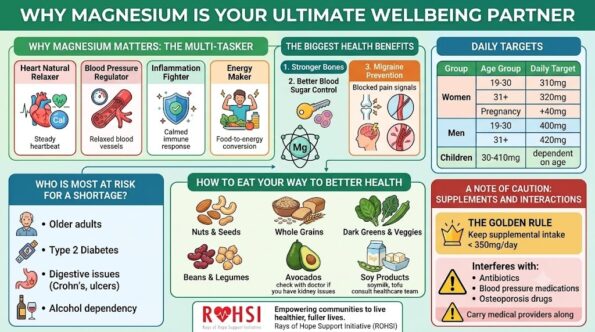
Think of magnesium as the ultimate manager for your internal systems. It powers over 300 biochemical reactions inside you. When it comes to managing long-term health issues, magnesium plays four critical roles:
- The Heart’s Natural Relaxer: Magnesium acts like a natural calcium blocker. While calcium helps your heart muscle contract to pump blood, magnesium steps in to help the muscle relax afterwards. soy milkdiarrhoea. Since your heart beats roughly 100,000 times a day, magnesium ensures each beat stays steady and strong.
- The Blood Pressure Regulator: By relaxing the walls of your blood vessels, magnesium allows blood to flow more freely, which naturally helps keep blood pressure numbers in a healthy range.
- The Inflammation Fighter: Chronic (long-term) inflammation is the root trigger for many complications in heart disease, arthritis, and diabetes. Magnesium acts as a protective buffer, calming down the immune system’s stress responses.
- The Energy Maker: If you are dealing with unexplained fatigue, low magnesium could be a factor. This mineral is essential for converting the food you eat into usable daily energy.
Daily Targets: How Much Do You Need?
Because our bodies use magnesium for so many daily tasks, running low over a long period can set the stage for major health hurdles—including type 2 diabetes, high blood pressure, irregular heartbeats, and severe migraines.
Here is a simple breakdown of what your body requires daily:
|
Group |
Age Group |
Daily Target |
|
Women |
19–30 years old 31 years and older During Pregnancy |
310 mg 320 mg Add an extra 40 mg |
|
Men |
19–30 years old 31 years and older |
400 mg 420 mg |
|
Children |
Dependent on age |
30 mg to 410 mg |
Who is most at risk for a shortage?
Older adults, individuals living with type 2 diabetes, those managing digestive issues (like Crohn’s disease or ulcers), or anyone dealing with alcohol dependency are much more likely to run low. This happens because the body either struggles to absorb the mineral properly or flushes too much of it out through the kidneys.
The Biggest Health Benefits
- Stronger Bones
Your body relies directly on magnesium to build new, healthy bone cells. Research shows that people living with osteoporosis (a condition that makes bones weak and brittle) consistently show lower levels of magnesium in their blood. Getting enough protects you against bone loss and sudden fractures.
- Better Blood Sugar Control
Magnesium helps insulin do its job effectively. Insulin is the hormone responsible for moving sugar out of your blood and into your cells for energy. When you have enough magnesium in your system, your body can keep blood sugar levels much steadier, lowering the risk of diabetes complications.
- Migraine Prevention
If you experience debilitating migraines, a magnesium deficiency might be partly to blame. Medical experts believe magnesium helps block pain-signalling chemicals in the brain and prevents the sudden tightening of blood vessels that triggers a painful attack.
How to Eat Your Way to Better Health
Getting your nutrients from real, whole foods is always the safest and most effective strategy. Luckily, there are plenty of delicious, accessible ways to add magnesium to your plate:
- Nuts and Seeds: Grab a handful of cashews, peanuts, or almonds for a quick snack. They are packed with the healthy fats and minerals your heart craves.
- Whole Grains: Ditch the processed white bread and white rice! Swap them for whole grains like brown rice, oats, or whole wheat bread. They retain all their natural fiber and high magnesium content.
- Dark Greens and Fresh Veggies: Leafy greens like spinach and kale are loaded with vitamins. Local favourites like okra are also incredibly rich in magnesium and excellent for your stews.
- Beans and Legumes: Beans are an incredible, budget-friendly source of magnesium that many of us skip. Kidney beans, black beans, and chickpeas are all fantastic choices.
- Avocados: Whether sliced, diced, or mashed, avocado is a nutrient powerhouse.
Note: If you are managing kidney-related health issues, please check with your doctor or dietitian before drastically increasing your avocado intake.
- Soy Products: A single cup of unsweetened soymilk provides around 60 mg of magnesium. Tofu is also a great option. (Check with your healthcare team before making soy a major part of your meal plan if you have specific dietary restrictions).
A Note of Caution: Supplements and Interactions
Can you have too much magnesium? If you get it entirely from food, healthy kidneys will naturally filter out and flush away any extra your body doesn’t use.
However, supplements are different. Taking too much supplemental magnesium—or overusing magnesium-heavy laxatives and antacids—can cause stomach cramps, nausea, and severe diarrhea.
The Golden Rule for Supplements
Keep your supplemental magnesium intake under 350 mg per day unless a doctor explicitly prescribes a higher dose for a specific medical reason.
Most importantly, magnesium can act like a sponge in your gut, binding to other medications and stopping them from working. It can interfere with:
- Certain antibiotics
- Blood pressure medications
- Osteoporosis drugs
Always carry your medical providers along
Never start a new supplement without talking to your healthcare team first, especially if you have existing kidney problems. Bring a list of everything you take to your next clinic visit, ask questions, and make sure any new change fits safely into your daily care plan. Your health and wellbeing are worth the conversation!
Note! Magnesium may be a small mineral, but it plays a giant role in your health. Start small today: add a handful of nuts to your snack routine, swap white rice for brown, or toss some extra okra and spinach into your next soup. Your heart will thank you!
Rays of Hope Support Initiative (ROHSI): Empowering communities to live healthier, fuller lives.