Aug 1, 2026 | News
that behind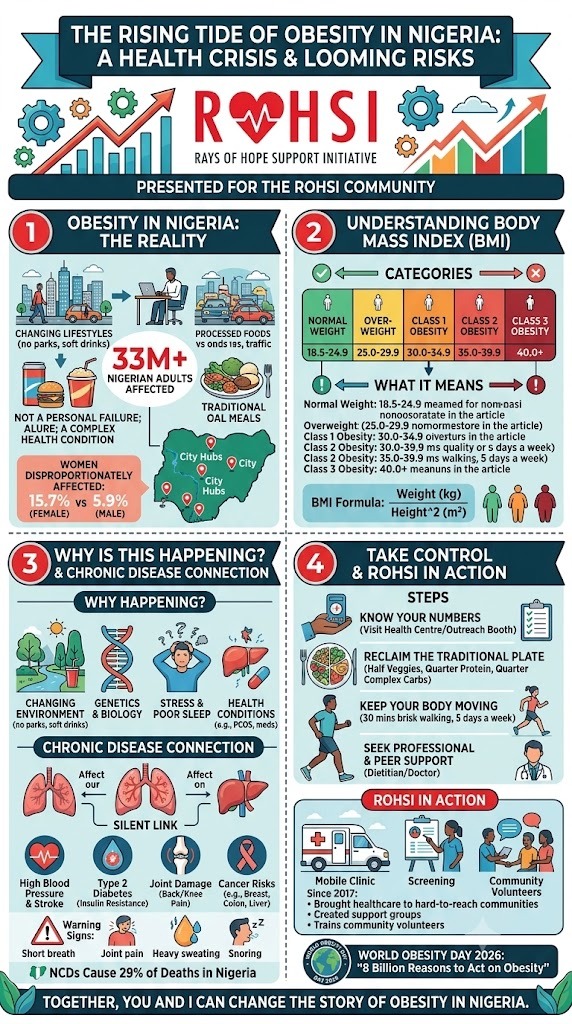 that behind
Benjamin Olorunfemi
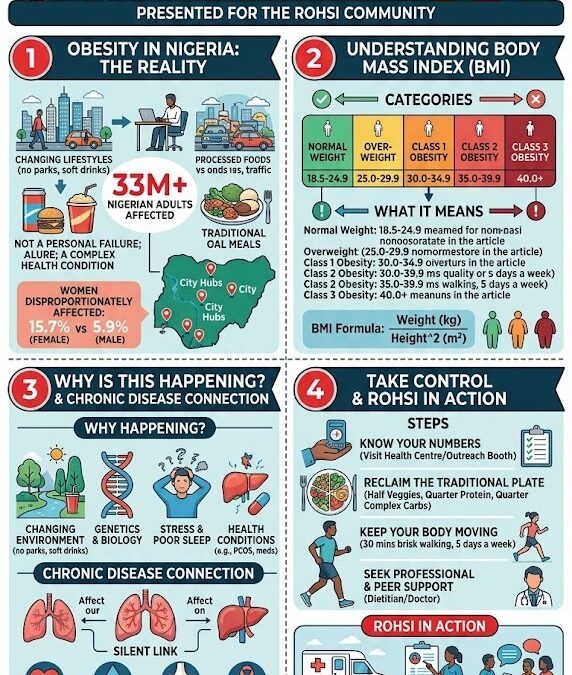
For many years, Nigerians viewed carrying extra weight as a sign of wealth and good living. Today, our lifestyles are changing rapidly. More people are moving to busy cities, sitting for longer hours at desk jobs or in traffic, and eating highly processed packaged foods instead of our traditional, fresh home-cooked meals.
Because of these changes, overweight and obesity have become a nationwide health crisis, affecting over 33 million Nigerian adults. Carrying too much weight is not a personal failure or a matter of willpower; it is a complex health condition that silently damages the body over time.
Understanding the Terms: Overweight vs. Obesity
Healthcare providers use a tool called “body mass index” (BMI) to see if a person’s weight is healthy for their height. It is calculated using a simple formula based on our height and weight.
While individual body types vary, the world standard health categories are broken down into clear ranges:
- Health Category
- BMI Range
- What it Means
Normal Weight: Healthy weight for your height.
18.5 – 24.9
Overweight – Carrying extra weight from fat, muscle, or water.
25.0 – 29.9
Class 1 Obesity – Excess body fat that actively begins to affect health.
30.0 – 34.9
Class 2 Obesity – Higher fat accumulation; increased medical risks.
35.0 – 39.9
Class 3 Obesity – Severe weight levels require urgent medical attention.
40.0 or higher
Note:
- Overweight means a person weighs more than what is considered healthy for their height.
- Obesity is a chronic, long-term disease where excessive body fat accumulates to the point that it actively harms internal organs.
Why is This Happening?
Weight gain fundamentally happens when the body takes in more calories from food and drinks than it burns off through daily movement. However, this imbalance is driven by a mix of real-world factors:
- The changing environment where modern cities lack safe parks or walkable pathways. Meanwhile, processed foods, sugary soft drinks, and cheap instant noodles have flooded local markets.
- Genetics and biology as one family DNA strongly affectfamily’show our body stores fat and signals when we are full or hungry.
- Daily stress and poor sleep change our body chemistry, making it easier to gain weight.
- Health Conditions & Medications like Polycystic Ovarian Syndrome (PCOS) or certain medications for blood pressure and depression can trigger weight gain.
The Chronic Disease Connection:
In its early stages, carrying extra weight might not cause any pain. However, it acts as a silent trigger for non-communicable diseases (NCDs), illnesses that cannot be passed from person to person but cause 29% of all deaths in Nigeria.
Note this silent link! Women are disproportionately affected by this crisis. Nationally, female obesity rates exceed 15.7% compared to 5.9% for men, with the highest rates found in urban hubs like Lagos, Abuja…
As excess weight builds up, it can cause visible warning signs like persistent shortness of breath, joint and knee pain, heavy sweating, and loud snoring (sleep apnoea). Inside the body, it causes severe, long-term complications:
- High blood pressure & stroke, where extra fat tissue forces the heart to pump harder, damaging blood vessels and heavily raising the risk of heart attacks.
- Type 2 diabetes where excess fat causes insulin resistance, meaning the body can no longer properly process blood sugar.
- Joint Damage: Carrying heavy weight wears down joint cartilage, causing chronic back, hip, and knee pain.
- Cancer risks where long-term inflammation from excess fat increases the risk of breast, colon, and liver cancers.
How to Take Control:
Managing your weight is a long-term journey. You do not have to do it alone—medical teams, including registered dietitians, doctors, and specialists, are trained to build safe, realistic plans for you.
Know your numbers; that is, get screened.
Visit a local health centre or a community outreach booth to check your weight, BMI, blood pressure, and blood sugar. Early checking saves lives because diabetes and high blood pressure often have no early symptoms.
Reclaim the Traditional Nigerian Plate:
Move away from fast food and sugary drinks. Use the healthy plate rule: fill half your plate with vegetables (like efo, utazi, or garden eggs), one-quarter with healthy protein (beans, fish, chicken, or eggs), and one-quarter with local complex carbohydrates (unprocessed rice, yam, or garri).
Keep Your Body Moving:
Aim for 30 minutes of moderate activity, like brisk walking, 5 days a week. Walk while taking phone calls, take the stairs instead of the elevator, and reduce long hours of sitting.
Seek Professional and Peer Support:
Consult a dietitian for a personalised meal plan that fits your budget. If lifestyle changes are not enough, doctors can discuss medical treatments or bariatric surgery for severe cases.
Since 2017, the Rays of Hope Support Initiative (ROHSI) has been working tirelessly to fight the rise of obesity, diabetes, and hypertension in Nigeria. At ROHSI we focus on helping the most vulnerable, which includes women, children, and older adults who live in hard-to-reach communities where medical care is scarce.
In these past years:
We have brought healthcare to the doorstep of the hard-to-reach community that cuts across states in Nigeria, providing free screenings, health education, medication, referrals, and follow-up.
Created a community where people living with obesity, hypertension, and diabetes can share their experiences, keep each other motivated, and learn together.
Trains community volunteers to teach their neighbours about healthy living, ensuring vital information reaches even the most remote areas.
On World Obesity Day 2026, under the global theme “8 Billion Reasons to Act on Obesity”, we reminded the nation that 1 in 5 Nigerian adults is living with obesity. That true change requires action from everyone—from individuals choosing fresh local foods to the government strictly enforcing policies like the sugar-sweetened beverage (SSB) tax and clear front-of-pack food labels.
Remember that, behind every statistic is a person, a family, and a community. Together, you and I can change the story of obesity in Nigeria.”
Jul 6, 2026 | Healthy Tips
Benjamin Olorunfemi
Living with a chronic or non-communicable disease (NCD) can sometimes feel like managing a complex puzzle. You are balancing medications, tracking symptoms, and trying to make the best lifestyle choices possible.
If there is one quiet hero your body needs in its corner right now, it is magnesium.
This single mineral is responsible for keeping your heart steady, your blood pressure stable, and your energy up. Yet, nearly half of us aren’t getting enough of it. Let’s break down in plain human language exactly why magnesium is so vital, how much you need, and how to safely bring more of it into your life.
Why Magnesium Matters: The Multi-Tasker in Your Body
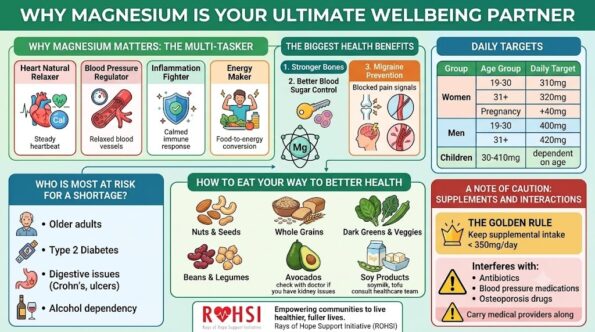
Think of magnesium as the ultimate manager for your internal systems. It powers over 300 biochemical reactions inside you. When it comes to managing long-term health issues, magnesium plays four critical roles:
- The Heart’s Natural Relaxer: Magnesium acts like a natural calcium blocker. While calcium helps your heart muscle contract to pump blood, magnesium steps in to help the muscle relax afterwards. soy milkdiarrhoea. Since your heart beats roughly 100,000 times a day, magnesium ensures each beat stays steady and strong.
- The Blood Pressure Regulator: By relaxing the walls of your blood vessels, magnesium allows blood to flow more freely, which naturally helps keep blood pressure numbers in a healthy range.
- The Inflammation Fighter: Chronic (long-term) inflammation is the root trigger for many complications in heart disease, arthritis, and diabetes. Magnesium acts as a protective buffer, calming down the immune system’s stress responses.
- The Energy Maker: If you are dealing with unexplained fatigue, low magnesium could be a factor. This mineral is essential for converting the food you eat into usable daily energy.
Daily Targets: How Much Do You Need?
Because our bodies use magnesium for so many daily tasks, running low over a long period can set the stage for major health hurdles—including type 2 diabetes, high blood pressure, irregular heartbeats, and severe migraines.
Here is a simple breakdown of what your body requires daily:
|
Group
|
Age Group
|
Daily Target
|
|
Women
|
19–30 years old
31 years and older
During Pregnancy
|
310 mg
320 mg
Add an extra 40 mg
|
|
Men
|
19–30 years old
31 years and older
|
400 mg
420 mg
|
|
Children
|
Dependent on age
|
30 mg to 410 mg
|
Who is most at risk for a shortage?
Older adults, individuals living with type 2 diabetes, those managing digestive issues (like Crohn’s disease or ulcers), or anyone dealing with alcohol dependency are much more likely to run low. This happens because the body either struggles to absorb the mineral properly or flushes too much of it out through the kidneys.
The Biggest Health Benefits
- Stronger Bones
Your body relies directly on magnesium to build new, healthy bone cells. Research shows that people living with osteoporosis (a condition that makes bones weak and brittle) consistently show lower levels of magnesium in their blood. Getting enough protects you against bone loss and sudden fractures.
- Better Blood Sugar Control
Magnesium helps insulin do its job effectively. Insulin is the hormone responsible for moving sugar out of your blood and into your cells for energy. When you have enough magnesium in your system, your body can keep blood sugar levels much steadier, lowering the risk of diabetes complications.
- Migraine Prevention
If you experience debilitating migraines, a magnesium deficiency might be partly to blame. Medical experts believe magnesium helps block pain-signalling chemicals in the brain and prevents the sudden tightening of blood vessels that triggers a painful attack.
How to Eat Your Way to Better Health
Getting your nutrients from real, whole foods is always the safest and most effective strategy. Luckily, there are plenty of delicious, accessible ways to add magnesium to your plate:
- Nuts and Seeds: Grab a handful of cashews, peanuts, or almonds for a quick snack. They are packed with the healthy fats and minerals your heart craves.
- Whole Grains: Ditch the processed white bread and white rice! Swap them for whole grains like brown rice, oats, or whole wheat bread. They retain all their natural fiber and high magnesium content.
- Dark Greens and Fresh Veggies: Leafy greens like spinach and kale are loaded with vitamins. Local favourites like okra are also incredibly rich in magnesium and excellent for your stews.
- Beans and Legumes: Beans are an incredible, budget-friendly source of magnesium that many of us skip. Kidney beans, black beans, and chickpeas are all fantastic choices.
- Avocados: Whether sliced, diced, or mashed, avocado is a nutrient powerhouse.
Note: If you are managing kidney-related health issues, please check with your doctor or dietitian before drastically increasing your avocado intake.
- Soy Products: A single cup of unsweetened soymilk provides around 60 mg of magnesium. Tofu is also a great option. (Check with your healthcare team before making soy a major part of your meal plan if you have specific dietary restrictions).
A Note of Caution: Supplements and Interactions
Can you have too much magnesium? If you get it entirely from food, healthy kidneys will naturally filter out and flush away any extra your body doesn’t use.
However, supplements are different. Taking too much supplemental magnesium—or overusing magnesium-heavy laxatives and antacids—can cause stomach cramps, nausea, and severe diarrhea.
The Golden Rule for Supplements
Keep your supplemental magnesium intake under 350 mg per day unless a doctor explicitly prescribes a higher dose for a specific medical reason.
Most importantly, magnesium can act like a sponge in your gut, binding to other medications and stopping them from working. It can interfere with:
- Certain antibiotics
- Blood pressure medications
- Osteoporosis drugs
Always carry your medical providers along
Never start a new supplement without talking to your healthcare team first, especially if you have existing kidney problems. Bring a list of everything you take to your next clinic visit, ask questions, and make sure any new change fits safely into your daily care plan. Your health and wellbeing are worth the conversation!
Note! Magnesium may be a small mineral, but it plays a giant role in your health. Start small today: add a handful of nuts to your snack routine, swap white rice for brown, or toss some extra okra and spinach into your next soup. Your heart will thank you!
Rays of Hope Support Initiative (ROHSI): Empowering communities to live healthier, fuller lives.
May 3, 2026 | Healthy Tips
Benjamin Olorunfemi – ROHSI
In our community, we talk a lot about the joy of childbirth and the beauty of raising a family. But there is a season that comes afterward—a “silent transition” that many of our mothers and sisters went through in secret. We often call it “the change of life”, yet many of our women enter this phase feeling confused, irritable, or even fearful that they are falling ill.
This article is for our women to enlighten those in the thick of it and to prepare our younger daughters for the journey ahead.
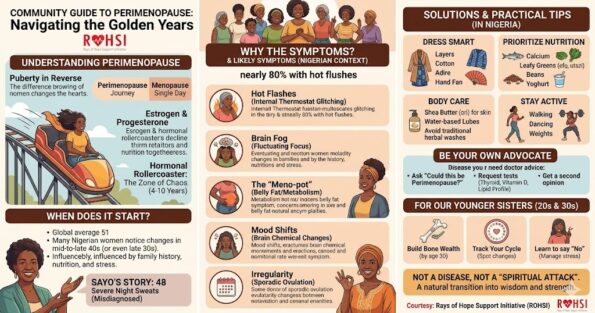
Think of perimenopause as “puberty in reverse”. Just as our young girl’s body takes years to transition into her childbearing years, a woman’s body takes time to transition out of them.
Medically, menopause is a single day—the one-year anniversary of our last period. Perimenopause, which means “around menopause”, is the entire journey that leads to that day. During this time, our ovaries, which have been diligently producing hormones for decades, begin their slow retirement. They start making less oestrogen and progesterone.
But here’s the key: the decline isn’t a smooth, gentle slope. It’s more like a hormonal rollercoaster, with levels surging and plunging unpredictably. This “zone of chaos” can last anywhere from four to ten years, and it’s the cause of the many changes our women experience.
While the global average for menopause is around 51, many Nigerian women begin to notice perimenopausal changes in their mid-to-late 40s. For some, it can start as early as their late 30s.
Think of Sayo (not her real name), a 48-year-old woman who started having night sweats so severe she had to change her clothes multiple times a night. She visited her local clinic and was given vitamins and told to “rest more”. It was only when a friend mentioned menopause that the pieces of the puzzle finally came together. Her story is the story of millions of our women.
Factors like our family history, nutrition, and even the chronic stress of our daily lives can influence when our body begins this shift. A good rule of thumb? If our mother started early, there’s a high chance one might too.
In Nigeria, research shows that nearly 80% of women experience hot flushes, and many others struggle with fatigue and joint pain. Because oestrogen affects everything from our brain to our bones, the symptoms can show up in many ways:
Likely symptoms:
Hot flashes – a sudden wave of intense heat, often followed by chills, and why? Our “internal thermostat” is glitching due to low oestrogen.
Brain Fog – Forgetfulness or feeling like you can’t concentrate, and why? Oestrogen helps the brain function; when it fluctuates, focus slips.
The “meno-pot” – weight gain specifically around the belly – and why? Our metabolism slows down, and the body stores fat differently.
Mood Shifts – Sudden irritability, anxiety, or sadness and why? Hormones directly affect our “feel-good” brain chemicals.
Irregularity – Periods that are too heavy, too light, or skip months, and why? Ovulation is becoming sporadic.
Solutions:
Dress in layers. Use breathable fabrics like cotton or Adire. Let us keep a traditional hand fan in our bag for church services or market trips.
Our local diets can be high in carbs, so let us prioritise calcium-rich foods like sardines (with the bones), leafy green vegetables (efọ and utazi), beans, and yoghurt.
For dry skin, shea butter (ori) is excellent. For vaginal dryness, use water-based lubricants—avoid “traditional” herbal washes that might cause irritation or infection.
Walking, dancing, or lightweight-bearing exercise helps keep our bones strong and our mood lifted.
Ma, if we feel something is “off”, let us be our own advocate. When visiting a doctor, let us ask specifically: “Could this be perimenopause?” We can request tests for our thyroid, vitamin D, and heart health (lipid profile). If a provider dismisses our symptoms as “just stress” without a proper check-up, we should not be afraid to seek a second opinion.
For Our Younger Sisters (20s & 30s)
You are not “too young” to prepare! Your future self will thank you if you:
- Build Bone Wealth! Most bone density is built by age 30. Eat well and exercise now.
- Track Your Cycle! Knowing what is “normal” now will help you spot “changes” later.
- Learn to say “No”: Chronic stress wreaks havoc on your hormones. Practise healthy boundaries today.
We should all remember that perimenopause is not a disease, and it is not a “spiritual attack”. It is a natural transition into a phase of strength and wisdom.
Apr 7, 2026 | Healthy Foods
Hello ROHSI Family,
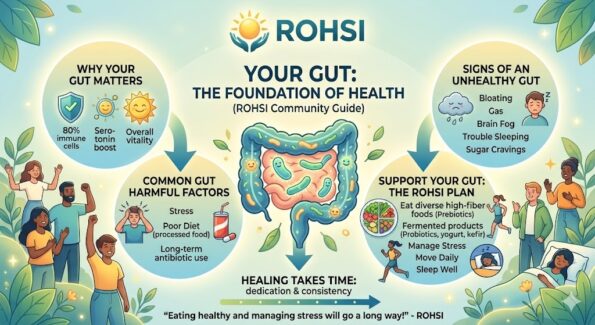
We’ve all heard the term “gut health” floating around, and we know it’s supposed to be a good thing. But in our journey toward whole-body wellness, it’s time to understand why it’s so fundamental. Think of your gut not just as a part of you but as the very foundation of your health. When the foundation is strong, the whole house stands firm.
What Does “Good Gut Health” Really Mean?
Simply put, good gut health is about balance. Inside your digestive system lives a vast, bustling community of microorganisms, bacteria, yeasts, and other microbes collectively known as your gut microbiome. A healthy gut occurs when there’s a harmonious balance between the “good” (helpful) and the “bad” (potentially harmful) microbes.
This isn’t just about digestion. In fact, 80% of your immune system resides in your gut! It’s also a major production site for neurotransmitters, including the “feel-good” hormone serotonin. This means your gut health is directly linked to your immunity and your mood. If your gut is out of balance, your immune system can weaken, and your emotional well-being can suffer.
What Can Throw Our Gut Out of Balance?
Our modern lifestyle can be tough on our internal ecosystem. Several factors can tip the scales, leading to an overgrowth of the bad bacteria. The most common culprits include the following:
Chronic Stress: When we’re stressed, it can increase intestinal permeability (often called “leaky gut”). This allows toxins to escape the gut and enter the bloodstream, disrupting the delicate balance of our microbiome.
Poor Nutrition: A diet high in processed foods, sugar, and unhealthy fats can feed the harmful bacteria, causing inflammation throughout the body and starving the beneficial bacteria that keep us healthy.
Overuse of Medications: While sometimes necessary, long-term use of antibiotics and antacids can have a negative impact. Antibiotics don’t discriminate; they kill both the bad bacteria causing an infection and the good bacteria we need. Antacids can decrease nutrient absorption, like B12, which is vital for energy and brain function. Always consult with your physician about the risks and benefits of any long-term medication.
How Your Gut Affects Your Whole Life
When your gut is thriving, you feel it from head to toe. Here’s how a healthy gut positively impacts your overall well-being:
Think of your gut as your body’s first line of defence. Beneficial bacteria train your immune cells to fight off real threats and maintain a strong gut barrier, preventing harmful substances from entering your bloodstream.
The “gut-brain axis” is a real and powerful connection. A healthy gut produces mood-regulating neurotransmitters like serotonin and dopamine. This is why a balanced gut can lead to a calmer mind, reduced anxiety, and better mental clarity. Conversely, an unhealthy gut can contribute to brain fog and mood swings.
A balanced microbiome is a master at breaking down food and extracting the vitamins and minerals your body needs to function. It also helps regulate waste removal, keeping your system running smoothly.
Your gut bacteria play a role in regulating your metabolism, blood sugar, and insulin sensitivity. An imbalanced gut can make it harder to maintain a healthy weight and is linked to metabolic issues.
An unhealthy gut can trigger chronic, low-grade inflammation throughout the body. This type of inflammation is a root cause of many chronic diseases, including autoimmune conditions, heart disease, and irritable bowel syndrome (IBS).
Is Your Gut Trying to Tell You Something?
An unhealthy gut doesn’t always just announce itself with a stomach ache. While gas, bloating, constipation, and diarrhoea are common signs, there are other, less obvious clues:
- Unexplained fatigue or poor sleep
- Skin irritations
- Autoimmune conditions (like Hashimoto’s, rheumatoid arthritis, or Type 1 diabetes)
- Brain fog, headaches, and poor concentration
- Intense cravings for sugar or carbs
- Moodiness, anxiety, or depression
If any of these resonate with you, it might be time to show your gut some love.
Healing your gut is a journey, not a race. Start with these simple foundational steps:
Eat a diverse range of whole foods. Focus on high-fibre foods (prebiotics) like fruits, vegetables, legumes, and whole grains to feed your good bacteria. Incorporate fermented foods (probiotics) like plain yoghurt, kefir, sauerkraut, and kimchi to introduce more beneficial bugs.
Your gut and brain are deeply connected. Manage your stress levels through activities you enjoy, whether it’s gentle movement, deep breathing, or time in nature. Prioritise regular exercise and aim for 7-9 hours of quality sleep each night.
Remember, your microbiome didn’t become unbalanced overnight, and it won’t be restored overnight either. Some people may need additional, targeted support from a healthcare provider, but for everyone, the journey starts here.
At Rays of Hope Support Initiative (ROHSI), we believe in empowering you with knowledge and compassionate support. Nourishing your body with healthy foods and managing your stress are powerful acts of self-care that will pave the way on your road to recovery and optimal well-being. Your gut is the root—let’s nurture it together.
Apr 1, 2026 | Healthy Tips
In the bustling markets and vibrant streets of Ibadan, a silent health crisis is unfolding, one that directly threatens the lives of our men. As an organisation based here in Oyo State, we are on the front line of the battle against non-communicable diseases (NCDs), particularly hypertension and diabetes. Every day, we witness a disturbing trend: today, men—especially young adults with bright futures, careers, and families—are dying daily from preventable health issues directly linked to the consumption of trans fats.
This is not just a health issue; it is a crisis that is robbing our community of its fathers, brothers, and leaders.
Trans fats, or trans-fatty acids, are the most dangerous type of fat for the human heart and vascular system. They are primarily created in an industrial process that adds hydrogen to liquid vegetable oils to make them more solid. For food vendors and producers, this is a cheap and attractive option because it increases the shelf life and flavour stability of foods.
In Ibadan, common sources of industrially produced trans fats include:
Reused Frying Oils! Oils are used repeatedly to fry popular staples like akara (bean cakes), puff-puff, boli (roasted plantain) with groundnut oil, and doughnuts sold by roadside vendors.
Margarines and Vegetable Shortenings! Often used in baked goods like bread, cakes, and pastries sold in local bakeries.
Packaged Snacks? Some commercially fried snacks and fast foods.
Our work at the Rays of Hope Support Initiative has highlighted a critical and concerning pattern: the devastating impact of trans fats is not gender-neutral.
While women are not completely immune, their natural hormonal makeup, particularly oestrogen, offers a degree of protection by helping to regulate cholesterol levels and fat distribution. This biological advantage, however, is not shared by men.
The male body is particularly vulnerable. In our screenings across Ibadan, we have observed that the majority of our men tend to develop visceral fat—the dangerous fat that accumulates deep within the abdomen, wrapping around their internal organs. This is the direct consequence of a diet high in trans fats. This central obesity is a ticking time bomb, leading to a cascade of life-threatening complications:
Trans fats wreak havoc on a man’s lipid profile. They raise “bad” cholesterol (LDL) and lower “good” cholesterol (HDL). They also significantly increase triglycerides, another type of fat in the blood that hardens arteries.
Also, the build-up of cholesterol and triglycerides doesn’t just sit idly on our body. It forms plaque, leading to the narrowing and hardening of our arteries (atherosclerosis)—”a sure path to hypertension”. The heart is then forced to pump blood through these constricted pathways, leading to dangerously high blood pressure (hypertension)—a condition we see daily at our centre.
Visceral fat is not inert; it acts like an active organ, releasing inflammatory substances that make the body’s cells resistant to insulin. This insulin resistance is a direct precursor to high blood sugar and type 2 diabetes, creating a perfect storm where a man is now managing two or more debilitating NCDs simultaneously.
The result is a preventable tragedy—a young man in his 30s or 40s, a provider for his family, suffers a sudden heart attack or stroke or is diagnosed with advanced kidney disease from uncontrolled hypertension and diabetes. Hmmm!
Addressing this crisis requires a multi-pronged approach, from individual lifestyle changes to systemic action by authorities.

Here is what needs to be done:
For Individuals and Families:
Dietary Overhaul:
- Minimise the consumption of foods fried in oil that has been used repeatedly. Be mindful of the deep golden-brown colour of repeatedly heated oil used for frying akara and puff-puff.
- When buying packaged foods, look for “partially hydrogenated oils” on the ingredient list—this is a direct indicator of trans fats.
- At home, use healthier oils like olive, soybean, or palm oil in moderation, and avoid heating them to the smoking point.
- Aim for at least 150 minutes of moderate-intensity exercise per week. This could be a brisk walk around your neighbourhood, cycling, or engaging in local group sports. Exercise is the most effective way to burn visceral fat.
- Do not wait for symptoms. As an organisation working within the NCDs healthcare space, we cannot overemphasise the importance of regular check-ups. Know your numbers: blood pressure, blood sugar, and cholesterol levels. Early detection is the only way to intervene before complications arise.
- If diagnosed with hypertension or diabetes, it’s not a death sentence but a lifelong condition that requires consistent management. Take your medication exactly as prescribed by a healthcare professional. Do not stop when you feel better; consult your doctor and dietitian first.
To our government (Oyo State and Federal):
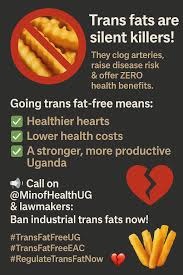
Nigeria must implement and enforce a trans fat ban by leading other nations in setting a legal limit for industrially produced trans fat in all foods.
Enforce strict quality controls on the production and sale of cooking oils to prevent adulteration and promote healthier options.
Launch mass media campaigns (radio, TV, town criers) in local languages to educate the public, especially men, about the dangers of trans fats, using culturally relevant examples like akara and puff-puff.
To our healthcare centres and authorities:
Every consultation for hypertension or diabetes must include practical, actionable advice on avoiding trans fats. We are asking for integrated dietary counselling.
Equip community health workers and nurses with the knowledge to counsel patients on healthy cooking practices and food choices.
Improve the tracking and reporting of NCDs to the appropriate quarters so as to better understand the scope of the problem.
To organisations working within the health care space:
We must continue to take our services to the markets, motor parks, and communities, meeting men where they are to check their blood pressure and blood sugar.
Develop programmes specifically for men, focusing on the link between their diet (e.g., the oil in their favourite local foods) and their future health. Use relatable language and peer-to-peer influence.
We must collectively raise our voices to urge the government for stricter regulations on trans fats. We are the voice for the communities we serve.
Create and facilitate support groups for men living with hypertension and diabetes, providing a space for shared learning and encouragement.
The fight against trans fats is a fight for the future of our men in Ibadan and Nigeria. Through awareness, lifestyle change, and strong advocacy, we can reverse this trend and ensure that our young men live to fulfil their promising futures.
